Iran Fires Two Ballistic Missiles Towards Strategic US-UK Military Base in Diego Garcia
In a significant escalation of regional tensions, Iran launched two intermediate-range ballistic missiles targeting the Diego Garcia military base in the Indian Ocean, a critical joint facility operated by the United States and the United Kingdom. According to a report by the Wall Street Journal citing US officials, neither of the missiles successfully struck the base, which is a pivotal hub for American and British military operations across Africa, the Middle East, and Asia.
Details of the Failed Missile Attack
The incident, reported on Friday, saw one of the Iranian missiles break apart during its flight path. In response, a US warship deployed an SM-3 interceptor missile against the second projectile. However, it remains uncertain whether this defensive measure successfully destroyed the incoming target. The precise timing of the launch has not been disclosed by authorities, adding an element of ambiguity to the event.
Official responses have been limited, with the White House, the British embassy in Washington, and the Ministry of Defence all declining to immediately comment on requests from Reuters. This silence underscores the sensitive nature of the situation and the potential for further diplomatic or military repercussions.

Strategic Importance of Diego Garcia
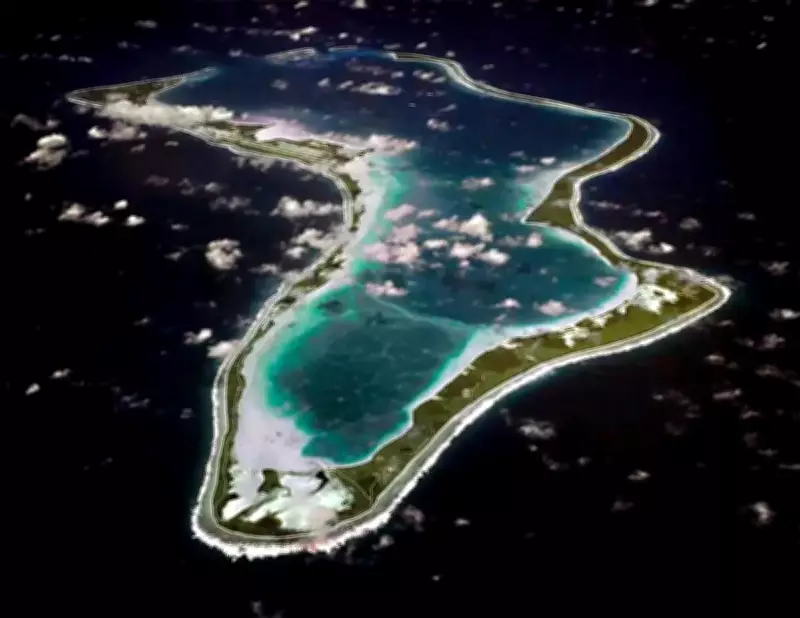
Diego Garcia is an atoll situated in the central Indian Ocean, forming part of the British Indian Ocean Territory. It hosts a heavily fortified military installation that is primarily operated by the United States. The base serves as a crucial logistical and operational center, enabling rapid deployment of air and naval assets across a vast geographic expanse.
Historically, Diego Garcia has played a central role in US military campaigns, including those in Iraq and Afghanistan, by providing a launch point for long-range bombers and supporting submarine and surveillance missions. Its remote location enhances security, making it an ideal site for pre-positioning military supplies, fuel, and equipment, which facilitates swift responses during regional crises.
The base is also viewed as vital to Washington's strategic posture in the Indian Ocean, allowing for monitoring and countering activities by rivals such as Iran and China. Its isolation and robust fortifications render it one of the most secure overseas military installations available to the US, highlighting why it remains a prime target in geopolitical confrontations.
Escalating Military Deployments in West Asia
This missile launch coincides with a significant increase in US military presence in West Asia. According to three US officials speaking on Friday, the United States is deploying thousands of additional Marines and sailors to the region. While no decision has been made to send troops into Iran directly, these reinforcements aim to bolster operational capacity for potential future actions, as stated by officials who requested anonymity.
One official detailed that the USS Boxer, along with two other amphibious assault ships and approximately 2,500 Marines from the 11th Marine Expeditionary Unit, is en route to West Asia from its home port in San Diego. The deployment is occurring nearly three weeks ahead of schedule, indicating a sense of urgency. The White House and the Pentagon have not commented on these movements.
This latest deployment will augment the roughly 50,000 US troops already stationed in West Asia and is expected to introduce two Marine Expeditionary Units into the region. Typically, each unit comprises around 2,500 Marines capable of executing a wide range of operations, including airstrikes and ground deployments. Earlier reports had suggested that the US military was preparing for possible next steps in the ongoing conflict.
Intensified Efforts in the Strait of Hormuz
Simultaneously, US forces are ramping up efforts to secure the Strait of Hormuz, a critical global shipping chokepoint. US warplanes and attack helicopters have increased strikes against Iranian drones and naval vessels as part of a broader campaign to maintain open sea lanes. Officials reported that low-flying Air Force A-10 Warthog aircraft are actively "hunting and killing fast-attack watercraft" operated by Iran's Revolutionary Guard in these contested waters.

Gen Dan Caine noted on Thursday that some regional allies, which he did not identify, are utilizing Apache helicopter gunships to counter one-way attack drones, a tactic increasingly employed by Iran across the Persian Gulf. Additionally, according to a report by Axios citing four sources, the US is considering plans to occupy Kharg Island to pressure Tehran into reopening the Strait of Hormuz, further escalating the strategic standoff.
Broader Implications and Regional Tensions
The failed missile attack on Diego Garcia underscores the heightened state of military readiness and the complex dynamics at play in the region. As the US reinforces its military footprint in West Asia and intensifies operations in key maritime areas like the Strait of Hormuz, the potential for further confrontations with Iran remains high. This incident highlights the ongoing volatility and the critical role of strategic military bases in global security architectures.