Iran Targets Diego Garcia with Ballistic Missiles as Trump Considers Military Exit
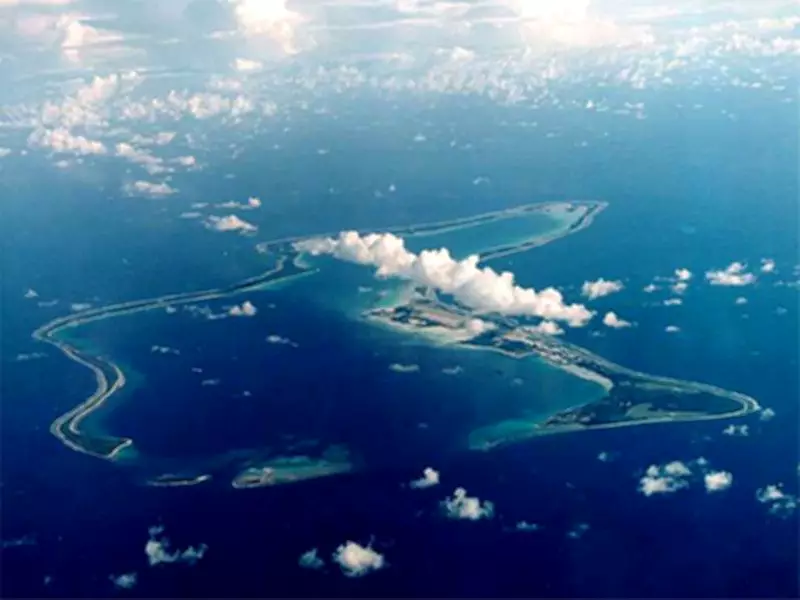
In a significant escalation of tensions, Iran has launched two intermediate-range ballistic missiles towards the joint US-UK military base at Diego Garcia in the Chagos Archipelago. This development comes as US President Donald Trump indicated that Washington is "very close" to scaling down its military operations against Tehran, according to a report by The Wall Street Journal citing US officials.
Missile Launch Details and Interception Attempt
As per the WSJ report, one of the missiles failed during its flight, while a US warship responded by launching an SM-3 interceptor at the second missile. It remains unclear whether the interception was successful, and the exact timing of the missile firings has not been specified.
The SM-3 interceptor, used by the US Navy, is designed to destroy short- to intermediate-range ballistic missiles through a "hit-to-kill" method. This technique relies on sheer force rather than an explosive warhead, with its "kill vehicle" impacting targets with the force equivalent to a 10-ton truck travelling at 600 miles per hour. Raytheon, the manufacturer, has likened this to intercepting a bullet with another bullet.

Strategic Implications of the Strike
The attempted strike is particularly notable because Diego Garcia is located approximately 4,000 kilometres from Iran. This distance suggests that Iran's missile range may be far greater than the 2,000 kilometres publicly stated by Iran's Foreign Minister Abbas Araghchi last month. Diego Garcia serves as a key strategic facility jointly operated by the United States and the United Kingdom, highlighting the global reach of Iran's military capabilities.
Trump's Stance on Military Operations
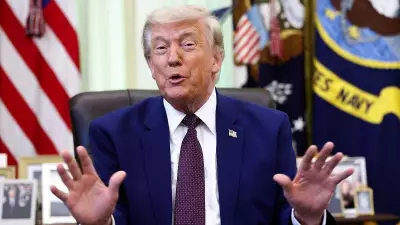
Amid the ongoing conflict, President Trump has asserted that Washington is not seeking a ceasefire. Speaking outside the White House, he stated, "We can have dialogue, but I don't want to do a ceasefire. You don't do a ceasefire when you're literally obliterating the other side... we're not looking to do that."
He also hinted at a potential reduction in US military efforts, claiming in a post, "We are getting very close to meeting our objectives as we consider winding down our great Military efforts in the Middle East with respect to the Terrorist Regime of Iran." Trump listed key US objectives, including:
- Completely degrading Iranian missile capability, launchers, and related infrastructure.
- Destroying Iran's defense industrial base.
- Eliminating Iran's navy and air force, including anti-aircraft weaponry.
- Preventing Iran from achieving nuclear capability.
- Protecting Middle Eastern allies at the highest level.
In response, the Pentagon has deployed three additional warships and thousands of Marines to the region to bolster US presence.
Iran's Warnings and Regional Actions
Iran has issued fresh warnings about expanding its retaliation beyond the Middle East. General Abolfazl Shekarchi, a senior military spokesperson, cautioned that "parks, recreational areas and tourist destinations" worldwide would not be safe for Iran's enemies, raising concerns about possible asymmetric attacks outside the region.
Simultaneously, Iran has intensified attacks on energy infrastructure in Gulf countries. Reports indicate that two waves of Iranian drones struck Kuwait's Mina Al-Ahmadi refinery early Friday, triggering a fire. This refinery is one of the largest in the region, with a capacity of around 730,000 barrels per day.
Iran has also warned the United Arab Emirates of potential retaliation. In a statement, Tehran threatened to target Ras al-Khaimah if Iranian Gulf islands were attacked again from UAE territory, stating that the Iranian armed forces would deliver "crushing blows."
Diplomatic and Defense Developments
On the diplomatic front, Foreign Minister Araghchi criticized the United Kingdom for allowing US forces to use its bases for strikes against Iran, arguing that the British people do not support involvement in the conflict. He emphasized Iran's right to self-defense, stating, "Iran will exercise its right to self-defense."

In a separate development, Iran has indicated it may allow Japanese-linked vessels to pass through the Strait of Hormuz, a critical global oil route, suggesting some flexibility amid heightened tensions.
Earlier, Israeli Prime Minister Benjamin Netanyahu claimed that joint US-Israeli strikes had significantly weakened Iran's military capabilities, asserting that Iran's missile and drone arsenal is being "massively degraded" and its industrial base destroyed.
Additionally, US defense major RTX Corporation announced that its subsidiary Raytheon signed multiple long-term agreements with the US Department of War to expand production of key munitions, including the SM-3 interceptor. The company plans to scale up output of systems like Tomahawk, AMRAAM, SM-3, and SM-6, with production expected to increase two to four times current levels.