

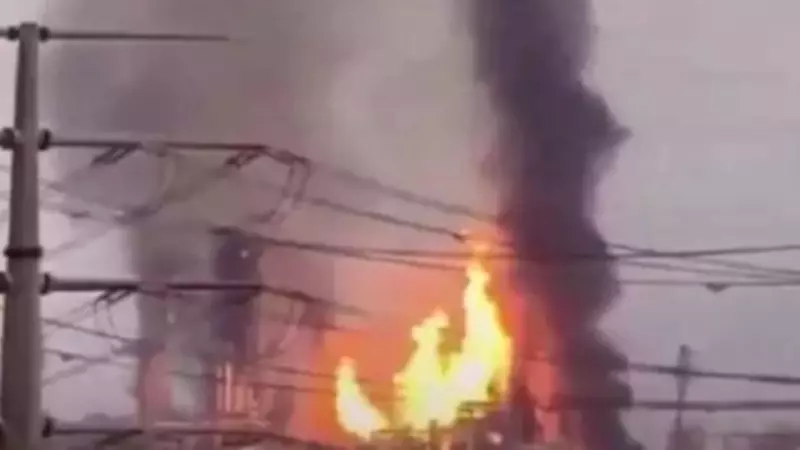
Iran Intensifies Strikes on Gulf Energy Infrastructure, Fueling Global Economic Turmoil
Iran dramatically escalated its military campaign on Thursday, launching a series of targeted attacks against critical oil and natural gas facilities throughout the Gulf region. This aggressive move significantly raises the stakes in an ongoing conflict that is now sending powerful shockwaves through the global economy.
Retaliation and Regional Escalation
The strikes are a direct retaliation for a recent Israeli attack on a major Iranian gas field. This tit-for-tat warfare has sent international fuel prices skyrocketing and now poses a severe risk of drawing Iran's Arab neighbors directly into a broader, more dangerous confrontation. The targeted nations include Qatar, Saudi Arabia, Kuwait, and the United Arab Emirates.
In a significant development, an Iranian missile attack also struck Israel's oil refineries located in the northern port city of Haifa. While Israeli authorities reported no "significant damage," the attack marks a direct hit on Israeli energy infrastructure.

Global Supply Chains Under Siege
Tehran's focused assault on energy production has placed immense stress on global supplies, which were already under severe pressure due to Iran's strategic control over the Strait of Hormuz. This vital maritime chokepoint is responsible for transporting approximately one-fifth of the world's oil.
The immediate economic impact was severe. Brent crude oil, the international benchmark, spiked to as high as $118 per barrel. This represents an increase of more than 60% since the war involving Israel and the United States began. Concurrently, the European benchmark for natural gas prices surged by 17% on Thursday alone and has doubled over the past month.
Maritime Threats and Alternative Route Attacks
The danger to commercial shipping in the region was starkly underscored by separate incidents where a vessel was set ablaze off the coast of the UAE and another was damaged near Qatar. Furthermore, efforts to bypass the volatile Strait of Hormuz faced direct pressure.
An Iranian drone successfully struck a Saudi Arabian refinery in the Red Sea. This facility was a key part of Saudi Arabia's strategy to use the Red Sea as an alternative exit route for its energy exports, highlighting Iran's intent to disrupt all logistical options.
Widespread Damage and Condemnation
The attacks have inflicted substantial economic damage. According to QatarEnergy's CEO, the strikes have knocked out an estimated 17% of Qatar's liquefied natural gas (LNG) export capacity. This disruption is projected to cause a staggering $20 billion in lost annual revenue and threatens energy supplies to both Europe and Asia.
Saudi Arabia confirmed its SAMREF refinery in the Red Sea port city of Yanbu was hit. Authorities in Kuwait and Abu Dhabi also reported attacks on two refineries and gas operations, respectively. The collective condemnation from the Arab world was swift and severe.
Qatar, Saudi Arabia, and the UAE publicly denounced the Iranian attacks. Ahmed Aboul Gheit, the Secretary-General of the Arab League, labeled the escalation as "dangerous." Despite this, Iran has shown no indications of backing down from its aggressive posture.
Human Toll and Military Posturing
Within Israel, more than half a dozen waves of Iranian attacks targeted large population centers, forcing millions of citizens into shelters and causing damage to buildings. In a notable countermove, Israel announced it had struck Iranian targets in the Caspian Sea for the first time, hitting dozens of objectives including ships, a shipyard, and a command center.
In Washington, U.S. Defense Secretary Pete Hegseth issued a stern warning, stating that the U.S. military "controls the fate" of Iran. He urged Tehran to make the right choices and cease targeting Arab allies, emphasizing that Iran should not "create pain" for others.
Hegseth further implied that more Iranian leaders could be targeted, specifically mentioning the IRGC and Basij force, whose leader was killed by Israel earlier in the week. Meanwhile, U.S. Treasury Secretary Scott Bessent suggested a potential policy shift, indicating the U.S. might consider removing sanctions from Iranian oil stranded on tankers to help boost global supplies and reduce soaring prices.






