Iran: A Strategic Islamic Republic with Diverse Population and Economic Challenges
Iran stands as a vast, resource-rich, and ethnically diverse Muslim-majority nation that has been governed as an Islamic republic since the 1979 revolution. This pivotal uprising overthrew the monarchy and brought clerics to power under the leadership of Ayatollah Ruhollah Khomeini, marking a significant shift in the country's political landscape.
Historical Transformation and Governance Structure
The revolution effectively ended the rule of the Shah, whose ambitious programme of rapid modernisation and Westernisation, coupled with the harsh suppression of dissent, had alienated key religious, political, and popular constituencies. In the aftermath, Iran was established as an Islamic republic, blending republican institutions with robust clerical oversight.
Today, the Supreme Leader, Ayatollah Ali Khamenei, serves as commander-in-chief of the armed forces and holds ultimate authority over the judiciary, state media, key military bodies, and major state policies. The president, elected by popular vote every four years, heads the executive branch and manages the cabinet and day-to-day administration. However, presidential candidates must first be approved by the Guardian Council, a powerful unelected body of clerics and jurists that also reviews legislation passed by parliament.

Religious and Ethnic Diversity
Iran's population is overwhelmingly Muslim, with more than 90 percent adhering to Shia Islam, making it the world's largest Shia-majority country. Sunni Muslims constitute most of the remaining Muslim population and are largely concentrated in border provinces. Recognised religious minorities include Christians, Jews, and Zoroastrians, while the Bahá’í community is not officially recognised by the state.
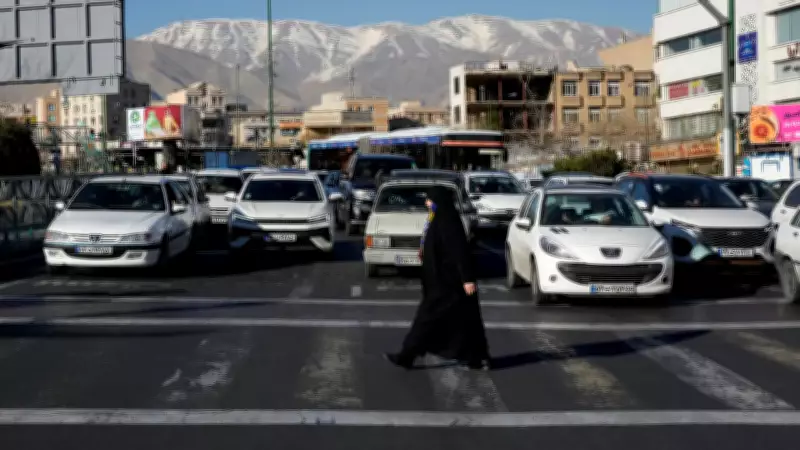
With a population exceeding 85 million people, roughly three-quarters reside in urban areas. The capital, Tehran, is home to around 10 million residents, while other major cities include Mashhad and Isfahan. Ethnically, Iran is highly diverse. Persians form the majority, alongside significant Azerbaijani, Lur, Kurdish, Arab, Baloch, and Turkmen communities. Linguistically, Persian is the official language and serves as the primary language of administration, media, and education, but Azeri, Luri, Kurdish, Gilaki, Balochi, and Arabic are widely spoken across different regions.
Economic Powerhouse Under Strain
Iran possesses some of the world's largest hydrocarbon reserves, holding approximately 10 percent of proven global oil reserves and roughly 15 percent of natural gas reserves, ranking it among the leading energy producers worldwide. The oil and gas sector forms the backbone of the economy, contributing up to 30 percent of GDP directly and indirectly, and accounting for a significantly larger share of export earnings and government revenue.
As a member of OPEC, Iran relies heavily on energy exports, though it also maintains a diversified industrial base that includes petrochemicals, steel, cement, automobile manufacturing, mining, agriculture, and food processing. The services sector has also grown as a share of GDP. In recent years, however, economic growth has been constrained by international sanctions, currency instability, and longstanding structural challenges, placing significant strain on the nation's financial stability.
Strategic Importance and Global Role
Iran occupies a strategic position at the crossroads of the Middle East, Central Asia, and South Asia. As the second-largest country in the Middle East by area, it shares land borders with Afghanistan, Armenia, Azerbaijan, Iraq, Pakistan, Turkey, and Turkmenistan. Controlling the northern shore of the Strait of Hormuz, a vital route for global oil and liquefied natural gas shipments, Iran plays a central role in global energy security.
It also borders the Caspian Sea, the world's largest inland body of water, shared with Russia and several Central Asian states, a region important for fisheries, trade routes, and offshore energy resources. Historically a hub of trade and empire, Iran's strategic location remains significant, though international sanctions have limited its role in regional commerce in recent years.

In summary, Iran is a complex nation shaped by its Islamic republic governance, rich cultural diversity, vast energy resources, and strategic geopolitical position, all while navigating ongoing economic challenges and international pressures.