

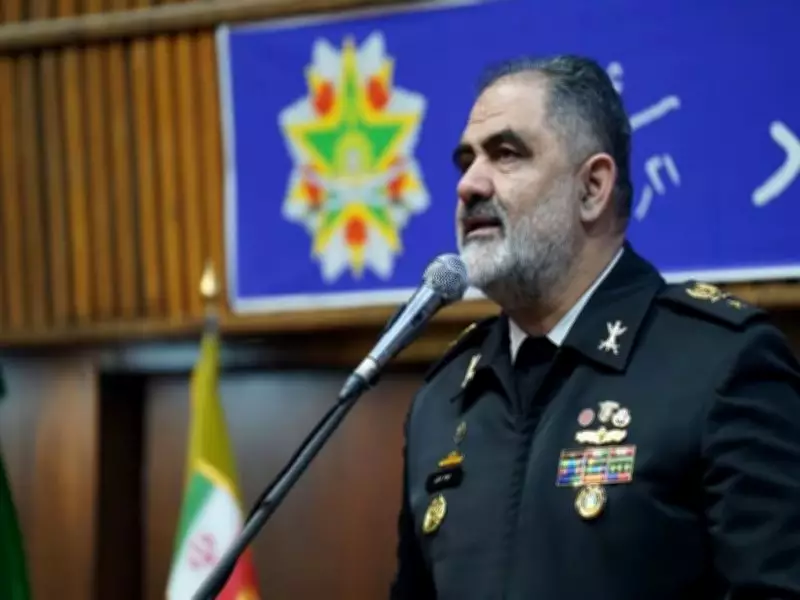
Iran Navy Chief Issues Stern Warning Over Sailor Deaths in Indian Ocean
The commander of the Iranian Navy has delivered a forceful warning in response to a fatal incident in the Indian Ocean, declaring that adversaries will face "deadly retaliation" following the killing of several sailors off the coast of Sri Lanka. According to Iranian state broadcaster Press TV, Rear Admiral Shahram Irani addressed the loss, emphasizing Tehran's unwavering commitment to respond to the attack.
Vow of Retribution and Strategic Response
Admiral Irani asserted that Iran will not overlook the enemy's actions, stating, "We will not forget the enemy's crime, and we will exact retribution for the blood of our martyrs." He highlighted that the timing and method of Iran's response would be unexpected, cautioning opponents that "the enemy should know that we will punish it with deadly strikes from where it least expects." Despite acknowledging a period of mourning for the naval forces, Irani maintained that Iran holds a position of strength, noting, "Although today we mourn our loved ones, by the grace of God, we have brought the enemy to its knees."
Background of the Attack and Official Condemnations
This rhetoric follows earlier statements from Iran's Army chief, Major General Amir Hatami, who warned on March 14 that the deaths of crew members from the IRIS Dena warship "will not go unanswered." As reported by Al Jazeera, citing the state news agency IRNA, Hatami condemned the attack on the vessel, one of Iran's newest warships, which occurred as it was returning from a military exercise. He clarified that the crew had completed a "peaceful mission" and were targeted while on their way back to Iran, facing the assault "despite not being engaged in a direct battle." Hatami emphasized that the sacrifice of the Dena's crew would remain a symbol of courage in Iran's naval history.

Operational Details and Allegations of War Crimes
The Iranian administration reinforced this stance by releasing images of the fallen sailors' coffins. In a post on X, the Iranian embassy in India identified the deceased as "the pure and honoured bodies of the naval martyrs who lost their lives in the terrorist attack by US forces on the IRIS Dena warship." Providing further details, the Spokesperson for the Ministry of Foreign Affairs, Esmaeil Baqaei, paid tribute to the sailors killed after the frigate was torpedoed and sunk by a US submarine. The vessel was reportedly hit approximately 40 nautical miles off the coast of Galle, Sri Lanka.
Baqaei characterized the United States' action as a "war crime" and a violation of international laws. He noted on X that the Dena had been officially invited by the Indian Navy for a joint naval exercise and a port visit prior to being attacked near the coasts of India and Sri Lanka. The spokesperson further alleged that the United States deliberately obstructed rescue operations, arguing that the strike constitutes aggression under UN General Assembly Resolution 3314 and a grave violation of the laws of war, including Geneva Convention II and Additional Protocol I.
Incident Aftermath and Rescue Efforts
The IRIS Dena sank south of Sri Lanka on March 4 after being struck by a US submarine torpedo approximately 20 nautical miles west of Galle. Following the incident, the Indian Navy deployed assets, including INS Tarangini, INS Ikshak, and P-8I maritime patrol aircraft, to assist Sri Lanka-led search and rescue efforts. Of the estimated 180 crew members on board the vessel, approximately 87 sailors were reported dead. Around 32 survivors were rescued by the Sri Lankan Navy and subsequently admitted to hospitals in Galle.
This escalating maritime conflict underscores heightened tensions in the Indian Ocean region, with Iran's warnings signaling potential retaliatory actions that could further strain international relations. The incident highlights ongoing disputes over naval activities and adherence to international maritime laws.






