

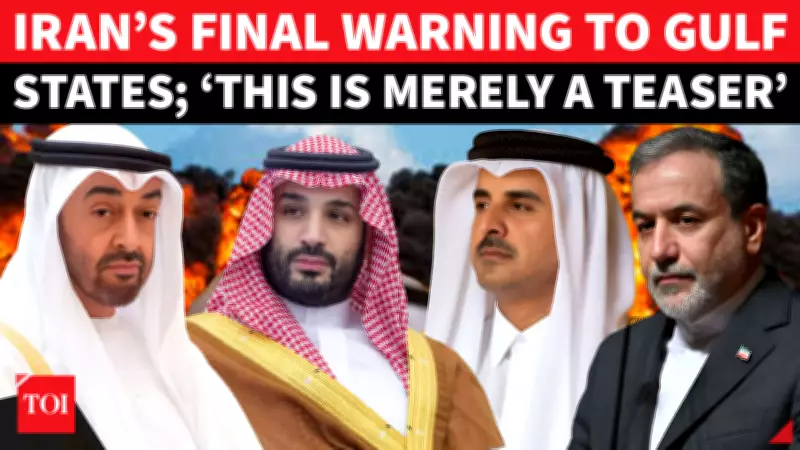
Iran's Foreign Minister Issues Dire Warning to Gulf Nations Amid Escalating Conflict
In a dramatic escalation of regional tensions, Iran's Foreign Minister Abbas Araghchi has delivered a stark ultimatum to Gulf nations, explicitly cautioning them against permitting the United States or Israel to utilize their territories for launching attacks against the Islamic Republic. The warning comes amidst a significant missile blitz targeting American military installations across the region, which Tehran insists is purely defensive in nature.
'Just a Trailer' – A Chilling Message of Retaliation
During a series of high-profile interviews, Araghchi framed Iran's recent military actions as acts of "self-defense" aimed specifically at American military assets, not civilian populations. He emphasized that the current missile strikes represent merely "just a trailer" of what could follow if Gulf states continue to facilitate operations by Iran's adversaries. This metaphorical language underscores the potential for a far more devastating and widespread conflict should diplomatic channels fail.
Targeting American Bases and Condemning Civilian Casualties
The Iranian Foreign Minister confirmed that Tehran is actively targeting U.S. military bases throughout the Middle East, from Bahrain to Qatar, in response to perceived aggression. However, he simultaneously condemned the reported bombing of a girls' school in Minab, labeling it a tragic and unacceptable escalation that resulted in significant loss of life. Araghchi expressed profound sorrow over the incident, which reportedly killed over 50 people, and called for an immediate cessation of such attacks on civilian infrastructure.

Path to De-escalation Remains Open, But Conditions Apply
Despite the bellicose rhetoric and ongoing military engagements, Araghchi signaled a potential opening for de-escalation. He stated that Iran is prepared to dial back its offensive operations if the United States and its allies halt their strikes against Iranian interests. This conditional offer highlights the complex diplomatic maneuvering at play, as regional leaders grapple with mounting pressure to prevent a full-scale war that could engulf the entire Middle East.
Regional Leaders Face Mounting Pressure Amid Rising Tensions
The situation has placed Gulf state governments in an increasingly precarious position. They must now navigate:
- Intense diplomatic pressure from both Iran and its Western allies.
- Military threats to their sovereignty and infrastructure.
- Economic instability as conflict disrupts trade and energy markets.
- Humanitarian concerns over civilian casualties and displacement.
As the conflict intensifies, with reports of explosions in Tehran and threats of retaliation from the Islamic Revolutionary Guard Corps (IRGC), the international community watches anxiously. The coming days will be critical in determining whether diplomatic solutions can prevail or if the region is headed toward an even broader and more destructive confrontation.






