Iran's Supreme Leader Issues Stark Warning to US Allies Over Potential Attack
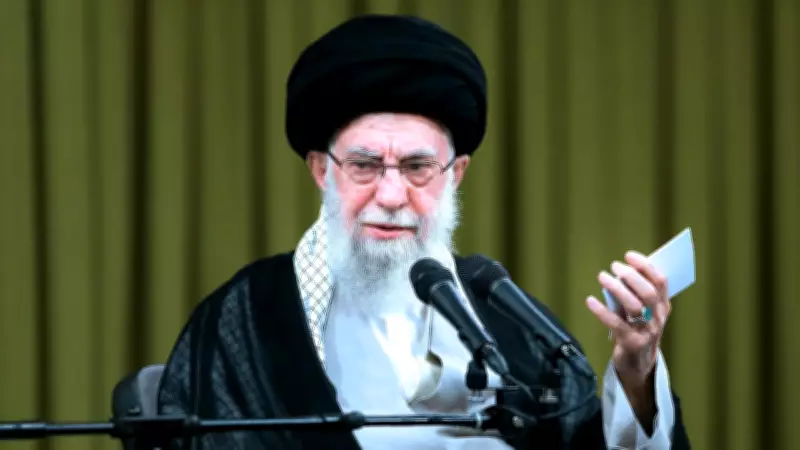
Iran's Supreme Leader Ayatollah Ali Khamenei delivered a forceful warning on Sunday, cautioning the United States' Middle East allies that any military assault on the Islamic Republic would inevitably spark a widespread regional conflict. This declaration comes at a time of heightened tensions following deadly domestic protests that have rocked the nation.
Khamenei Addresses Legislative Session Amid Rising Tensions
Speaking during a legislative session, Khamenei sought to reassure Iranians, urging them "should not be scared" of the rhetoric emanating from US President Donald Trump. He emphasized the grave consequences of potential aggression, stating clearly, "The Americans should know that if they start a war, this time it will be a regional war." This statement underscores Iran's strategic posture and its readiness to respond to external threats with broader regional implications.
Background: Deadly Protests and Government Crackdown
The Supreme Leader's warning follows Tehran's severe crackdown on mass demonstrations that initially erupted in December over economic hardships, including the soaring cost of living. These protests gradually evolved into a more extensive anti-government movement, drawing significant international attention.

Khamenei characterized the protests as being orchestrated by external forces, specifically pointing to the United States and Israel. He labeled the events as "riots" and described them in dramatic terms: "They (rioters) attacked the police, government centres, IRGC centres, banks, and mosques, and burned the Koran… It was like a coup." He further asserted that "the coup was suppressed," highlighting the government's firm response.
Tehran has officially acknowledged more than 3,000 fatalities during the protest period, claiming that the majority were security personnel and innocent bystanders. The government attributes the violence to "terrorist acts." However, human rights organizations and several foreign governments have countered these claims, accusing Iran and its Islamic Revolutionary Guard Corps (IRGC) of being responsible for the deaths of thousands of protesters.
Iran Retaliates Against EU's IRGC Designation
In a significant retaliatory move, Iranian lawmakers on Sunday formally labeled the armies of European Union member states as terrorist groups. This action was a direct response to the EU's recent designation of the IRGC as a terrorist organization. During the parliamentary session, lawmakers donned the distinctive green uniforms of the Guards and chanted provocative slogans, including "Death to America," "Death to Israel," and "Shame on you, Europe," as broadcast by state television.
Speaker Mohammad Bagher Ghalibaf condemned the EU's decision, calling it an "irresponsible action." He cited "Article 7 of the Law on Countermeasures Against the Declaration of the IRGC as a Terrorist Organisation," which provides Iran with the legal framework to classify the armed forces of European countries as terrorist entities. The immediate practical impact of this legislative move remains uncertain, but it symbolizes a sharp escalation in diplomatic hostilities.
Historical Context and Regional Dynamics
The parliamentary session coincided with the 47th anniversary of the return from exile of the late Ayatollah Ruhollah Khomeini, the foundational figure of the Islamic Republic established in 1979. The IRGC, serving as the ideological backbone of Iran's military apparatus, is entrusted with the critical mission of safeguarding the revolution from both external and internal threats.
The EU's designation of the IRGC as a terrorist group aligns with similar classifications previously made by the United States, Canada, and Australia. This international stance reflects ongoing concerns over Iran's regional activities and internal policies.

Regional tensions have been further exacerbated by recent military confrontations. Last June, Iran and Israel engaged in a 12-day war after Israel targeted sites linked to Iran's nuclear program. The United States intervened in support of Israel, and the conflict concluded following mediation by President Trump, which led to a truce. Despite this ceasefire, the underlying regional tensions persist at a high level, contributing to the volatile atmosphere addressed by Khamenei in his warning.
The evolving situation underscores the complex interplay of domestic unrest, international diplomacy, and military posturing in the Middle East, with Iran positioning itself as a formidable actor willing to escalate conflicts to a regional scale if provoked.