

Iran Issues Direct Warning to American Technology Corporations Amid Regional Escalation
In a significant escalation of rhetoric, Iran issued a stark warning on Wednesday to major American technology companies, stating that their offices and critical infrastructure could become legitimate military targets as the ongoing conflict in the Middle East region continues to widen. The warning represents a dangerous new phase in the hostilities, potentially drawing multinational corporations directly into the geopolitical crossfire.
Published List Identifies Specific Corporate Assets as Potential Targets
The IRGC-affiliated Tasnim News Agency, which maintains close ties to Iran's Islamic Revolutionary Guard Corps, published what it described as a comprehensive list of offices and infrastructure operated by prominent United States technology firms. The agency explicitly claimed these facilities are linked to Israel and have been utilized for military applications and purposes.
The report characterized these locations as "Iran's new targets," signaling a strategic shift toward economic and technological warfare. According to the detailed publication, the list encompasses critical infrastructure supporting cloud-based services operated by industry giants including Google, Microsoft, Palantir Technologies, IBM, Nvidia, and Oracle Corporation.

Geographic Spread and Justification for Targeting
The identified offices and infrastructure are reportedly situated across several Israeli cities, as well as in select Gulf countries, expanding the potential geographic scope of any future Iranian actions. Tasnim justified the targeting by asserting that the technology hosted and managed at these locations has been allegedly deployed for military applications, thereby transforming civilian corporate assets into legitimate military objectives under Iran's current strategic doctrine.
"As the scope of the regional war expands to infrastructure war, the scope of Iran's legitimate targets expands," the Tasnim report declared, framing the warning within the context of an evolving conflict paradigm.
Separate Warning Extends to Economic Centers and Banking Institutions
In a parallel development that underscores the broadening nature of the threats, Iran also issued warnings that it could target economic centers and banks with links to United States and Israeli entities operating across the Middle East region. A spokesperson for the Khatam al-Anbiya Headquarters—an entity described by the United Nations as being owned by the Islamic Revolutionary Guard Corps—stated that this warning was issued in direct response to what Iran characterized as an attack on one of its own banking institutions.
"The enemy left our hands open to targeting economic centres and banks belonging to the United States and the Zionist regime in the region," the spokesperson asserted, indicating a policy of reciprocal economic targeting.
In a chilling advisory, the official also warned civilians to maintain a safe distance from such potential targets. "People of the region should not be within a one-kilometre radius of banks," the spokesperson cautioned, highlighting the serious risk to non-combatants.
Conflict Enters Twelfth Day with Intensified Hostilities
Meanwhile, the tripartite war involving the United States, Israel, and Iran entered its twelfth consecutive day on Wednesday, with reports indicating a significant intensification of military actions. Lebanon's health ministry confirmed that Israeli strikes early Wednesday killed at least seven people across southern Lebanon, including five individuals in the town of Qana.
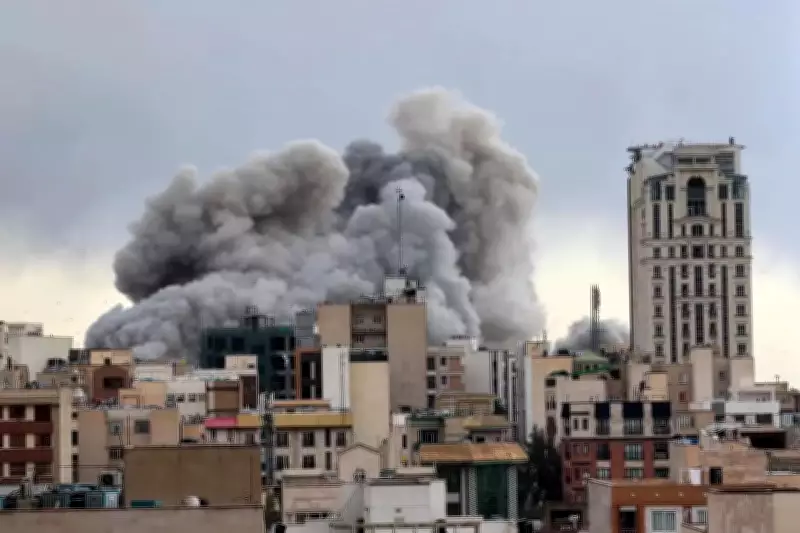
Simultaneously, residents of Tehran, Iran's capital, reported experiencing some of the conflict's "heaviest bombardment" overnight. Powerful explosions shook residential neighborhoods, causing widespread electricity outages across multiple parts of the city and plunging areas into darkness, according to firsthand accounts from the capital.

The convergence of these developments—the explicit threat to international corporate assets, the warning against economic targets, and the escalating kinetic warfare—paints a picture of a rapidly deteriorating security situation with potentially far-reaching consequences for global business operations and regional stability.





