

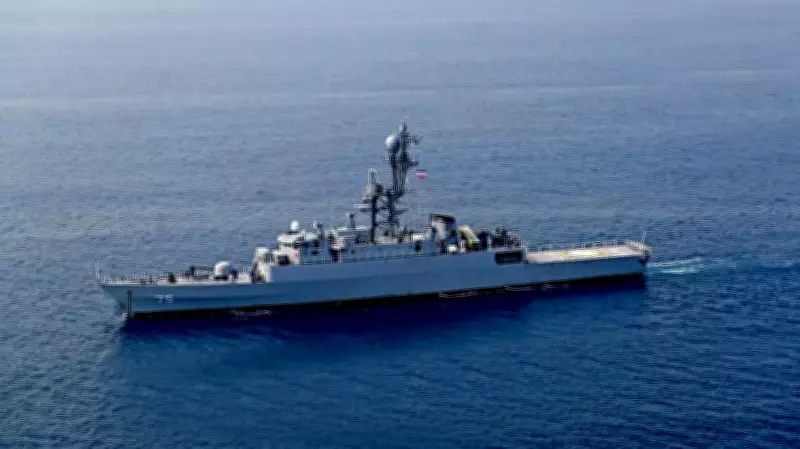
Iranian Sailor's Final Phone Call Reveals US Warnings Before Warship Sinking
In a poignant revelation from the recent naval confrontation, a sailor aboard the Iranian warship IRIS Dena made a final phone call to his father just minutes before the frigate was struck by a torpedo from a US submarine. According to a detailed report by Iran International, a Persian-language satellite TV channel and news network, the sailor disclosed that American forces had issued two explicit orders for the crew to abandon the vessel prior to the attack.
Commander's Defiance and Crew Dispute
Despite receiving these twin warnings from US forces, the commander of IRIS Dena reportedly refused to allow the crew to evacuate the ship. The report, citing a source close to the sailor's family, indicates that some crew members engaged in arguments with the commander over this decision. The sailor's father relayed that the 32 sailors who ultimately survived the attack were essentially those who managed to escape on lifeboats after heeding the US warnings, highlighting a critical moment of internal dissent aboard the frigate.
Conflicting Reports on Crew Numbers and Rescue Efforts
Initial accounts suggested there were 180 crew members on board IRIS Dena when it was targeted in the Indian Ocean off the Sri Lankan coast on March 4. However, Iranian Foreign Minister Seyed Abbas Araghchi later stated on social media platform X that the frigate carried 130 sailors. Upon receiving a distress signal, the Sri Lankan navy responded promptly but found the warship had already sunk, with 32 crew members floating on lifeboats in the high seas. The Lankan navy successfully rescued these survivors and brought them ashore.

In a related development, another Iranian naval vessel, IRIS Bushehr, with 208 crew members on board, sought and obtained refuge in Sri Lanka following the incident, adding to the complexity of the situation.
US Diplomatic Moves and Propaganda Concerns
According to an internal US State Department cable dated March 6, viewed by Reuters, Jayne Howell, the charge d'affaires at the US embassy in Colombo, has urged Sri Lankan authorities not to repatriate the 32 survivors from IRIS Dena or the 208 crew members from IRIS Bushehr, who are currently in Sri Lankan custody. The cable explicitly stated, "Sri Lankan authorities should minimise Iranian attempts to use the detainees for propaganda."
Howell also communicated to the Israeli ambassador to India and Sri Lanka that there were no plans to repatriate the crew to Iran. The envoy inquired whether there had been any engagement with the crew to encourage "defection," as noted in the cable, underscoring the geopolitical tensions surrounding the incident.
Broader Context of Regional Tensions
This event occurs against a backdrop of escalating tensions in the region, with updates on the Israel-Iran conflict and US military movements, including reports of a third US carrier en route. The incident highlights the volatile dynamics in the Indian Ocean and the intricate diplomatic maneuvers involving multiple nations, from Iran and the US to Sri Lanka and Israel.
The sinking of IRIS Dena not only marks a significant military engagement but also raises questions about command decisions, crew safety, and the humanitarian aspects of naval warfare, as families await news and nations navigate the fallout.






