

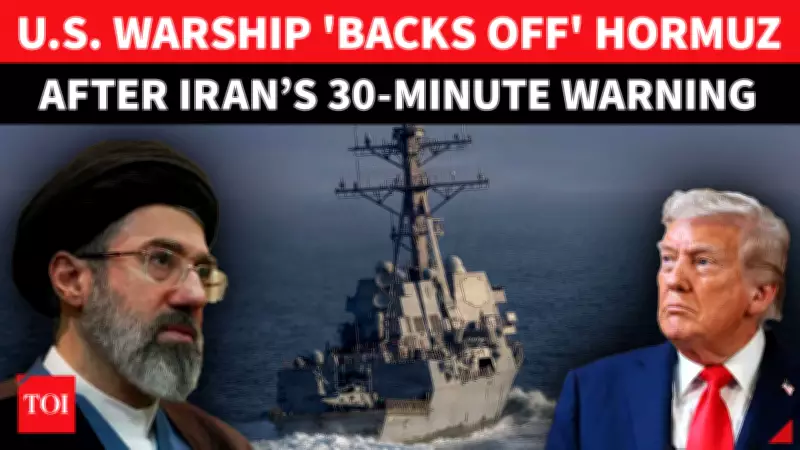
Iran's 30-Minute Ultimatum Forces US Destroyer to Abort Entry into Strait of Hormuz
A dramatic military confrontation unfolded in the strategic Strait of Hormuz, with reports indicating that a U.S. Navy destroyer was compelled to abort its planned entry after Iran issued a stark 30-minute ultimatum. According to sources, Tehran communicated through mediators that any American vessel attempting to traverse the strait would be targeted within half an hour, explicitly linking this aggressive posture to the ongoing high-stakes peace negotiations in Islamabad.
Conflicting Narratives Emerge Amid Heightened Tensions
Iranian authorities characterized their warning as a "firm response" to perceived provocations, underscoring their readiness to defend territorial waters. However, U.S. officials presented a contradictory version of events, asserting that multiple warships successfully crossed the strait without encountering any hostile actions. Iranian state media swiftly denied these American claims, further muddying the waters of an already volatile situation.
Political Context and Broader Implications
This incident occurred against the backdrop of former U.S. President Donald Trump's assertion that the United States had initiated operations to "clear the strait," a statement that amplified existing frictions. The episode starkly illustrates the fragile equilibrium between military brinkmanship and diplomatic efforts, particularly as peace talks in Islamabad aim to de-escalate regional tensions. Analysts note that such standoffs risk derailing delicate negotiations and could have far-reaching consequences for global oil shipping routes, given the strait's critical role in international trade.

Additionally, the situation is compounded by reports of over 3,200 ships and 2,000 seafarers currently stranded in the Hormuz area, highlighting a stark disconnect between Iran's public claims of reopening the waterway and the on-ground reality of maritime disruptions. This development adds another layer of complexity to an already tense geopolitical landscape, where miscalculations could swiftly escalate into broader conflict.






