

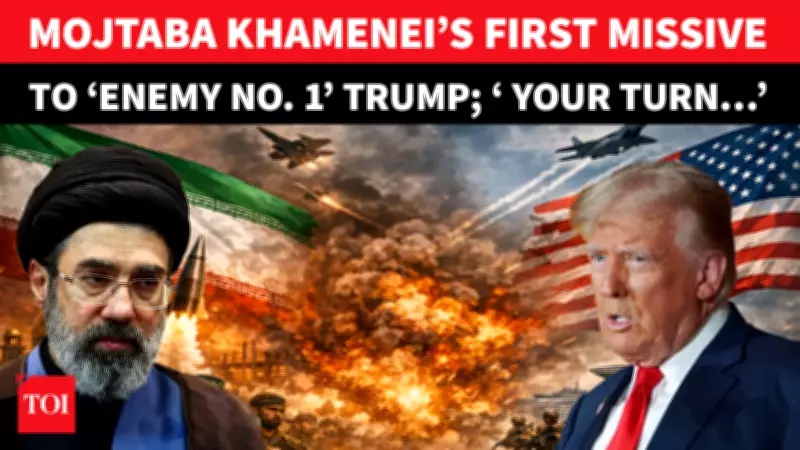
Iran's New Supreme Leader Takes Firm Stance on Strait of Hormuz Amid Escalating Gulf Conflict
In a stark declaration that has sent shockwaves through global energy markets and diplomatic circles, Iran's newly appointed Supreme Leader Mojtaba Khamenei has vowed to keep the Strait of Hormuz closed, labeling the vital shipping corridor a strategic "tool of pressure" in the ongoing war with the United States and Israel. The chilling pledge was delivered via a message broadcast on Iranian state television, marking a significant escalation in regional tensions.
A Direct Warning to the United States and Its Allies
Khamenei's statement included a pointed warning directed at former U.S. President Donald Trump and American military installations across the Middle East. He explicitly stated that U.S. bases in the region could face retaliatory attacks as Iran seeks to avenge casualties suffered during the conflict. This threat underscores Tehran's aggressive posture and its willingness to target American assets directly.
Escalating Attacks on Maritime Traffic
The Supreme Leader's announcement comes against a backdrop of intensifying hostilities in the Gulf waters. Recent weeks have witnessed a series of assaults on cargo vessels, including:

- Multiple strikes on oil tankers navigating near the strait.
- An attack on a Chinese-flagged ship in proximity to the Hormuz chokepoint.
- A marked increase in drone and missile activity targeting commercial shipping lanes.
These incidents have severely disrupted maritime trade, raising alarms among international shipping companies and energy exporters reliant on this crucial passage.
Global Economic Repercussions and Market Turmoil
The closure of the Strait of Hormuz—a narrow channel through which approximately one-fifth of the world's oil supply transits—has triggered profound economic concerns. With oil prices surging toward $100 per barrel, financial markets worldwide are bracing for what energy officials describe as the largest supply disruption in modern history. The potential long-term impact on global inflation, trade balances, and geopolitical stability cannot be overstated.
Strategic Implications and Regional Dynamics
Khamenei's rhetoric positions the Strait of Hormuz not merely as a geographic feature but as a central bargaining chip in Iran's confrontation with Western powers. By weaponizing this maritime artery, Tehran aims to exert maximum pressure on the U.S. and its allies, including Israel. Analysts suggest this move could:
- Further complicate diplomatic efforts to de-escalate the Gulf war.
- Prompt retaliatory measures from the United States and coalition forces.
- Alter the strategic calculus of neighboring Gulf states dependent on oil exports.
The situation remains fluid, with international observers closely monitoring developments for signs of either escalation or potential dialogue. As tensions mount, the world watches anxiously, aware that the stability of global energy markets hangs in the balance.






