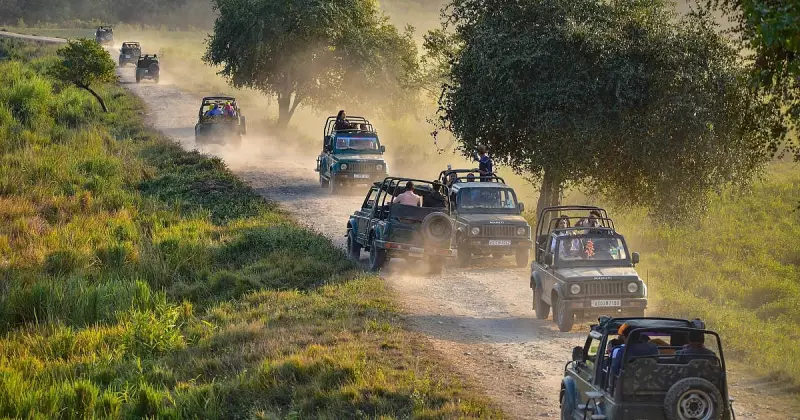
Kaziranga National Park in Assam is taking a major step to protect its wildlife. The park is constructing an elevated corridor. This corridor will allow animals to move safely across a busy highway.
Highway Deaths Spark Urgent Action
A recent study by Gauhati University revealed shocking numbers. From 2016 to 2017, vehicle collisions on the highway killed 6,036 animals. These animals belonged to 53 different species. This high death toll highlighted the urgent need for a solution.
How the Elevated Corridor Works
The new corridor will function as a dedicated bridge for wildlife. It will stretch over the highway, providing a safe passage for animals. This design prevents direct contact between animals and vehicles. The corridor mimics natural terrain to encourage animal use.

Park officials emphasize the corridor's dual purpose. It aims to enhance connectivity within the park's ecosystem. At the same time, it ensures uninterrupted traffic flow on the highway. This balance is crucial for both conservation and local transportation.
Long-Term Benefits for Conservation
Experts believe this initiative will have significant positive impacts. Reducing animal deaths on the highway will help maintain healthy population numbers. It will also prevent habitat fragmentation caused by the road.
The corridor supports the movement of various species, including endangered ones. Kaziranga is home to the one-horned rhinoceros, tigers, and elephants. Safe passage is vital for their survival and genetic diversity.
Local communities and conservationists have welcomed the project. They see it as a proactive measure to address a long-standing issue. The corridor represents a modern approach to wildlife management in India.
Construction is underway with careful planning to minimize disruption. Authorities are monitoring the site to ensure compliance with environmental standards. The project aligns with national efforts to protect India's rich biodiversity.
Once completed, the corridor will serve as a model for other regions. It demonstrates how infrastructure can coexist with wildlife conservation. This innovative solution could inspire similar projects across the country.