

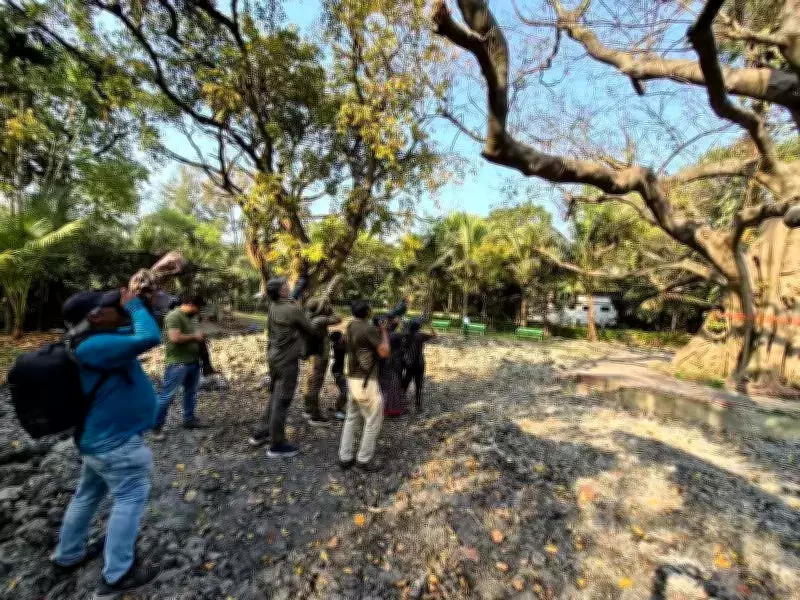
Kolkata's Rabindra Sarobar Sparks Heated Debate Over Disabled Play Area vs. Biodiversity Preservation
A contentious development project at Kolkata's iconic Rabindra Sarobar complex has ignited a fierce debate between human welfare advocates and environmental conservationists. The Lions Club initiative to transform a section of the Lions Safari Park into a specialized play area for children with disabilities is now facing staunch opposition from naturalists who argue the construction will irreparably damage one of the city's most vital biodiversity hotspots.
The Development Project and Its Humanitarian Intent
At the heart of the controversy lies the excavation of approximately 13,000 square feet of land within Safari Park, previously utilized by the Laughing Club. Safari Park president S S Rajput has confirmed the organization is proceeding with plans to create an accessible play zone specifically designed for children with disabilities, including those with spastic conditions and autism spectrum disorders.
The project involves paving the area with specialized tiles to ensure wheelchair accessibility, with an estimated investment ranging between 15 to 20 lakh rupees. Rajput emphasized the humanitarian aspect of the initiative, stating that disabled individuals currently lack adequate access to recreational spaces like Rabindra Sarobar. "For us, humans are a priority, birds come later," he asserted, framing the debate as a matter of social responsibility versus environmental concern.

Environmental Concerns and Biodiversity Impact
Birders and naturalists have raised urgent alarms about the ecological consequences of paving the soft ground. They argue that this action would systematically dismantle crucial micro-habitats that sustain the park's diverse avian and reptilian populations. The recent sighting of a slaty-backed flycatcher—a rare migratory bird with only a few recorded instances in Kolkata—has underscored the area's significance as a critical biodiversity hub.
Seasoned birder Tirthankar Roychowdhury explained the ecological chain reaction: "The leaf litter and soft topsoil are essential for the survival of skinks, earthworms, moths and various insects, which serve as primary food sources for ground-foraging birds." He emphasized that concrete surfaces would eliminate these food sources, rendering the area uninhabitable for numerous bird species.
Naturalist Arjan Basu Roy identified specific bird species that would be affected, including the Indian pitta, orange-headed thrush, scaly thrush, and Indian blue robin—all of which rely on unpaved ground for foraging. He further highlighted the importance of wild mushrooms that grow during monsoon seasons, noting their crucial role in nutrient cycling and soil health maintenance. "This entire ecological phenomenon and its benefits would be permanently lost if the ground is paved," he warned.
The Broader Ecological Context
The Rabindra Sarobar complex represents an extraordinary urban ecosystem, supporting an impressive 213 bird species, over 70 butterfly species, and 25 odonate species. Safari Park serves as the core of this remarkable biodiversity. Birder Saptarshi Chatterjee predicted that paving would lead to localized declines in butterfly populations, further diminishing the area's ecological richness.
Birders have presented a compelling counter-argument to the human-first perspective. Tarun P Lala, another passionate birder, framed the issue in broader ecological terms: "The Lake is not merely a recreational zone. It is a living ecosystem within our city. The migratory birds that visit each year are silent ambassadors of global ecology. We must pause, reassess, and protect what remains—before the flight paths grow empty."
This perspective emphasizes that protecting natural habitats ultimately serves human interests by preserving the ecosystems upon which future generations depend. As one birder succinctly stated: "To protect the future of our children, we must first protect the earth beneath their feet."

The Ongoing Debate and Its Implications
The conflict at Rabindra Sarobar represents a microcosm of larger global debates about urban development, accessibility, and environmental preservation. Both sides present valid concerns: the need for inclusive recreational spaces for disabled individuals versus the imperative to protect fragile urban ecosystems that support remarkable biodiversity.
As discussions continue, stakeholders must navigate complex questions about sustainable development, balanced priorities, and innovative solutions that might accommodate both human needs and environmental preservation. The outcome of this particular debate could set important precedents for how Kolkata—and other urban centers—approach similar conflicts between development projects and ecological conservation in the future.





