

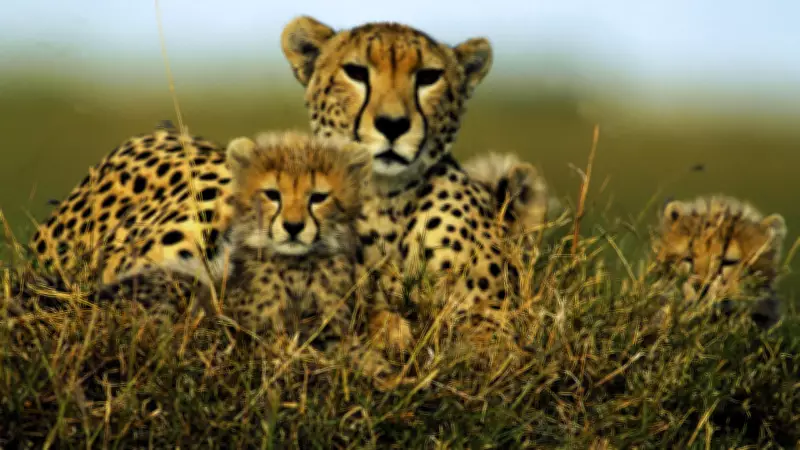
Kuno National Park: Where Cheetahs Are Rewriting India's Wildlife History
Kuno National Park, originally established as Kuno Palpur Wildlife Sanctuary, spans across the Sheopur and Shivpuri districts of Madhya Pradesh, encompassing approximately 74,200 hectares of diverse terrain. The park derives its name from the meandering Kuno River that flows through the landscape, providing vital sustenance to its forests and grasslands. Today, this protected area stands as a groundbreaking location where conservation history is being actively rewritten, with cheetahs flourishing once again on Indian soil.
A Landscape Built for Speed and Survival
Located in the Sheopur district of Madhya Pradesh, Kuno National Park presents a captivating mosaic of dry deciduous forests, expansive grasslands, and riverine ecosystems shaped by the Kuno River. Unlike India's dense tiger reserves, Kuno offers an open and airy landscape specifically suited for speed-oriented predators. This unique environment has become the stage for one of modern India's most ambitious conservation experiments.
The Cheetah Reintroduction: From Extinction to Revival
India witnessed the disappearance of its last wild cheetahs in 1952, leaving the species confined to history books for decades. This changed dramatically when cheetahs were translocated from Namibia and South Africa under a comprehensive conservation program championed by Prime Minister Narendra Modi's leadership. The primary objective: reintroduce the species to suitable Indian grasslands and restore a crucial missing ecological link.

The initial years presented significant challenges, including health setbacks, adaptation struggles, and intensive monitoring requirements. However, by 2026, Kuno National Park is demonstrating remarkable progress with stable breeding patterns emerging as a key success indicator.
Conservation Milestones: Successful Litters Signal Adaptation
On February 18, 2026, Madhya Pradesh Chief Minister Mohan Yadav announced that Gamini, a South African cheetah, had given birth to three healthy cubs within Kuno's protected boundaries. This development elevated India's total cheetah population to 38 individuals. Just days earlier, on February 7, 2026, Aasha, a Namibian cheetah and now a proud second-time mother, delivered five cubs.
These recent births have increased the number of Indian-born surviving cubs to 24. For conservation scientists and wildlife experts, this represents far more than positive news—it serves as concrete evidence that the translocated animals are successfully adapting, breeding, and surviving in Indian environmental conditions.
The Kuno Safari Experience: Witnessing Conservation in Action
A safari at Kuno National Park emphasizes horizon scanning and patient observation. Cheetahs, known for their rapid movements, often appear as distinctive silhouettes against the open landscape. Visitors may also encounter various supporting species including:
- Chital (spotted deer)
- Nilgai (blue bull antelope)
- Wild boar
- Langurs
- Leopards
These animals collectively form the ecological environment that sustains the reintroduced big cats.
Planning Your Visit: Essential Information for Responsible Tourism
Best time to visit: October through March offers optimal weather conditions
Period to avoid: Peak summer months from April to June when temperatures become excessively hot
Safari timing: Early morning excursions provide ideal opportunities for observing wildlife activity
Access routes: Road travel from Gwalior or Shivpuri provides convenient park access
Accommodation options: Modest lodges and eco-resorts around Sheopur district, with infrastructure gradually expanding though still limited
Permit requirements: Advance safari booking strongly recommended due to limited availability
As a sensitive conservation zone, Kuno National Park maintains strict regulations. Off-route driving, loud disturbances, and crowding are strictly prohibited. The cheetah reintroduction project remains fragile, making responsible tourism practices critically important for its continued success.

Why Kuno's Success Matters Globally
While the number 38 might appear modest in global wildlife conservation terms, its significance becomes profound when considering India had zero wild cheetahs for over seventy years. Twenty-four Indian-born surviving cubs represent a remarkable achievement. The two recent births in February 2026 alone—five from Aasha and three from Gamini—stand as important milestones in a conservation comeback story that visitors can now witness firsthand.
The atmosphere at Kuno National Park today carries a sense of quiet optimism, markedly different from the uncertainty that accompanied its reopening just a few years earlier. For travelers planning a 2026 visit, this represents more than a typical safari booking—it offers an opportunity to step into a living conservation laboratory where history continues to be rewritten with each successful birth.





