

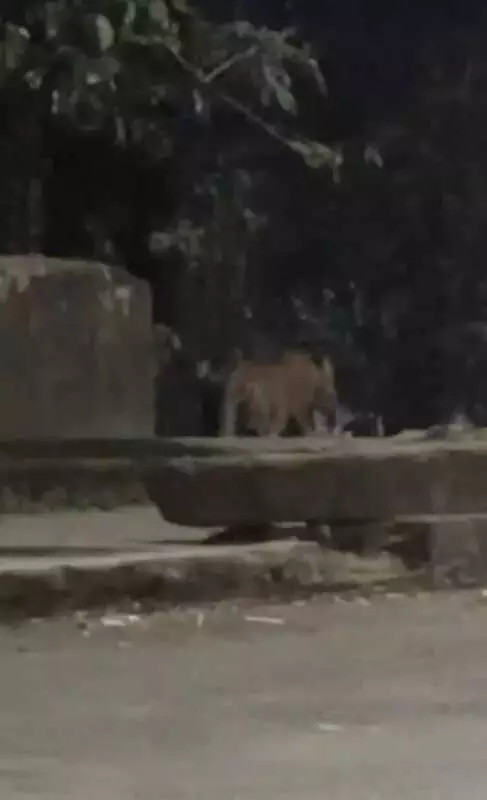
A leopard was confirmed to be roaming near the NDA–Pashan main road in Pune in the early hours of Monday, December 2, sparking alert and precautionary measures by authorities. The sighting, captured on video by a resident just after midnight, adds to a growing number of similar reports from across the city in recent weeks.
Midnight Sighting and Official Response
The incident occurred shortly after 12:30 AM on Monday. Bavdhan resident Bhushan Inamdar spotted the big cat while driving home. "I saw the leopard alongside the footpath near D-Palace," Inamdar told TOI. He recorded the animal, which appeared to be searching for something before crossing the road and heading towards the Bavdhan Van Udyan area.
Forest officials from the Paud range conducted a field verification after the video circulated rapidly on local WhatsApp groups. A senior forest official confirmed the sighting was genuine but could not confirm if it was the same leopard seen a week ago in Aundh's Sindh Society. "The NDA landscape itself supports multiple leopards, and the movement routes around the fringes often converge," the official stated.

As an immediate precaution, authorities have temporarily closed off Bavdhan Van Udyan. Range Forest Officer Pratap Jagtap explained that the hill patch near NDA connects to Vetal Tekdi, forming a known wildlife corridor. "We are assuming that the leopard may have come from that side," he said, adding that monitoring is ongoing.
Surge in Sightings and Possible Causes
This event is the latest in a series of leopard sightings reported from various Pune neighborhoods, including Aundh, Lohegaon, Hinjewadi, Bhugaon, Kolvan, and Girivan. Officials noted this level of activity is something they "have not seen earlier." The trend began earlier in 2025 with a sighting at Pune airport.
Experts link the spike to seasonal changes. "Sugarcane harvesting — now underway around Pune region — often pushes leopards out of dense fields where they hide, especially females with cubs," explained Pratap Jagtap. He added that some leopards could be dispersing from the Junnar–Shirur belt, where their population has increased.
An unnamed expert also suggested that a sharper winter could be modifying the animals' movement patterns. The natural hill and nullah corridors around Pune often merge, meaning sightings in different areas may or may not be of the same individual.
Precautions and Public Advisory
Following the sighting, a forest team conducted reconnaissance, spoke to residents, and identified locations for deploying trap cameras. Drones will be used for night patrolling to track the animal's movements.
A public advisory was issued by former corporator Dilip Vede-Patil, urging residents in the NDA–Pashan area to exercise caution. The advisory recommends:
- Avoiding unnecessary late-night outings.
- Keeping children and pets indoors.
- Remaining vigilant and contacting authorities with any information.
"Teams on ground are tracing the pugmarks of the leopard to track its route and presence," Vede-Patil said, urging people not to spread rumours.
Residents Take Extra Measures
Local residents have heightened their safety measures. Savita Shinde, a caretaker at Bavdhan Van Udyan, described hearing stray dogs bark incessantly between 2:30 AM and 4:00 AM on Monday. "I lock the door in a way that the children cannot open it at night. If we step out, we carry pots to clang loudly, to scare away animals," she said.
Tejas Baijal, an ENT surgeon living in Aamchi Colony next to Van Udyan, has stopped letting his pet dogs roam freely. "After the Monday sighting was reported, I got their premises checked as a precaution," he stated.
The owner of a local daycare centre in Bavdhan has also instructed staff to be on high alert, ensuring children's safety during playtime.
While the leopard's identity and exact path remain under investigation, the incident underscores the increasing interface between urban Pune and its wild inhabitants, prompting a community-wide call for cautious coexistence.






