

Lucknow Emerges Among World's Most Polluted Cities in 2025 Global Study
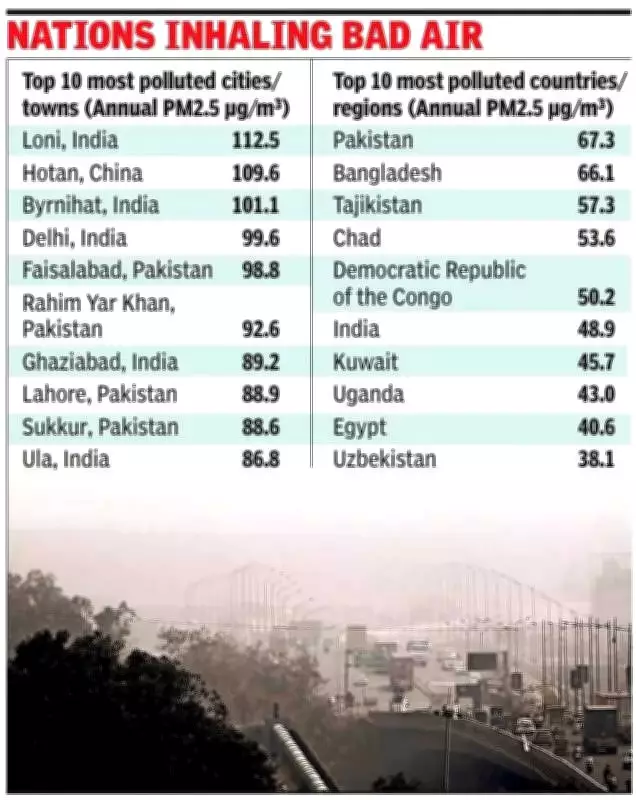
According to a comprehensive report released by Swiss air quality agency IQAir, Lucknow has been ranked as the 58th most polluted place in the world for the year 2025. The findings are based on an extensive analysis of air quality data from 9,446 cities and towns across 143 countries, utilizing information from over 40,000 monitoring stations and sensors worldwide.
Alarming Pollution Levels in the City of Nawabs
Within India, Lucknow stands at 34th position out of 259 locations included in the study. The city's annual average PM2.5 concentration was recorded at 54.2 micrograms per cubic meter (µg/m³). This measurement is particularly concerning as it represents nearly ten times the safe annual average limit of 5 µg/m³ established by the World Health Organization (WHO).
PM2.5 particles are extremely fine airborne particulates that can penetrate deep into human lungs and even enter the bloodstream. Prolonged exposure to these pollutants has been scientifically linked to numerous health complications including respiratory difficulties, aggravated asthma symptoms, and increased risks of cardiovascular diseases, strokes, and lung cancer. Vulnerable populations such as children, elderly individuals, and those with pre-existing health conditions face particularly severe consequences, with potential for long-term damage from early exposure.

Multiple Factors Driving Lucknow's Pollution Crisis
Environmental experts identify several everyday contributors to Lucknow's deteriorating air quality. These include poorly maintained roads with numerous potholes, excessive dust from various sources, high vehicle emissions, and inadequate management of construction and demolition waste. The cumulative effect of these factors creates a persistent pollution problem that affects millions of residents.
India's Widespread Pollution Challenge
The IQAir report reveals that India maintains its position as the sixth most severely affected country globally, with an alarming 64 cities and towns appearing among the world's 100 most polluted locations. The situation appears particularly dire in Uttar Pradesh, where multiple urban centers feature prominently on the pollution ranking list.
Loni, a town in Ghaziabad district, has earned the dubious distinction of being ranked as the most polluted place worldwide, with PM2.5 levels approximately twelve times higher than WHO safety guidelines. Other Uttar Pradesh cities showing critically high pollution levels include:
- Ghaziabad at 7th position globally
- Noida at 18th position
- Greater Noida following closely
- Muzaffarnagar at 29th
- Hapur at 34th
- Baghpat at 35th
- Bulandshahr at 36th
- Meerut at 42nd
- Khurja at 67th
- Kanpur at 146th
- Gorakhpur at 150th
Expert Analysis and Recommended Solutions
Professor Ved Prakash, a prominent pulmonologist from King George's Medical University, emphasized that the IQAir findings reflect growing international concern about air pollution's health impacts. He called for immediate and stringent action to address Lucknow's pollution crisis, specifically recommending strict adherence to National Green Tribunal regulations concerning dust control, waste burning restrictions, and emission standards.
The medical expert outlined several practical measures that could significantly improve air quality, including regular road sweeping operations, infrastructure improvements to reduce dust generation, comprehensive vehicle emission testing, expansion of public transportation systems, and proper management of construction and industrial waste.
Professor Prakash further noted that international organizations recognize air pollution as a critical global health threat. The World Economic Forum has identified it as a major environmental risk factor, while the United Nations has established clear connections between air pollution and serious health conditions including heart disease, stroke, and cancer. In response to this growing crisis, the World Health Assembly has established an ambitious target to reduce pollution-related deaths by fifty percent before 2040.

Understanding the Data Discrepancy
Environmental analysts point out that India's pollution rankings appear particularly severe because international standards are more stringent than domestic regulations. The Central Pollution Control Board of India permits higher PM2.5 concentration levels than those recommended by WHO guidelines, creating confusion when comparing global and local air quality data. This regulatory gap highlights the need for harmonized standards and clearer public communication about air pollution risks.





