

Ludhiana Food Vendors Struggle as Middle East Conflict Triggers LPG Cylinder Shortage
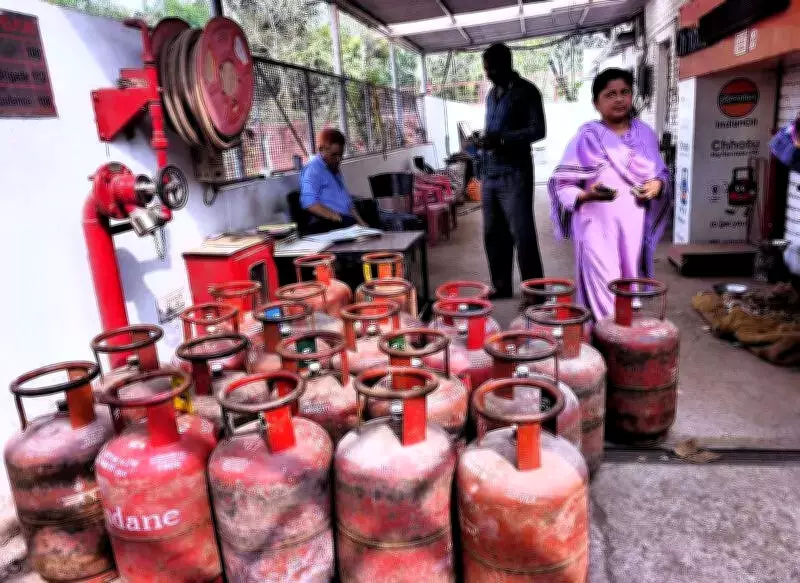
In Ludhiana, a city celebrated for its vibrant food culture, owners of eateries are grappling with an unprecedented crisis. The escalating conflict in the Middle East has swiftly led to severe disruptions, with food business owners confronting challenges they have never encountered before. A critical shortage of commercial LPG cylinders is threatening the survival of many small-scale food operations, compounding existing economic pressures.
Widespread Scarcity and Black Market Exploitation
Food joint owners report immense difficulties in sourcing commercial cylinders, forcing them to scour the city or resort to exorbitant black-market prices. Sham Kumar, who operates a small food outlet near Ghumar Mandi, expressed deep concern over sustaining his business. "My monthly rent is Rs 80,000, and I have four employees to pay. I've been quoted rates ranging from Rs 1,500 to Rs 3,500 per cylinder in the black market," he said. After considerable effort, he managed to procure two cylinders for Rs 2,100 each from Raikot but remains uncertain about future supply.
Rahul Sharma, another food joint owner, spent an entire morning searching fruitlessly across areas like College Road, Hambran Road, and Kitchlu Nagar. "I couldn't find a single cylinder at any price," he lamented, highlighting the pervasive nature of the shortage.

Menu Reductions and Operational Cuts
The cylinder scarcity has compelled many vendors to drastically reduce their offerings. Pooja, who runs a small eatery with her husband, has removed popular dishes like dosa and tawa roti from her menu due to their high gas consumption. "I have only one cylinder left, which will last about two more days. After that, I don't know what we'll do," she said, reflecting the dire situation.
Baljinder Kaur, operating a cart selling tikki, rajma, and kadhi chawal near Khalsa College, is down to her last cylinder after nearly one and a half years in business. "If the shortage continues, I might have to switch to selling juice instead, depending on available fuel. I am in a fix," she shared, underscoring the threat to livelihoods.
Economic Slowdown and Customer Impact
The shortage exacerbates an already challenging environment, with reduced customer footfall attributed to the economic slowdown linked to the Middle East conflict. Sham Kumar noted, "There was already less work because of the war situation, as people are worried about the future. Now this shortage has made things worse." Residents like Raman, who works in Feroze Gandhi Market, complain about dwindling affordable options. "I used to have bhatura or roti for lunch from a cart, but it's too expensive in dhabas or restaurants now," he said.
Exploring Alternatives and Rising Costs
Vendors are exploring alternative fuels, though options are limited. Vishal, who runs a tea stall near Gole Market, considers switching to coal-based stoves if LPG supplies don't improve. "If we don't get cylinders, coal may be the only option left," he stated. However, Devinder Singh, operating a fast-food joint in Model Town, pointed out that induction cooktops are impractical for large-scale tawa cooking. "If gas does not become available soon, we may have to shut down," he warned.
Additionally, prices of other inputs have surged. Jaskirat Singh, who runs a fast-food joint on Mundian Road, reported that disposable plates and bowls have increased from Rs 100 to Rs 150 per bundle, further straining businesses.
Industry on Shaky Ground
The street food and small eatery sector in Ludhiana is on precarious footing due to this multifaceted crisis. Key points include:

- Vendors face severe shortages of commercial LPG cylinders, with many unable to find supplies even at high black-market rates.
- Reduced customer footfall, driven by economic concerns from the Middle East conflict, compounds the financial strain.
- Many food joints have cut down menus, removing gas-intensive dishes like dosa and tawa roti.
- Several vendors are down to their last cylinder and fear closure if supply doesn't improve.
- Some are considering alternative fuels like coal, while others find induction cooktops unsuitable for their needs.
- Rising costs of other inputs, such as disposable items, add to the operational challenges.
- Customers lament the shrinking availability of affordable street-food options as vendors scale back or halt operations.
This situation highlights the broader economic ripple effects of geopolitical tensions, putting local livelihoods at risk in Ludhiana's bustling food scene.





