

Maharashtra Chief Minister Announces Ambitious 300 Crore Tree Plantation Drive
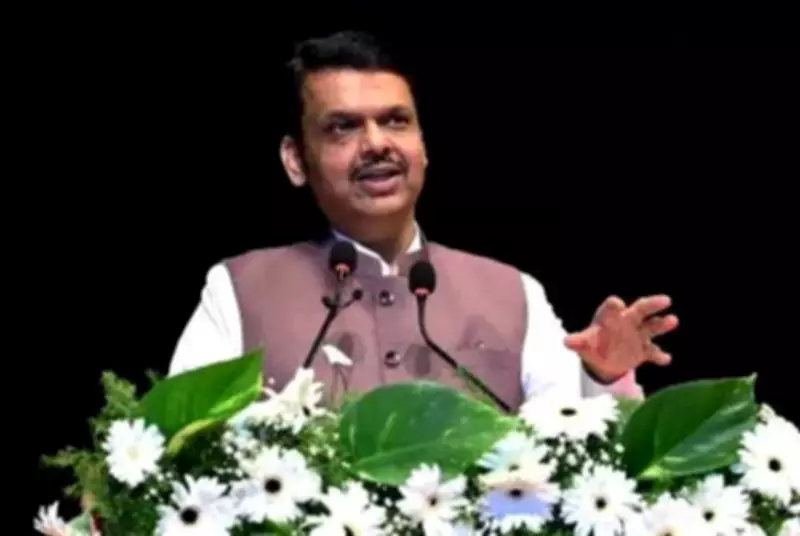
In a significant move to boost environmental sustainability, Maharashtra Chief Minister Devendra Fadnavis has announced a comprehensive mission-mode program aimed at planting an impressive 300 crore trees across the state between 2026 and 2031. The announcement was made during a high-level review meeting held at his official residence, Varsha, in Mumbai on Monday.
Three-Pronged Strategy for Green Transformation
CM Fadnavis outlined a three-pronged approach that integrates environmental conservation, climate change mitigation, and rural employment generation. This holistic strategy is designed to increase the state's tree cover to 33 per cent, addressing both ecological and socio-economic challenges simultaneously.
The Chief Minister emphasized the importance of involving experts, non-governmental organizations (NGOs), and startups in the plantation drive to ensure innovation and community participation. He directed that a proposal to establish the Green Maharashtra Authority be presented before the state cabinet, which will oversee the ambitious 300 Crore Tree Plantation Mission.

Priority Areas and Implementation Plan
Under the Green Maharashtra initiative, priority will be given to regions with low forest cover, such as Marathwada, to address ecological imbalances. The program will kick off with the planting of approximately 20 crore trees in the first year, contingent on sapling availability. The plantation will include species like bamboo and teak, chosen for their environmental and economic benefits.
To meet the massive sapling requirements, the government plans to leverage a collaborative network involving:
- Government nurseries
- Private nurseries
- Self-Help Groups (SHGs)
Targets will be set for sapling production to ensure a steady supply for the plantation drive.
Eco-Sensitive and Technologically Advanced Execution
During the meeting, MITRA CEO Pravin Pardeshi presented a detailed plan highlighting that plantation activities will be carried out exclusively with species suitable to local ecosystems, based on agro-climatic zones. This approach ensures ecological compatibility and enhances survival rates.
Importantly, the mission will not involve afforestation of grasslands and wetlands; instead, these areas will be restored to preserve their natural biodiversity. Implementation will be closely monitored through a digital and satellite-based real-time system, enabling transparent recording of plantation activities and tree survival rates.
Long-Term Maintenance and Monitoring
Regular monitoring of tree survival, forest development, and sapling growth will be conducted to ensure the success of the initiative. Maintenance for three to five years will be supported through schemes such as:
- MGNREGA (Mahatma Gandhi National Rural Employment Guarantee Act)
- CAMPA (Compensatory Afforestation Fund Management and Planning Authority)
- Agriculture Department programs
- Local self-government initiatives
Notably, the tree survival period has been extended to 10 years, underscoring the government's commitment to long-term environmental sustainability and accountability.
This ambitious plantation drive represents a major step forward in Maharashtra's efforts to combat climate change, enhance green cover, and generate rural employment, setting a benchmark for other states to follow.






