

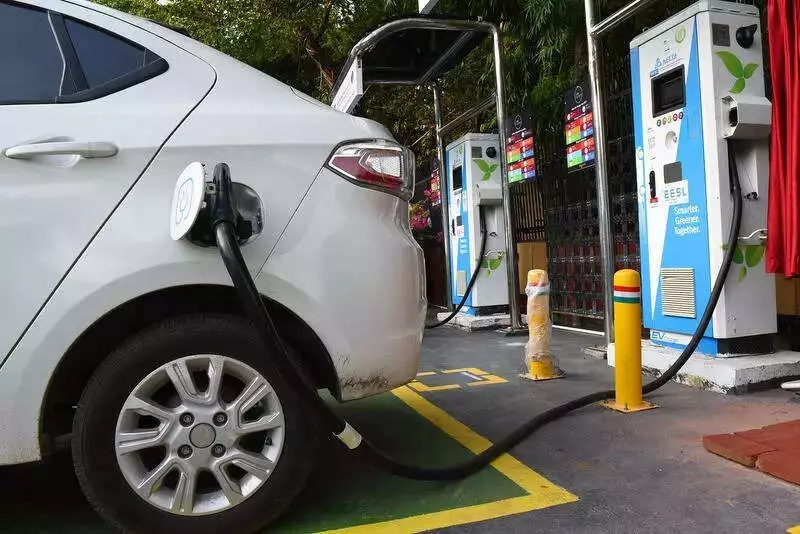
The Municipal Corporation of Delhi (MCD) has formally submitted a comprehensive action plan to Union Environment Minister Bhupender Yadav, outlining a multi-pronged strategy to control air pollution in the national capital by 2026. The blueprint focuses on electric vehicle infrastructure, waste management, and stringent dust control measures.
Core Components of the 2026 Pollution Control Plan
Presented by MCD Commissioner Ashwani Kumar, the plan hinges on several key interventions. A major thrust is on expanding the electric vehicle ecosystem, with a goal to increase the number of EV charging stations in Delhi from the current 422 to 994 by 2026. Public sector undertakings and power discoms have been tasked with establishing these stations at closed dhalaos, surface parking lots, and roadside locations over the first three quarters of the year.
Simultaneously, the civic body has set strict deadlines to tackle the perennial issue of landfill sites. The plan aims to flatten the Okhla and Bhalswa landfills by next year (2025), and the Ghazipur landfill by 2027. To bridge the gap in solid waste processing, MCD will construct new plants and enhance the capacity of existing ones.

Dust mitigation remains a priority, with the corporation planning to procure 14 mechanical road sweepers using funds from the National Clean Air Programme (NCAP). The Union Environment Ministry has specified that individual officers will be held responsible for the operation of these machines, which will be supported by GPS tracking.
Immediate Directives and Traffic Decongestion Focus
Following a high-level review meeting with officials from Delhi, Haryana, and Uttar Pradesh, Minister Yadav issued urgent instructions for visible air quality improvement across Delhi-NCR within one week. Authorities have been directed to immediately remove construction and demolition waste from roadsides, contain biomass burning, and strictly enforce bans on construction activities during high pollution periods.
Traffic congestion, identified as a major pollution contributor, is being addressed through a dual strategy of enforcement and infrastructure. The minister advocated for staggered office timings in commercial complexes, malls, and offices to reduce peak-hour gridlock. Gurgaon, Faridabad, Ghaziabad, and Noida have been told to fast-track integrated smart traffic management systems.
To ease congestion at the ground level, MCD has identified 71 critical congested points. Short-term action will clear encroachments at 38 locations. Long-term measures include creating parking sites at 19 spots, shifting markets at three locations, and removing encroachments at four others. A specific bottleneck caused by handcarts in Sadar Bazar has also been flagged for resolution.
Infrastructure Push and Accountability
As part of its decongestion and pollution control strategy, MCD plans a significant expansion of parking infrastructure. Currently managing 419 surface lots and 30 multi-level facilities, the corporation aims to construct 10 additional multi-level parking complexes in 2026. The identified locations will be sent to the Delhi government for approval once finalized.
Minister Yadav emphasized addressing industrial pollution and illegal parking through strict action while providing viable alternatives. Directions were issued to remove traffic-causing encroachments within 10 days, ensure pothole-free roads through annual maintenance contracts, and provide proper drainage to prevent road damage during monsoons.
To ensure sustained focus, action plans will be reviewed every month at the ministerial level starting January 2025. This move institutionalizes accountability and aims to prevent the dilution of efforts over time, marking a structured approach to Delhi's chronic air quality crisis.






