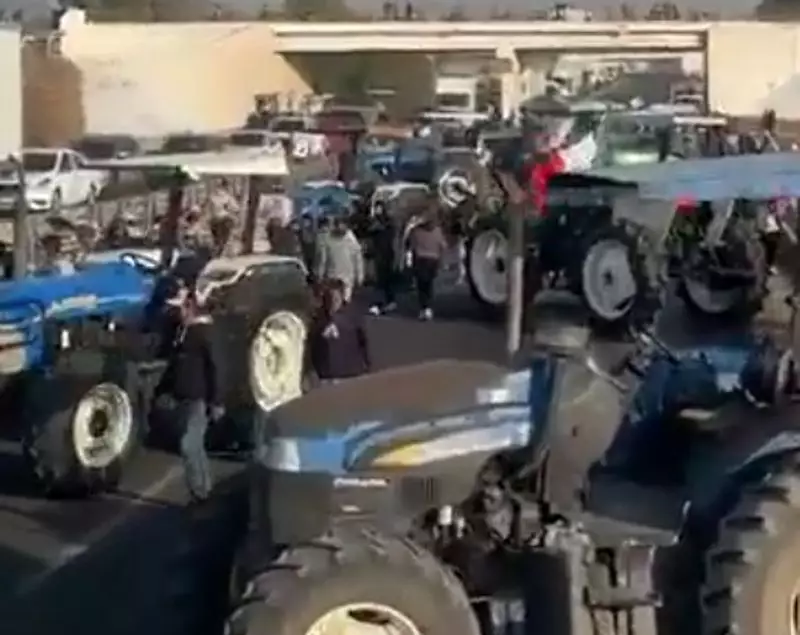
Hundreds of Mexican farmers, driving tractors and trucks, brought traffic to a standstill around the nation's Congress building in a powerful demonstration against a proposed new national water law. The dramatic protest, which saw major avenues blocked by agricultural machinery, unfolded as lawmakers inside debated the contentious legislation.
What Sparked the Massive Tractor Protest?
The core of the dispute is a draft National Water Law put forward by the administration of President Andrés Manuel López Obrador. While the government frames the law as a necessary step to modernize and regulate water usage in a country facing scarcity, farming communities view it with deep suspicion. Protesters, many from vital agricultural states, fear the legislation is a precursor to the privatization of water resources, which they argue would put control in the hands of large corporations and devastate small-scale agriculture.
The scene in Mexico City was one of determined resistance. Farmers from organizations like the National Peasant Confederation (CNC) maneuvered their tractors to choke key access points to the legislative palace. Their central demand was clear: the complete withdrawal of the proposed law. They argue that the current text fails to prioritize the water rights of rural and indigenous communities, instead favoring industrial and urban interests.

Government's Stance and Legislative Context
President López Obrador's government has consistently denied that the law aims to privatize water. Officials state the objective is to create a more robust and equitable legal framework to manage Mexico's water, a resource under increasing strain from climate change and overuse. The proposal seeks to update regulations that many agree are outdated.
However, trust in such assurances is low among the protesting campesinos. Historical experiences with resource management and a general skepticism towards political promises have fueled the widespread mobilization. The protest highlights a significant clash between federal policy ambitions and grassroots economic survival.
Implications and the Road Ahead
The tractor blockade is more than a symbolic gesture; it represents a major disruption and a potent political challenge. It forces lawmakers to confront the tangible anger of a sector that forms a crucial part of Mexico's economy and social fabric. The protest underscores the delicate balance required in crafting natural resource policy in a nation where water is becoming an increasingly contentious and valuable commodity.
The immediate consequence was a significant logistical disruption in the capital, drawing national media attention to the farmers' grievances. The long-term impact remains to be seen. The protest puts immense pressure on legislators to either amend the bill substantially, engage in genuine dialogue with farmer groups, or risk further and potentially escalating social unrest. The outcome will set a critical precedent for how Mexico manages its water resources and addresses the concerns of its agricultural heartland in the years to come.
This event is a stark reminder of the global tensions surrounding water rights. As countries worldwide grapple with scarcity, the conflict in Mexico between centralized regulatory efforts and local community control offers a closely watched case study. The farmers' decisive action with their tractors signals they are prepared for a long fight over this vital resource.