

Middle East Crisis Deepens as US-Israel Strikes on Iran Trigger Regional War
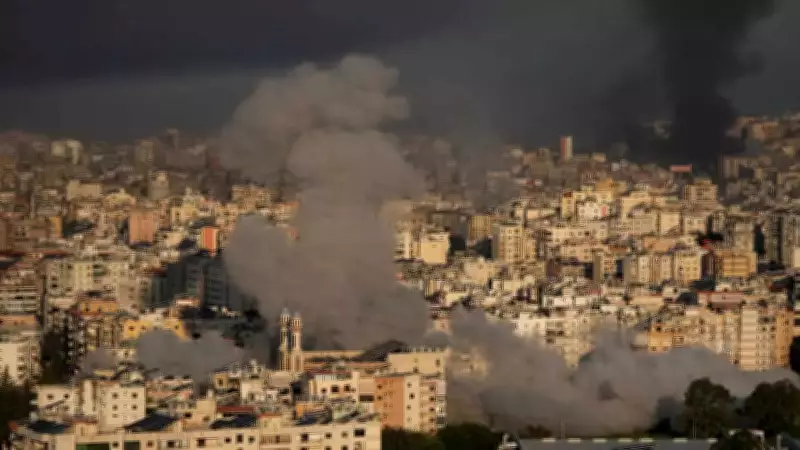
What began as meticulously coordinated military strikes by the United States and Israel targeting Iran's regime under Supreme Leader Ayatollah Ali Khamenei has rapidly escalated into a comprehensive regional conflict engulfing the Middle East. The skies across multiple nations are now filled with drones and missiles as Tehran demonstrates its ballistic capabilities through retaliatory strikes, directly challenging the military postures of both Israel and US President Donald Trump alongside his close ally.
Leadership Transition and Escalating Conflict
Following the death of Ayatollah Ali Khamenei, Iran's leadership moved swiftly to appoint his son, Mojtaba Khamenei, as the new Supreme Leader. Under his direction, Tehran has intensified retaliatory operations against American and Israeli military positions, expanding hostilities to include countries such as the United Arab Emirates and Bahrain. These attacks have severely undermined regional security perceptions, with major cities like Dubai and Abu Dhabi experiencing unprecedented threats to their previously stable environments.
Iran-backed Hezbollah has joined Tehran in launching assaults against Israel under Prime Minister Benjamin Netanyahu, further broadening the conflict's scope. Throughout the region, the ominous sounds of explosions and emergency sirens have become a grim new reality as rival powers intensify their struggle for dominance.

Oil Market Disruption and Global Response
The expanding conflict involving Iran has created significant disruptions to global oil supplies, halting tanker movements, damaging refineries, and raising investor concerns about escalating energy prices. In response, the International Energy Agency announced on Wednesday it would release 400 million barrels of emergency oil from member country reserves—the largest such release in the agency's history and representing a notable shift in governmental approaches to the crisis.
Since the conflict's inception on February 28 with joint US-Israeli strikes on Iran, oil tanker traffic through the critical Strait of Hormuz has nearly ceased. This vital maritime route typically transports approximately one-fifth of the world's daily oil supply. Major producers including Iraq, Kuwait, and the United Arab Emirates have reduced production as storage facilities reach capacity, while attacks on oil and gas infrastructure by Iran, Israel, and the United States have heightened fears of supply shortages.
Humanitarian Consequences and Regional Developments
The United Nations children's agency UNICEF has warned that intensifying conflict between the United States, Israel, and Iran is creating catastrophic conditions for millions of Middle Eastern children. Since February 28, over 1,100 children have been reported injured or killed in the violence, including 200 in Iran, 91 in Lebanon, four in Israel, and one in Kuwait. UNICEF anticipates these numbers will rise as fighting spreads, with millions of children missing school and hundreds of thousands displaced due to continuous bombardment.
In a tragic maritime incident, an Indian national was reportedly killed when Iran allegedly used a "suicide" boat to attack a US-owned oil tanker near Iraq. The Marshall Islands-flagged Safesea Vishnu was targeted near Khor Al Zubair port within Iraqi territorial waters, with the remaining 27 crew members rescued and taken to Basra.
Regional Security Measures and Diplomatic Responses
Israel has imposed strict restrictions on worshippers and access to Jerusalem's Old City and Al Aqsa Mosque, citing security concerns amid the ongoing war. Eight nations—Qatar, Jordan, Indonesia, Turkiye, Pakistan, Saudi Arabia, Egypt, and the United Arab Emirates—have jointly condemned the continued closure of the mosque during Ramadan for twelve consecutive days, calling the restrictions a flagrant violation of international law and the historical status quo.
Bahrain's interior ministry announced the arrest of four citizens accused of espionage activities with Iran's Revolutionary Guard Corps, alleging they photographed sensitive locations and transmitted information via encrypted software. Meanwhile, Iraqi armed group Saraya Awliya al-Dam claimed responsibility for seven attacks targeting US military bases across Iraq.

Expanding Conflict Zones and Leadership Developments
Iran escalated hostilities by targeting commercial shipping and Dubai International Airport on Wednesday, raising concerns about stability in the oil-rich Persian Gulf region. The United Arab Emirates activated air defense systems in response to incoming missile threats, advising residents to seek safe locations.
According to Israeli intelligence assessments, new Supreme Leader Ayatollah Mojtaba Khamenei may have been wounded during the initial strikes that killed his father, though conflicting reports about his condition have emerged. The 56-year-old leader has not appeared publicly since his appointment, with his wife also reported killed in the same attack.
Late Wednesday witnessed fresh explosions and anti-aircraft fire in Tehran, while Israel conducted strikes against Iran-backed Hezbollah targets in Lebanon. The UN refugee agency reports at least 759,000 people displaced within Lebanon, with over 92,000 fleeing to neighboring Syria.
In provocative rhetoric, senior military adviser Yahya Rahim Safavi strongly criticized US President Donald Trump as "the most corrupt and stupid American president" and "Satan himself," while reiterating Iran's longstanding threats against Israel's existence in the region.





