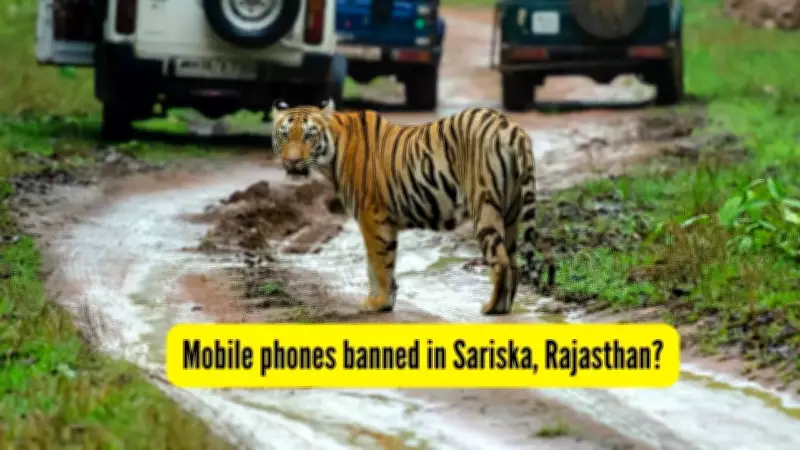
Ranthambore and Sariska Tiger Reserves Implement Mobile Phone Ban on Safaris
In a significant move to protect wildlife, Ranthambore National Park has recently enforced a ban on mobile phones during safaris, following directives from the Supreme Court. Reports suggest that Sariska Tiger Reserve, another key tiger habitat in Rajasthan, may soon adopt a similar prohibition, though official confirmation is pending as per media sources.
Ranthambore National Park: A Premier Wildlife Destination
Ranthambore National Park stands as one of India's most renowned wildlife attractions, drawing thousands of tourists annually who hope to spot Bengal tigers and other animals in their natural environment. While the park has long balanced tourism with conservation protocols, recent years have seen increased human interference, particularly due to mobile phone use for photography and content creation like reels. Forest officials highlight that phones cause noise and sudden movements during safaris, severely disturbing the jungle's inhabitants.
New Rules for Safari Participants
Under the new regulations, tourists must surrender their mobile phones to safari guides or drivers before embarking on a safari. The devices are securely stored in designated containers and returned only after the safari concludes. The ban prohibits all mobile phone activities, including photography, calls, and video recording, throughout the safari, applying to all participants across core tourism zones and routes.

Divisional Forest Officer (Tourism) Sanjeev Sharma emphasized, "The Supreme Court clearly held that the use of mobile phones within tourism zones of the core habitat of Tiger Reserves is not permitted. The order was issued to strictly implement these directions."
Potential Extension to Sariska Tiger Reserve
According to the official website of Ranthambore National Park, officials at Sariska Tiger Reserve have indicated that a similar mobile phone ban will be enforced there soon. Wildlife advocates continue to push for stricter enforcement of laws against crowding around animals, especially in areas like Jhalana Safari Reserve.
Why the Ban Was Necessary
The implementation of this ban addresses several critical issues:
- Disturbance to Wildlife: Mobile phones have led to frequent disruptions for forest dwellers, with ringing, loud conversations, and continuous video recording causing stress to sensitive species like tigers.
- Tourist Safety: With phones in hand, tourists often lean out of vehicles for close-up shots, ignoring safety risks. The ban encourages adherence to safety protocols and greater attention to guides.
- Reduced Vehicle Congestion: The ban aims to minimize the problem of multiple safari vehicles converging at one spot when an animal is sighted, improving overall safari management.
Strict Enforcement and Mixed Reactions
The mobile phone ban is enforced in compliance with Supreme Court guidelines. Violators may face penalties under wildlife protection laws, including fines and legal action, as warned by DFO Sharma. However, digital and DSLR cameras are still permitted inside the reserves. The decision has garnered mixed responses, with wildlife enthusiasts applauding the rule for conservation efforts, while some tourists express concerns about inconvenience.