

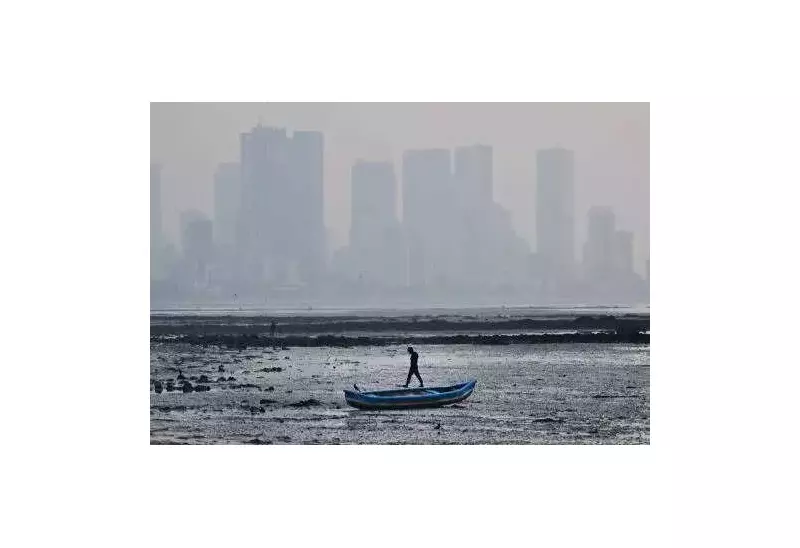
Mumbai's air quality took a turn for the worse this week, with the city's overall Air Quality Index (AQI) climbing to 133 on Thursday, placing it firmly in the 'moderate' or 'unsatisfactory' category. This marks a persistent decline from earlier in the week, highlighting a worrying trend for residents.
Worst-Affected Areas and Pollution Hotspots
The data revealed significant disparities across the city's neighbourhoods. The Bandra-Kurla Complex (BKC) emerged as the most polluted location, recording an AQI of 232, which falls into the 'poor' zone. It was not alone in experiencing severe pollution levels. Other areas with high readings included:
- Bandra East at 203 ('poor')
- Ghatkopar at 186 ('moderate')
- Shivaji Nagar at 185 ('moderate')
- Chembur at 180 ('moderate')
- Borivli at 174 ('moderate')
Pockets of Cleaner Air Amidst the Haze
Despite the overall decline, some parts of Mumbai continued to breathe relatively cleaner air. Worli maintained a 'satisfactory' AQI of 75, while Powai and Sion recorded readings of 87 and 93 respectively, also staying within the 'satisfactory' band. This contrast underscores the hyper-local nature of air pollution in the metropolitan region.

A Steady Downward Trend Since November
The recent figures are part of a gradual but consistent climb in pollution levels. The city's AQI has risen steadily from 114 on Monday to 138 by Thursday. This deterioration follows a brief respite on November 30, when Mumbai recorded its cleanest day in nearly a month with an AQI of 103. The recent low point was observed on November 26, when the air quality index dipped to 198, just shy of the 'poor' category.
The AQI scale classifies readings from 0-50 as 'good', 51-100 as 'satisfactory', 101-200 as 'moderate', 201-300 as 'poor', 301-400 as 'very poor', and anything above 400 as 'severe'. The current trajectory places several key business and residential hubs in the less healthy 'moderate' to 'poor' range, prompting concerns among citizens and environmental groups.






