Alarming Industrial Gas Levels Detected in Mumbai Residential Towers
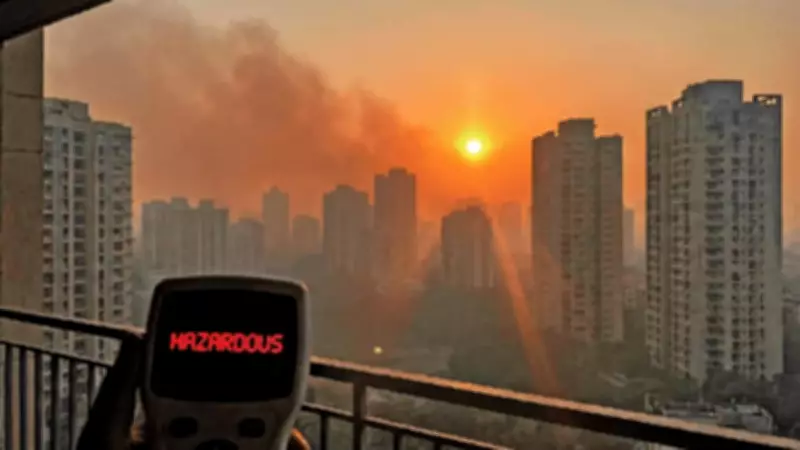
A groundbreaking citizen-led air quality study conducted in Mumbai's Wadala area has uncovered dangerously elevated levels of industrial gases within residential high-rise buildings, raising serious concerns about urban air pollution exposure at higher elevations. The research, conducted by the Mumbai Ecological Research and Analysis Group (MERAG), represents one of the first systematic attempts to monitor air quality specifically inside residential towers rather than relying solely on ground-level government monitoring stations.
Elevated Monitoring Reveals Critical Findings
Sensors were strategically installed on the 26th floor of one residential tower and the 13th floor of another building to accurately measure what residents are actually breathing at height. The monitoring equipment collected comprehensive data over an intensive eight-day period, with readings logged every fifteen minutes to capture detailed fluctuations throughout the day. The study tracked multiple pollutants including fine particulate matter (PM2.5), coarse particles (PM10), carbon monoxide, ammonia, hydrogen sulfide, sulfur dioxide, along with temperature and humidity parameters.
Shocking Concentration Levels Exceed Safety Limits
The findings revealed particularly alarming concentrations of several hazardous gases. Carbon monoxide levels reached 3 milligrams per cubic meter, representing a concerning 50% increase above the permissible safety limit. Ammonia concentrations showed periodic spikes reaching 700 micrograms per cubic meter against a standard threshold of 400 micrograms. Most dramatically, hydrogen sulfide concentrations climbed to nearly 2 parts per million, which is approximately fifteen times higher than the allowed safety limit for this toxic gas.

Understanding Pollution Sources and Transport
Researchers are currently examining the collected data alongside wind speed and wind direction measurements to better understand how industrial emissions may be traveling into residential complexes. Carbon monoxide is typically associated with combustion sources including vehicular exhaust systems, diesel generators, and various fuel burning processes. A source closely involved with the study emphasized that "most monitoring frameworks concentrate only on PM2.5 and PM10 particulate matter. Nobody has regularly examined industrial gases and emissions in residential areas", highlighting the innovative nature of this research approach.
Multiple Pollution Concerns Identified
While ammonia levels remained within limits on average, the study documented concerning periodic spikes that warrant further investigation. Hydrogen sulfide, which was found to be consistently above prescribed thresholds, is often associated with sewage systems, organic decomposition processes, and specific industrial emissions. The research also flagged significant particulate pollution concerns, with PM2.5 readings consistently exceeding safety limits and PM10 levels largely remaining above permissible thresholds throughout the monitoring period.
Research Methodology and Future Directions
This pioneering study represents a significant advancement in urban air quality monitoring by focusing specifically on residential environments at elevation. The next phase of research will concentrate on identifying precise pollution sources and developing targeted mitigation strategies. The findings underscore the urgent need for expanded air quality monitoring that includes industrial gases alongside traditional particulate measurements in residential neighborhoods across urban India.