

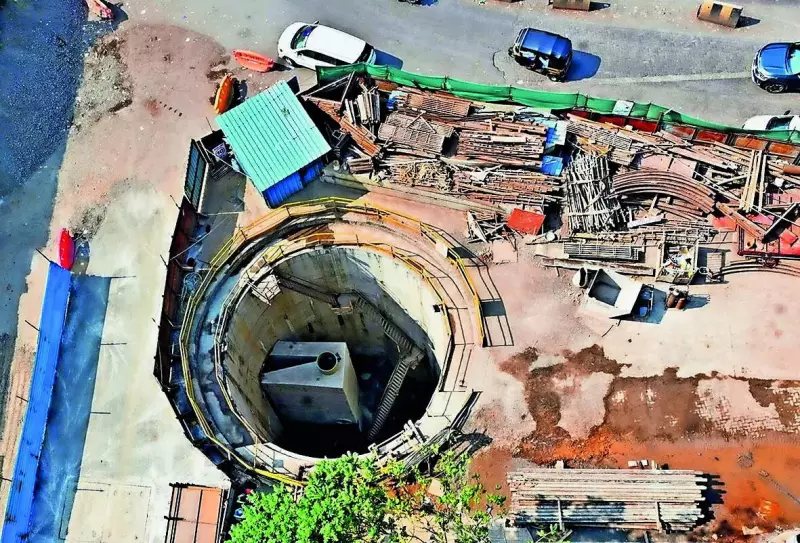
Mumbai has launched its most technologically advanced and costly attempt yet to rescue the heavily polluted Mithi River, centering on two mega-projects with a combined price tag of approximately Rs 2,100 crore. This latest push, coming after two decades and over Rs 2,200 crore already spent, aims to intercept the majority of the river's sewage and alleviate chronic flooding. However, experts caution that engineering marvels alone cannot revive the Mithi, and lasting success hinges on tackling encroachments and unchecked waste dumping along its banks.
The Rs 400 Crore Diversion Tunnel: A Sewage Interceptor
At the heart of the strategy is a 6.63-kilometre long diversion tunnel system, valued at over Rs 400 crore. The tunnel, with a diameter of 2.6 metres, runs fully bored between Bapat Nalla near the airport and Safed Pul Nalla at Saki Naka. Executed by the J Kumar-MEPL joint venture, the project began in October 2021 and is scheduled for completion by February 2026.
The system is designed to capture dry-weather sewage from two major nullahs. "The river's black, foul water today is because untreated sewage continues to flow directly into it," stated Abhijit Bangar, Additional Municipal Commissioner heading the storm-water drain department. The tunnel will divert an estimated 168 million litres per day (MLD) of sewage—more than half of the river's total estimated load of 309 MLD—to the upcoming Dharavi Wastewater Treatment Plant (WWTP).

A site engineer explained the process: "Incoming sewage is first screened to remove solid waste, then enters the 6.63km tunnel. By trapping 78 MLD from Bapat and 90 MLD from Safed Pul, we prevent nearly 60% of the river's sewage load from flowing downstream." However, Bangar emphasized that the tunnel's full impact will only be realized once the Dharavi WWTP becomes operational, likely by mid-2027.
The Rs 1,700 Crore Tidal-Stretch Overhaul
The second critical component is a massive Rs 1,700-crore package to overhaul the tidal-influenced stretch from CST Bridge at Kurla to Mahim Causeway, including the Vakola River. A special purpose vehicle led by Adani Transport, in partnership with Ashoka Buildcon and Akshaya Infraproject, is the lowest bidder for this complex work.
This phase includes a comprehensive set of interventions:
- Dry-weather flow interception systems.
- Gate and pump systems at 18 river outfalls to prevent tidal ingress into city drains.
- 8.3 km of bored sewer lines and 4.72 km of retaining walls.
- Construction of service roads and an 8 MLD pump station at Machchimaar Colony.
"These gates and pumps will prevent high-tide water from entering the city's drainage network and will pump out water during heavy rainfall, reducing flooding in low-lying areas," Bangar explained.
Encroachment: The Steepest Hurdle
The tidal-stretch project faces its most formidable challenge not in engineering, but in land acquisition and encroachment removal. The Brihanmumbai Municipal Corporation (BMC) has identified 1,990 affected structures along the project footprint. Major encroachment clusters exist near CST Bridge (900 structures), Vakola (100), Machchimaar Colony (319), and near Maharashtra Nature Park (671).
Nearly half of the work area for building retaining walls, service roads, and laying pipes lies under these encroachments. Their removal is critical for the project's physical execution and long-term efficacy.
A Future of Clean Water or More Money Down the Drain?
While the infrastructure projects represent a significant leap, environmental experts consistently warn that they are not a silver bullet. The revival of the Mithi is a multi-pronged battle. Engineering solutions must be coupled with stringent control of waste dumping, industrial effluents, and unregulated activities along the riverbanks.

Bangar expressed cautious optimism, linking visible improvement directly to project completion: "Once the interceptor network is fully in place and all sewage is diverted and treated, we will start seeing a noticeable change in the colour and quality of Mithi's water."
As Mumbai embarks on this fresh attempt costing another Rs 2,000 crore, the pressing question remains: Will this coordinated effort of tunnels, treatment plants, and tidal gates finally deliver the durable, ground-level change that has eluded the city for decades, or will it become another chapter of expensive lessons learned?





