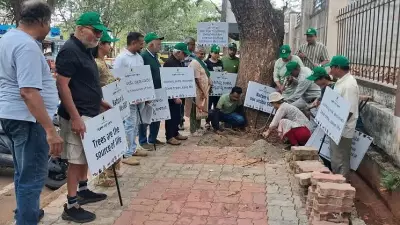
Nagaland Forest Department Urges Intensive Conservation Focus at Annual Workshop
The Nagaland Forest Department has strongly emphasized the critical need for focused and intensive conservation of forests across the state. This call to action was delivered during the annual review-cum-planning workshop of the Forest and Biodiversity Management in the Himalaya (Nagaland) Project, commonly known as FBMP. The significant event was held at the forest office complex in Kohima on Thursday, marking a pivotal moment for environmental stewardship in the region.
Workshop Aims to Review Progress and Chart Future Roadmap
The two-day workshop, which is co-financed by the Federal Republic of Germany through its development bank KfW, serves a dual purpose. Primarily, it aims to conduct a thorough review of the progress made under the FBMP initiative. Additionally, the gathering is focused on charting a detailed and actionable roadmap for the next phase of project implementation. This strategic planning is essential for ensuring the continuity and effectiveness of conservation efforts in Nagaland's diverse ecosystems.
FBMP: A Key Component of Indo-German Financial Cooperation
The Forest and Biodiversity Management in the Himalaya (Nagaland) Project is an integral part of the Government of Germany's financial cooperation with India. This partnership was formally signed in 2016, with a clear focus on promoting sustainable and effective management of forests and biodiversity within Nagaland. The project represents a long-term commitment to environmental preservation and ecological balance in the Himalayan region.

Principal Chief Conservator Stresses Institutionalization and Measurable Outcomes
Addressing the inaugural programme of the workshop, Vedpal Singh, the Principal Chief Conservator of Forests & Head of Forest Force for Nagaland, delivered a compelling address. He underscored the urgent necessity to institutionalize all interventions under the FBMP project. This institutionalization is crucial to ensure sustainability and continuity beyond the tenure of individual officers or project cycles.
Singh emphasized that review meetings must culminate in measurable and implementable decisions, moving beyond theoretical discussions to concrete actions. He issued a caution against spreading resources too thinly across numerous locations, which can dilute impact. Instead, he advocated for intensive interventions in selected, high-priority areas. This approach is designed to create demonstrative and replicable models that can be scaled up across the state.
Focus on Human-Wildlife Conflict Mitigation to Boost Public Engagement
Highlighting the importance of addressing visible and relatable issues, Singh called for a strengthened focus on components such as human-wildlife conflict mitigation. By tackling these pressing concerns, the forest department aims to enhance public engagement and garner stronger institutional support. This strategy recognizes that community involvement is key to the long-term success of conservation initiatives.
The workshop in Kohima has set a clear direction for Nagaland's forest conservation efforts, blending international cooperation with local actionable plans to safeguard the state's rich biodiversity for future generations.