

Nagpur Families Still Grapple with Pahalgam Terror Attack Trauma One Year Later
The wounds remain painfully raw, and haunting memories continue to torment survivors from Nagpur, exactly one year after a devastating terror attack in Pahalgam claimed more than twenty lives and left numerous individuals injured. For these families, the anniversary brings back vivid recollections of terror, survival against impossible odds, and psychological scars that refuse to heal with time.
The Roopchandani Family's Harrowing Escape
For Simran Roopchandani, the sound of sudden gunfire and the desperate scramble to escape still jolt her awake from sleep. Her family's survival came at a tremendous physical and emotional cost. Simran's husband, Tilak Roopchandani, vividly recalls they were at a small kiosk near the attack site when his wife intuitively suggested they leave immediately.
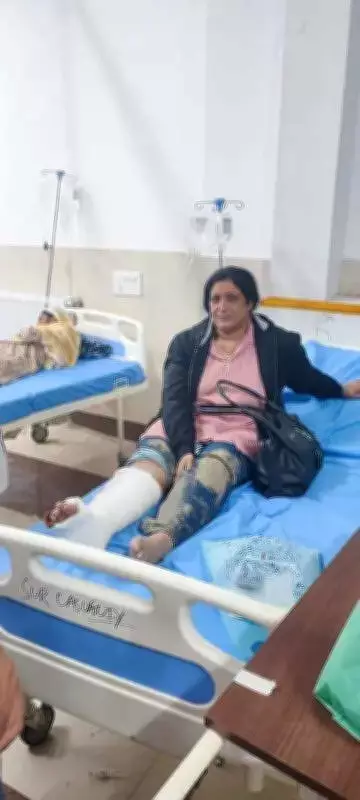
"Within moments of stepping away, gunfire erupted and bullets began hitting the exact site we had just left," Tilak recounted. As panic spread uncontrollably, the family ran for cover and jumped downhill, during which Simran suffered a severe leg fracture. Despite the painful injury and oozing blood, they had no choice but to keep moving forward.

Tilak and their teenage son, Garv, carried Simran on their shoulders across a treacherous forest stretch of nearly seven kilometers with bullets flying dangerously close behind them. In those critical life-or-death moments, Simran urged her son to run ahead and save himself, but Garv refused adamantly.
"Either we will leave together or we die together," Tilak recalled his son declaring, a statement that still triggers emotional goosebumps when remembered. The family eventually trekked to relative safety, but the psychological trauma refuses to diminish with time.
Simran, who underwent major surgery last year with rods inserted to stabilize multiple fractures, is now preparing for another medical procedure in May. "It takes immense courage to even recall April twenty-second," Tilak confessed, adding that the family consciously avoids discussing the incident as it inevitably brings back overwhelming distress.
Other Nagpur Survivors' Miracle Stories
Similar miraculous survival narratives continue to emerge from other Nagpur residents who narrowly escaped the attack. Rajendra Kawale, a sixty-year-old traveling with his family and young grandchildren, came within minutes of reaching the attack site when gunshots suddenly rang out.
"Our driver, Javed, immediately instructed us to take a rapid U-turn. Suddenly, it transformed into a war-like situation," he described, recalling scenes of armed forces rushing in and tourists scrambling desperately for cover. Kawale believes a brief, seemingly insignificant delay in their journey ultimately saved their lives.
"Had we not stopped earlier to purchase dry fruits, we would have been at the exact spot and possibly dead," he reflected soberly. Their return journey proved equally harrowing, with curfew restrictions and security curbs along the highway extending their travel time to nearly eighteen hours to reach Jammu.
"I still remember my wife and daughter-in-law shivering uncontrollably, and my grandsons utterly terrified. It was nothing short of a miracle that we survived," Kawale emphasized.
Deeply Personal Trauma and Lasting Impacts
For Pruthviraj Waghmare, the trauma carried deeply personal dimensions. His family had descended from Baisaran barely thirty minutes before the attack occurred. "The same 'pittu' who carried my daughter safely went back up the mountain. I fear he never returned," he shared with evident emotion.
The terrifying experience has left a permanent impact on his family's psyche and behavior. "They absolutely refuse to travel north after what they endured," he added, highlighting how trauma reshapes everyday decisions.
Other survivors recount similar distressing experiences. Raj Dekate was among those stranded for more than thirty-five hours at a bus stop near Srinagar without food, leaving them completely exhausted and profoundly anxious.

Similarly, a group of fifteen Nagpur tourists, including Satish Ingle who had visited Baisaran Valley just one day before the attack, were forced to abruptly cut short their trip amid rising panic. They encountered hotels at full capacity and severe movement restrictions.
Their driver's attempt to transport them to a safer location was stopped by the Army due to urgent security concerns, pushing them to seek last-minute shelter at a petrol pump and a nearby Parshuram temple, where compassionate locals stepped in with essential food, rest, and medical assistance.
The Silent Aftermath Continues
While normalcy has gradually returned to Kashmir's tourist circuits, for those who lived through the horrific attack, the invisible scars remain deeply embedded. Their powerful accounts underline not just the immediate horror of that fateful day, but the silent, prolonged aftermath that continues long after news headlines have inevitably moved on to other stories.
The psychological toll, physical injuries, and altered lives of Nagpur's Pahalgam survivors serve as poignant reminders of terrorism's enduring human cost, one year after bullets shattered what should have been a peaceful vacation in paradise.





