

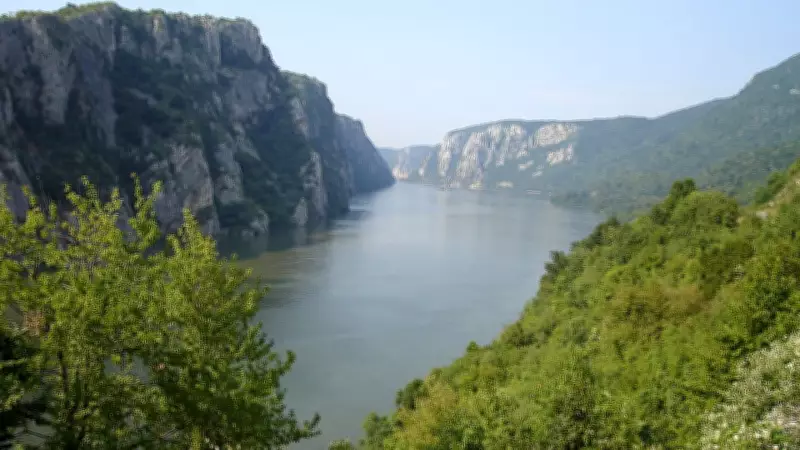
NASA Satellite Imagery Reveals Island Swallowed by Danube Dam Reservoir
For decades, NASA has enabled scientists worldwide to observe Earth with unprecedented precision, detecting changes invisible from the ground. Through satellite technology, researchers monitor coastal shifts, melting ice caps, and even subtle water level increases in reservoirs. A recent focus on Europe's Iron Gate Dam uncovered a startling development: an island has been completely submerged by rising reservoir waters, a direct consequence of human engineering.
Iron Gate Dam and River Control on the Danube
Among the world's many hydroelectric facilities, the Iron Gate Dam stands on the Danube River between Romania and Serbia. Constructed primarily for energy generation, waterway improvement, and flow regulation, this massive project has significantly altered the natural landscape. According to NASA Earth Observatory data, while dams are crucial for electricity and water management, they inevitably cause widespread ecosystem changes and displacement. In this case, reservoir formation led to a gradual, persistent rise in water levels over years.
NASA Satellite Imagery Reveals the Disappearance
NASA researchers used satellite observations to document this landscape evolution. What initially appeared as a small island vanished entirely as reservoir waters encroached. A NASA-sponsored study titled 'The impact of the Danube Iron Gate Dam on heavy metal storage and sediment flux within the reservoir' emphasizes that satellite imagery allows accurate tracking of environmental transformations. Scientists note that reservoir expansion can progressively inundate land, with these changes often going unnoticed without remote sensing technology.

This process illustrates that environmental impacts from infrastructure development are not always immediate; they can unfold gradually over many years, requiring long-term monitoring to fully comprehend.
Environmental Impact of a Submerged Island
The loss of an island extends beyond aesthetic concerns to profound ecological consequences. Land-based habitats transform into aquatic environments, forcing plants and animals to adapt, migrate, or face extinction. The United Nations Environment Programme warns that such disruptions can imbalance biodiversity and ecosystem stability. Additionally, submerged vegetation decomposes, releasing methane and other gases that contribute to climate change, with effects radiating beyond the immediate project area.
Human activities in these contexts can also destroy cultural heritage sites and inflict economic hardships on local communities, as flooding from dam operations disrupts livelihoods. The study highlights that affected populations often endure significant challenges due to these environmental shifts.
A Stark Reminder of Human Impact on Nature
The submergence of the island near the Iron Gate Dam, captured by NASA, serves as a poignant example of the complex interplay between development and conservation. While dams are vital for energy production and water storage, their environmental repercussions must be carefully considered. NASA's observations transcend mere scientific data; they narrate a story of progress, its consequences, and the slow, inevitable sinking of land beneath water, reminding us of our enduring footprint on the planet.






