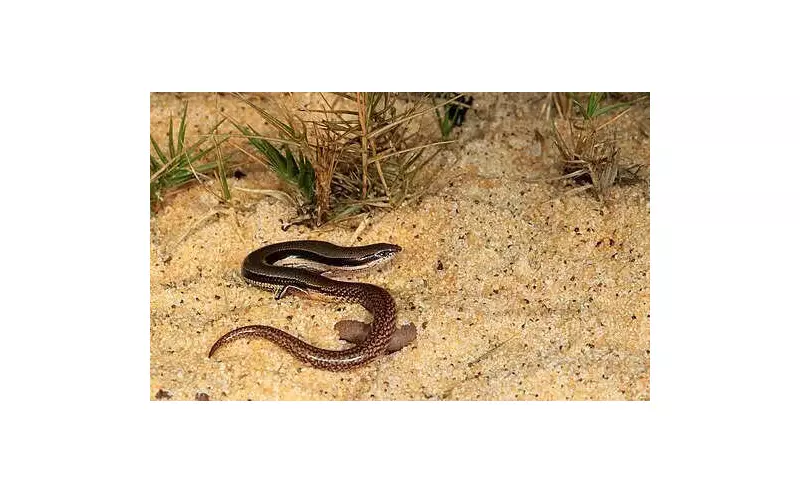
New Lizard Species Emerges from Australia's Underexplored Gulf Region
Researchers working in northern Australia have made an exciting biological discovery. They identified a previously unknown species of slider skink in the Gulf of Carpentaria. This region has received relatively little scientific study compared to other parts of the country.
A Rare Find in Remote Territory
The small lizard belongs to a group known for subtle physical differences and highly localized ranges. Scientists found the specimens during surveys conducted a decade apart. This discovery adds to growing evidence that large parts of Australia's tropical north still hold undocumented wildlife.
Researchers say the find underlines the importance of long-term fieldwork in remote landscapes. In such areas, rare species can easily be overlooked. It also draws attention to conservation areas that quietly protect biodiversity without attracting much public notice.

Naming and Physical Characteristics
The new species has been named Lerista munuwajarlu. The name draws on the Garrwa language, with munuwa meaning 'no' and jarlu meaning 'arm'. This name reflects the skink's reduced limbs, a common feature in slider skinks. Its common name is the Gulf Coastal Slider.
Both known individuals were found at the Pungalina Seven Emu Wildlife Sanctuary in the Gulf of Carpentaria. The sanctuary sits on Yanyuwa and Waanyi Garawa country. The Australian Wildlife Conservancy manages this protected area.
The Challenge of Studying the Gulf Region
Compared with Cape York, the Top End, or the Kimberley, the Gulf of Carpentaria has seen far less scientific surveying. Access proves difficult, distances are large, and many habitats remain remote from major research centers.
As a result, even small reptiles that live beneath the sand can escape notice for decades. Dr. Eridani Mulder from the Australian Wildlife Conservancy commented on the significance of such discoveries. He noted that every new record helps fill gaps in knowledge.
Dr. Mulder emphasized that even inconspicuous species play a role in understanding how northern ecosystems function and change over time.
A Decade Between Sightings
The first specimen of Lerista munuwajarlu was collected in 2012. This occurred during a broad fauna survey carried out by the Australian Wildlife Conservancy, CSIRO, and the Royal Geographical Society of Queensland.
Researchers noticed its unusual features immediately. These included two toes on each hind limb and a faint stripe along its upper sides. At the time, scientists suspected it might represent an undescribed species.
Targeted searches followed, but no further individuals were found. For years, the skink remained a possibility rather than a confirmed discovery.
Genetic Confirmation of a New Species
In 2022, researchers from the Australian National University returned to Pungalina Seven Emu for further surveys. During this work, they located a second individual of the skink.
Genetic analysis later confirmed that it was distinct from other known species. However, it remains closely related to other Lerista skinks found across northern and eastern Australia.
This combination of physical traits and genetic data allowed scientists to formally describe the species. This formal description occurred even though only two specimens are known so far.
A Genus Full of Hidden Diversity
Lerista represents the second most species-rich reptile genus in Australia. It currently has 98 recognized species. Many members of the group have very limited ranges.
These ranges sometimes restrict themselves to a single region or habitat type. In some cases, species are known from only one or two collected individuals.
This pattern makes the genus challenging to study. It also highlights how easily species can be missed if surveys are infrequent or too broad.
Conservation Efforts Enable Discovery
The Pungalina Seven Emu Wildlife Sanctuary has been managed as a conservation area since 2008. Work there focuses on controlling feral animals and improving fire regimes.

Both of these management actions can strongly influence small reptiles and other ground-dwelling species. Researchers say the discovery of Lerista munuwajarlu shows the value of long-term protection and repeated surveys.
Without consistent management and follow-up fieldwork, the species may never have been confirmed.
What This Discovery Suggests
So far, the Gulf Coastal Slider is only known from one location. That makes continued protection of its habitat critically important. This protection remains necessary even if the animal itself continues to be rarely seen.
Scientists caution that many similar species may exist in the Gulf region. These species wait to be noticed through patient, detailed work rather than dramatic finds.
In places like the Gulf of Carpentaria, biodiversity does not always announce itself. Sometimes it appears briefly, leaves few traces, and waits years before being seen again.