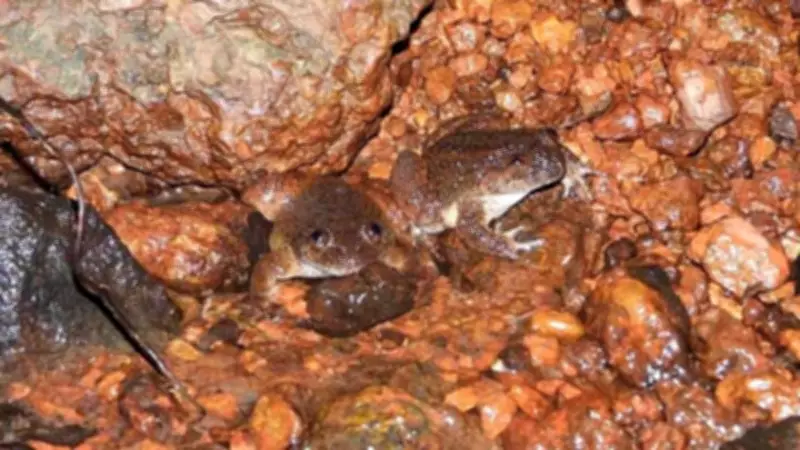
New Species of Night Frog Discovered in Western Ghats of Karnataka
In a significant scientific breakthrough, researchers have uncovered a new species of night frog within the lush, biodiverse landscapes of Karnataka's Western Ghats. This discovery underscores the region's status as a global hotspot for amphibian diversity and emphasizes the critical need for ongoing conservation initiatives to protect these unique ecosystems.
Details of the Discovery
The newly identified frog belongs to the genus Nyctibatrachus, commonly known as night frogs, which are endemic to the Western Ghats. Scientists made this finding during a recent field survey conducted in the dense forests of Karnataka. The frog exhibits distinct morphological characteristics, such as unique skin patterns and specific vocalizations, that differentiate it from other known species in the area.
Key features of the new species include:

- A small body size, typical of many night frogs, adapted for life in moist, forested environments.
- Specialized breeding behaviors that involve laying eggs on vegetation near streams, a trait common among this genus.
- Camouflaged coloration that helps it blend into the leaf litter and rocky substrates of its habitat.
Importance for Biodiversity and Conservation
This discovery adds to the growing list of amphibian species found exclusively in the Western Ghats, a UNESCO World Heritage Site renowned for its high levels of endemism. The region is home to over 200 species of frogs, many of which are threatened by habitat loss, climate change, and human activities.
Conservation experts stress that identifying new species is crucial for understanding ecosystem health and guiding protection strategies. The Western Ghats face ongoing pressures from deforestation, agricultural expansion, and infrastructure development, making such findings vital for raising awareness and promoting sustainable practices.
Research and Future Implications
The research team utilized advanced techniques, including genetic analysis and acoustic monitoring, to confirm the frog's status as a distinct species. Their work highlights the importance of continued scientific exploration in remote areas, where many undiscovered organisms may still exist.
Looking ahead, scientists plan to conduct further studies to assess the population size, distribution, and ecological role of this new night frog. This information will be essential for developing targeted conservation plans and ensuring the long-term survival of not only this species but also the broader biodiversity of the Western Ghats.
In summary, the discovery of a new night frog species in Karnataka's Western Ghats serves as a reminder of the region's incredible natural wealth and the urgent need to preserve it for future generations.