

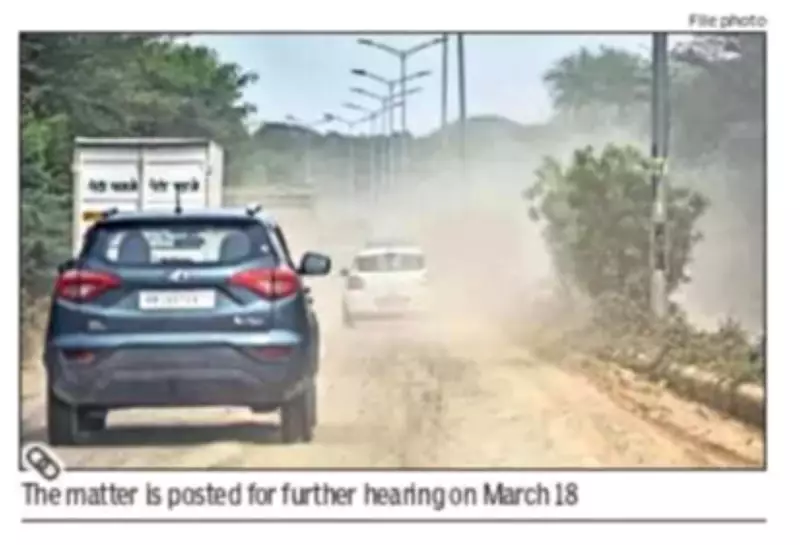
NGT Takes Action on Gurgaon's Severe Road Dust Pollution
The National Green Tribunal (NGT) has issued formal notices to the Haryana government and other civic authorities following a plea that highlights road dust as the biggest contributor to PM10 pollution in Gurgaon. The tribunal's bench, comprising Justice Prakash Shrivastava and expert member Dr. Afroz Ahmad, directed the issuance of notices on Tuesday, responding to concerns over what the applicant described as a "worsening air pollution crisis" in the city.
Allegations of Inaction and Environmental Neglect
According to the plea, authorities have failed to implement meaningful measures to control dust emissions from roads and construction activities, which substantially add to fine particulate matter in the air. The applicant emphasized that no effective steps were taken on the ground to curb rising dust levels, undermining the city's air pollution control efforts.
An affidavit filed on February 20 clarified that, to the best of the applicant's knowledge, the issue is not pending before the Supreme Court. The matter has been scheduled for further hearing on March 18, with the applicant instructed to serve the notices to respondents and file an affidavit of service at least one week prior.

Background: Gurgaon's Road Network and Pollution Data
This order comes against the backdrop of a recent report that revealed nearly one in three roads in Gurgaon is earmarked for redevelopment due to poor surface quality and high dust generation. Official records indicate that about 30% of the city's 2,400-kilometer road network—over 700 kilometers—is listed for upgrades under a new road dust control plan for 2026–27, with a projected outlay of Rs 1,971 crore.
Documents highlight how broken and poorly maintained road stretches continue to exacerbate the city's air pollution. Pankaj Yadav, a resident of Sector 22, told reporters, "Road dust remains the biggest contributor to PM10 pollution in Gurgaon, yet authorities did not take any effective steps to control it. Ensuring smooth roads, proper greening, and maintaining pavements are all basic, doable tasks, but civic agencies are not doing them. We are suffering because of their inaction."
Consistent Reporting and Previous NGT Actions
Reports have consistently highlighted how Gurgaon's road dust problem has deepened in the absence of sustained enforcement. Earlier this month, the NGT heard a separate plea on February 24, where another applicant flagged road and construction dust as the primary contributor to PM10 levels and alleged that authorities did not take "effective steps" to control it. In that case, the tribunal also issued notices to the Haryana government and civic agencies.
Health Implications of Dust Pollution
According to pollution board data, dust particle size determines the potential hazard to human health. Particles larger than 10 μg/m³ and 2.5 μg/m³ are not breathable and can only damage external organs. However, finer particles may penetrate the lower respiratory tract and enter the bloodstream, affecting internal organs and potentially triggering cardiovascular disorders.
The NGT's intervention underscores the urgent need for actionable solutions to address Gurgaon's pollution crisis, with road dust control emerging as a critical focal point for environmental and public health safeguards.






