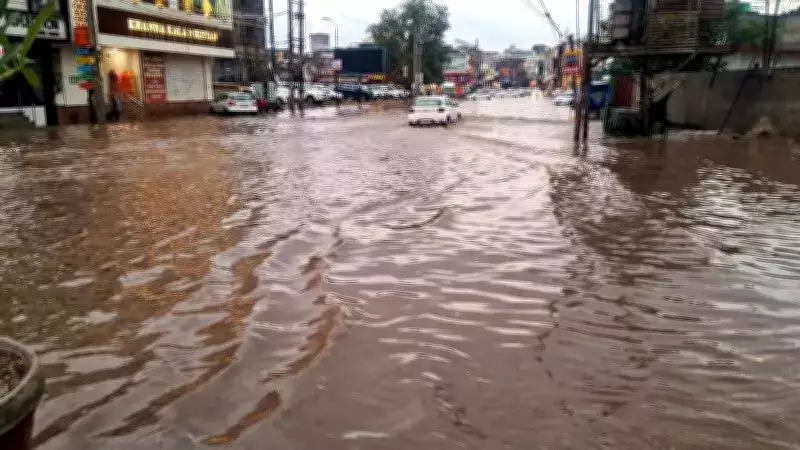
Northwest India Defies Rainfall Predictions with Excess January Precipitation
In a meteorological surprise, three northwestern Indian states—Punjab, Haryana, and Himachal Pradesh—recorded excess rainfall during January 2024, despite official forecasts predicting below-normal to normal precipitation for the region. This unexpected weather pattern has significant implications for agriculture, water resources, and climate understanding in this crucial part of the country.
January Rainfall Figures Exceed Normal Levels
The India Meteorological Department's data reveals striking excess precipitation across all three states. Punjab recorded the most dramatic deviation, receiving 34.3 millimeters of rainfall against a normal expectation of 20.3 mm—representing a substantial 69% excess. This remarkable figure highlights how actual weather conditions can diverge significantly from statistical predictions.
Haryana followed with 35% excess rainfall, measuring 19.6 mm compared to the normal 14.5 mm. Meanwhile, Himachal Pradesh received 90.2 mm of precipitation, which stands 6% above the normal average of 85.3 mm. These measurements were recorded until the morning of January 31, 2024, providing a comprehensive picture of the month's weather activity.

Western Disturbances Drive Unexpected Rainfall
Meteorological experts attribute Punjab's significant rainfall excess to two active western disturbances that affected the region during specific periods. The first disturbance was active from January 21 to 24, while the second occurred from January 26 to 28. These weather systems brought unanticipated precipitation to areas that typically experience drier conditions during this period.
Additionally, dense fog conditions were observed across both Punjab and Haryana from January 10 to 18, creating challenging visibility conditions and affecting transportation while contributing to the overall unusual weather pattern experienced throughout the month.
Contrasting Forecasts and Future Predictions
The January rainfall excess becomes particularly noteworthy when contrasted with official forecasts. On January 1, 2024, the India Meteorological Department had predicted normal monthly rainfall—between 78% and 122% of the long period average—for North India, including Punjab, Haryana, and Himachal Pradesh. The actual figures significantly exceeded these expectations.
Looking ahead, the IMD has issued a forecast of below-normal rain for February 2024 over Northwest India, which consists of seven meteorological subdivisions including the three states in question. The prediction suggests rainfall at approximately 78% of the long period average for the region. Nationally, monthly rainfall during February is most likely to be below normal at about 81% of the long period average.
Temperature Trends and Seasonal Outlook
Beyond precipitation patterns, temperature forecasts indicate above-normal minimum temperatures across most parts of the country during February. Maximum temperatures are also expected to remain above normal throughout the month. Interestingly, below-normal cold wave days are predicted over several parts of Northwest India, suggesting a milder winter than typical for the region.
This weather anomaly occurs within a broader seasonal context. The IMD had previously predicted that rainfall over Northwest India during the winter season (January to March) would be below normal, specifically less than 86% of the long period average. The January excess precipitation creates an intriguing starting point for this seasonal prediction, raising questions about how February and March will unfold.
The unexpected rainfall patterns in Northwest India during January 2024 demonstrate the complex and sometimes unpredictable nature of regional weather systems. As climate patterns continue to evolve, such deviations from forecasts provide valuable data for meteorologists and climate scientists working to improve prediction models and understand broader environmental changes affecting the Indian subcontinent.