

Jaipur: NTCA Returns Ramgarh Vishdhari Tiger Reserve Plan, Demands Revisions
The National Tiger Conservation Authority (NTCA) has directed the Rajasthan state government to resubmit the Tiger Conservation Plan (TCP) for the Ramgarh Vishdhari Tiger Reserve (RVTR) after requesting specific amendments and recommendations. This development has prompted the forest administration to begin revising the proposal immediately.
Previous Drafts Found Inadequate
The NTCA returned the plan that the state forest department had submitted on two previous occasions, citing several critical gaps. A senior forest official explained the shortcomings: "The previous drafts did not adequately include corridor plans connecting RVTR with Ranthambore Tiger Reserve and Mukundra Hills Tiger Reserve. We are now collecting corridor data from Indargarh on the Ranthambore end and Bhagatpura on the Mukundra Hills end. The study is being conducted with the assistance of the Wildlife Institute of India (WII). Once completed, the amended plan will be resubmitted."
Delay Impacts Tourism and Livelihoods
The approval delay has left local wildlife enthusiasts and stakeholders waiting for the commencement of tiger safaris in the core area, which were originally proposed to begin in January 2026. Bhanwar Singh Hada, a wildlife enthusiast from Bundi, expressed concern about the economic implications: "Once core-area safaris begin, they will generate livelihood opportunities for thousands of people, as witnessed in Ranthambore. If operations started earlier, tourists and stakeholders would benefit during the peak season. The reserve has immense potential, especially with improved connectivity through the Delhi–Mumbai Expressway. Sightings are expected to be comparable to Ranthambore in the coming years. The forest department should expedite the process, as it is already delayed."

Reserve Details and Tiger Population
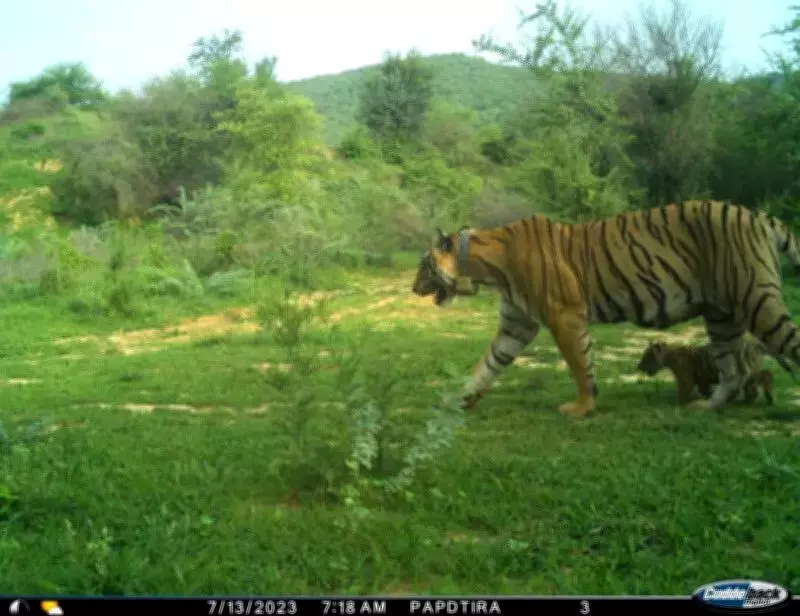
The reserve spans an impressive 1,501.89 square kilometres, comprising a core area of 481.90 square kilometres and a buffer zone of 1,019.98 square kilometres. It currently supports 8 tigers, including:
- 2 adult males
- 1 male cub aged around 12 months
- 5 tigresses, 1 of which was introduced through inter-state relocation
TCP Approval Will Enable Regulated Safaris
Upon NTCA approval of the amended TCP, regulated tiger safaris will be permitted in the core zone, significantly strengthening eco-tourism prospects. Another senior official highlighted the comprehensive nature of the plan: "The TCP also incorporates scientific wildlife management, enhanced monitoring mechanisms, water resource development, human–wildlife conflict mitigation, and systematic population tracking."
Economic and Conservation Benefits
According to experts, nearly 20% of the reserve area will be opened for eco-tourism after implementation of the TCP, creating substantial employment avenues for local communities. In May 2022, the reserve received formal approval from the Union Ministry of Environment, Forest and Climate Change, becoming Rajasthan's fourth and the country's 52nd tiger reserve. The TCP was subsequently prepared to regulate tourism and related activities in accordance with NTCA guidelines.
Proposed Safari Routes and Tourism Zones
Officials have proposed initial safari routes, including one from the Peepkhoda entry gate in Naitpur leading into the core area. Additional routes will be notified following final approval of the TCP amendment. Four tourism zones are proposed, with carrying capacity to be determined as per NTCA norms. Plans also include relocation of 8 villages from within the reserve after obtaining statutory clearances.
Historical Context and Conservation Journey
Tapeshwar Singh, a green expert, provided historical context: "After Independence, the forests came under the administration of the Rajasthan government. In 1982, a portion was notified as the Ramgarh Vishdhari Wildlife Sanctuary under Section 5 of the Rajasthan Wild Animals and Birds Protection Act, 1951. Tigers reportedly disappeared from the sanctuary in 1999, before their recent reintroduction under the state's conservation initiative."

The revised Tiger Conservation Plan represents a critical step toward balancing conservation goals with sustainable tourism development in this important wildlife habitat.





