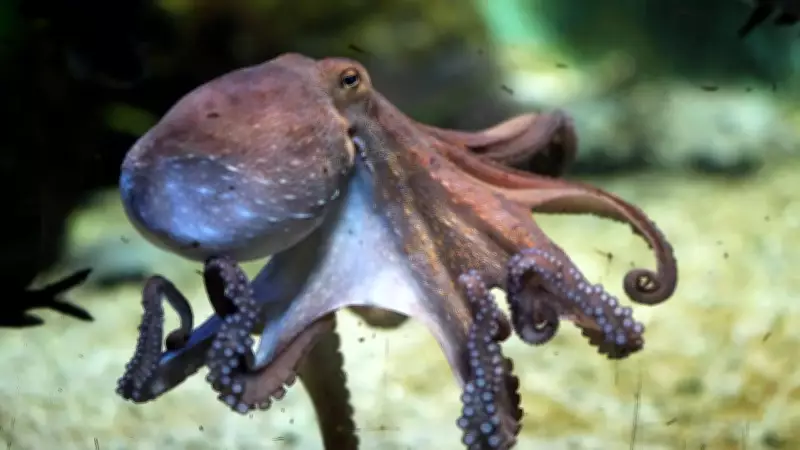
The change of climate has altered the habitat of certain creatures, and some are making their way toward the coast. An unprecedented boom in common octopus populations off southwest England is officially stretching into a second year. A new report by the Marine Biological Association (MBA) and the University of Plymouth has confirmed that this massive surge is the largest recorded in the region in at least 75 years. According to the data, the population explosion, which began in 2025, is heavily linked to rising sea temperatures and rapid shifts in the marine ecosystem. This article breaks down what researchers discovered, how it is affecting local communities, and what it means for the future of UK waters.
What the Research Reveals About the Boom
To get a clear picture of the boom, scientists combined official data with observations from recreational SCUBA divers and snorkellers. The public response was massive, generating 120 detailed reports in a short timeframe. Interestingly, many of these divers traveled from London, the Midlands, and even Ireland just to get a glimpse of the creatures. In fact, 30.1% of the people surveyed admitted they traveled to specific dive spots for the sole purpose of seeing an octopus. The public observations gave scientists invaluable data on a scale that standard scientific monitoring could not achieve alone. Divers confirmed widespread octopus breeding in UK waters and noted that they were actively hunting a wide range of species.
Spotting Patterns and Unique Behaviors
These sightings were backed up by underwater video monitoring and Baited Underwater Remote Videos (BRUVs) deployed from the MBA Research Vessel Sepia. The footage proved that the octopuses were heavily concentrated on rocky reef habitats. Divers observed the animals actively hunting, guarding food, and protecting their territory. Many noticed large, mature octopuses showing signs of senescence (the natural final stage of life), alongside fresh eggs and juveniles. This proves that successful breeding occurred in UK waters during late spring and early summer of 2025. Local divers shared firsthand accounts of how surreal the boom has been. One diver mentioned they had never seen a common octopus in the UK before, despite snorkeling around Cornwall their entire life. Others reported finding them tucked into lobster pots or hunting completely out in the open on the reef. Some noticed messy feeding grounds left behind, littered with broken lobster claws and spider crab carcasses.

Tracking the Geography of the Surge
This new study follows a January 2026 report that first analyzed the scale of the bloom. Evidence suggests this massive population originally drifted over as young larvae from breeding grounds near northern France and the Channel Islands, carried by ocean currents. Warmer sea temperatures likely gave them a massive survival boost. While the population was heavily concentrated in Devon and Cornwall last year, recent data shows they are spreading rapidly. Sightings have now been confirmed on both the south and north coasts of the southwest, with reports reaching as far as Wales, Dorset, East Sussex, and Scotland.
The Economic Sting for Local Fisheries
While the boom has been a dream for divers, it has caused serious issues for local fishermen. The spike in octopus numbers directly coincided with sharp drops in catches of commercially important shellfish like crabs, lobsters, and scallops. Octopuses are incredibly clever, efficient hunters. Fishermen and divers reported them invading lobster pots and static fishing gear to eat the trapped shellfish inside. For small-scale local fishers, this has meant ruined catches, lost revenue, and massive economic uncertainty.
Why Normal Surveys Missed the Signs
Interestingly, traditional trawl surveys used by governments to monitor marine life failed to pick up on the octopus explosion entirely. Researchers say this comes down to a mismatch in timing, the design of the fishing gear, and where the trawlers were looking. Because octopuses hug the rocky reefs and shallow waters, the trawls missed them entirely. This is why researchers emphasize that combining official science with citizen data from divers and fishermen is the only way to accurately track rapid environmental shifts.

Looking Ahead
The boom has put a spotlight on how quickly climate change can disrupt marine life and alter predator-prey dynamics. To prepare for future surges, the MBA has recommended three main steps: expanding underwater video monitoring, keeping closer tabs on fishing catches and gear damage, and creating a dedicated mobile reporting app specifically for divers and snorkellers. Ultimately, this event serves as a clear warning of how fast our oceans are shifting. Scientists emphasize that working directly with coastal communities and fishermen will be vital for managing these changes moving forward.