Pakistan Airstrike on Kabul Hospital Leaves Hundreds Dead, Sparks International Outcry
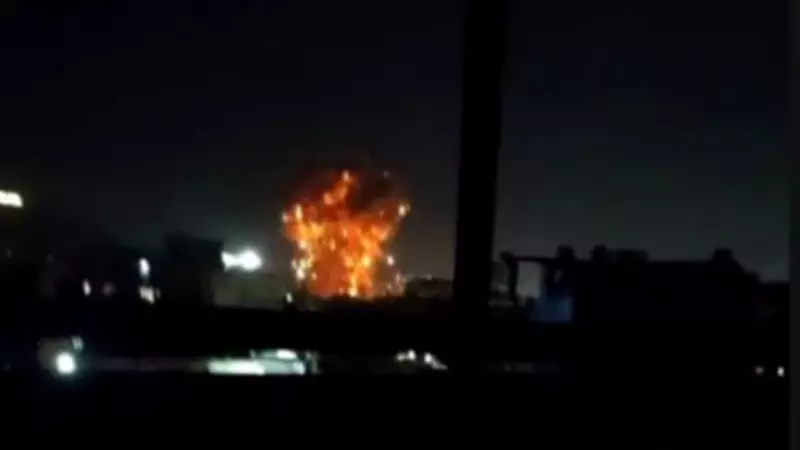
In a devastating escalation of cross-border tensions, at least 400 people were killed and nearly 250 injured after an airstrike carried out by Pakistan struck a drug rehabilitation hospital in the Afghan capital Kabul late Monday night. The attack, which occurred around 9 pm local time, destroyed significant portions of the 2,000-bed complex, igniting massive fires and forcing rescue workers to scramble through the rubble in a desperate search for survivors.
Taliban Administration Condemns Attack as 'Crime Against Humanity'
Afghanistan's Taliban administration has accused Pakistan of deliberately targeting the civilian facility, with Deputy Government Spokesperson Hamdullah Fitrat reporting widespread destruction and rising casualties as rescue operations continue. Videos circulating on social media and local television showed plumes of smoke billowing from the complex, highlighting the scale of the devastation.
Taliban Spokesperson Zabihullah Mujahid strongly condemned the attack, describing it as a blatant violation of humanitarian principles. "We strongly condemn this crime and consider such an act to be against all accepted principles and a crime against humanity," he stated in a post on X, emphasizing that most victims were patients undergoing treatment at the hospital.

Pakistan Denies Civilian Casualties, Cites Operation Ghazab lil-Haq
In stark contrast, Pakistan has dismissed allegations of targeting civilian sites, insisting that the airstrikes were precision attacks aimed at militant infrastructure. According to security sources, the strike was part of Operation Ghazab lil-Haq, launched in late February in response to what Islamabad termed unprovoked firing by Afghan Taliban fighters across the border.
Pakistan's Information Minister Attaullah Tarar asserted that the military conducted "precision airstrikes" on technical support infrastructure and ammunition storage facilities in Kabul and eastern Afghanistan, specifically targeting sites used by militant networks allegedly supported by the Afghan Taliban. Spokesperson for Prime Minister Shehbaz Sharif, Mosharraf Zaidi, further denied that any hospital was hit, accusing the Taliban of spreading misinformation.
Escalating Conflict and Conflicting Claims
The attack comes amid a broader conflict that has intensified over the past three weeks, with both countries exchanging artillery fire, airstrikes, and drone attacks along their shared border. Clashes earlier on Monday resulted in at least four deaths in Afghanistan, raising fears of a wider confrontation.
Pakistan and Afghanistan have released sharply different casualty figures, with Pakistani officials claiming hundreds of Afghan Taliban fighters killed, while Afghan authorities dispute these numbers and allege heavy losses on the Pakistani side. Pakistan's President Asif Ali Zardari accused the Taliban administration of crossing a 'red line' by deploying drones that injured civilians inside Pakistan last week, prompting further military operations.
International Reactions and Calls for De-escalation
The escalating conflict has drawn international concern, with China urging both sides to avoid further escalation and resume dialogue. Chinese Foreign Ministry Spokesperson Lin Jian emphasized, "The most urgent task is to avoid the expansion of the war and return the two countries to the negotiating table as soon as possible." Pakistan's foreign office also dismissed reports of rejecting China's mediation efforts, reaffirming their close partnership.
The United Nations Security Council has called on Afghanistan's Taliban authorities to intensify counter-terrorism efforts, extending the mandate of the United Nations Assistance Mission in Afghanistan amid rising tensions. Additionally, the International Human Rights Foundation condemned the strike, calling for an independent investigation into the incident.

Background and Regional Security Implications
This conflict underscores long-standing tensions in the Afghanistan-Pakistan border region, historically a hub for militant activity. Pakistan alleges that groups like the Tehreek-i-Taliban Pakistan operate from Afghan territory to launch attacks inside Pakistan, a claim repeatedly denied by the Taliban government. As rescue efforts continue in Kabul and diplomatic tensions simmer, the region faces heightened security risks, with the potential for further violence threatening regional stability.