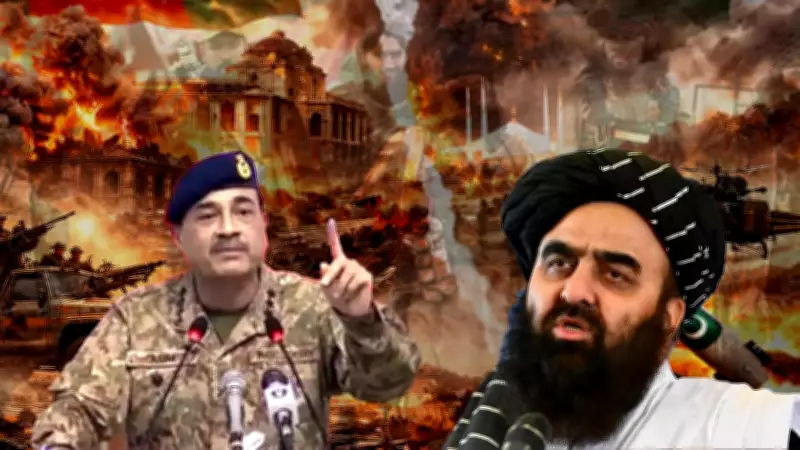
Security Expert Breaks Down Pakistan's Failed Taliban Gamble and Escalating Conflict
According to a detailed analysis by a senior security expert, Pakistan's strategic gamble with the Taliban has resulted in a full-blown open war, driven by deep-seated structural tensions that have been simmering since the Taliban's return to power in 2021. Maj Gen AK Siwach (Retd.), the former head of the Territorial Army, provides critical insights into why this conflict has intensified, pointing to three major fault lines that have pushed the situation to a breaking point.
Three Critical Fault Lines Fueling the Conflict
The expert identifies three primary areas of dispute that have exacerbated the confrontation between Pakistan and the Taliban. First, the Durand Line, the contentious border between Pakistan and Afghanistan, remains a flashpoint, with both sides disputing its legitimacy and control. Second, issues of Pashtun identity have come to the forefront, as ethnic tensions and demands for autonomy in regions like Khyber Pakhtunkhwa add complexity to the conflict. Third, the role of the Tehreek-e-Taliban Pakistan (TTP), a militant group with ties to the Afghan Taliban, has become a significant source of unrest, particularly in Khyber Pakhtunkhwa and Balochistan, where local grievances and separatist movements further destabilize the area.
Military Strategies and Escalation
In response to these tensions, Pakistan has heavily relied on air power to target militant positions and assert control over disputed territories. However, this approach has proven ineffective against the Taliban's guerrilla warfare tactics, which include ambushes, hit-and-run attacks, and leveraging local support in rugged terrain. The expert notes that this mismatch in military strategies has led to a protracted conflict, with neither side able to secure a decisive victory, resulting in ongoing violence and instability.

The reliance on aerial bombardment by Pakistan has failed to address the root causes of the conflict, such as political grievances and ethnic divisions, allowing the Taliban to maintain resilience through asymmetric warfare. This dynamic has turned what was once a strategic gamble by Pakistan into an open war, with significant implications for regional security and the broader geopolitical landscape in South Asia.
Broader Implications and Future Outlook
The failure of Pakistan's Taliban strategy highlights the challenges of managing complex insurgencies and border disputes. The expert warns that without addressing the underlying issues—such as border demarcation, ethnic rights, and militant group affiliations—the conflict is likely to persist, potentially spilling over into neighboring regions and affecting international relations. This analysis serves as a cautionary tale for other nations dealing with similar security dilemmas, emphasizing the need for comprehensive approaches that go beyond military solutions to include diplomatic and political engagement.