

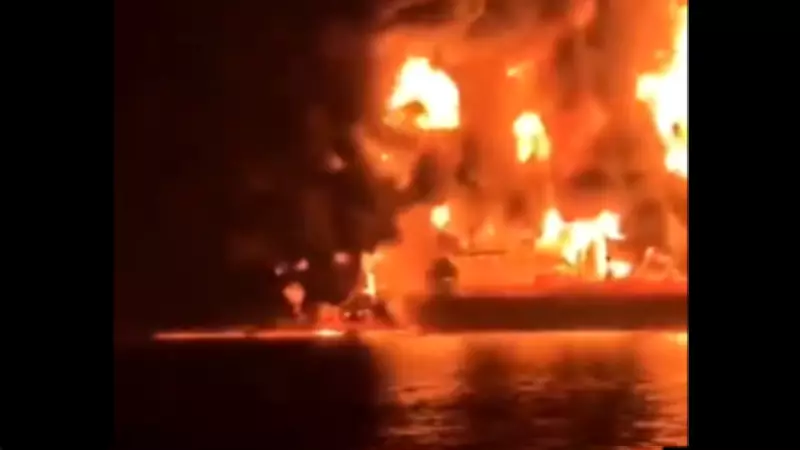
Explosions Rock Persian Gulf, Killing One and Igniting Major Oil Tanker Fires
At least one person has been confirmed dead and two large oil tankers were engulfed in flames in the Persian Gulf on Wednesday, following powerful explosions off the coast of Basra, Iraq. Preliminary findings from an Iraqi-led investigation suggest the blasts were likely caused by an attack, with reports indicating explosive-laden Iranian boats may have struck the vessels.
Details of the Incident and Vessels Involved
The explosions occurred while the tankers were anchored side by side within Iraq's territorial waters at al Faw port near Basra. Footage from the scene showed large fires rapidly spreading across the surrounding waters, with flames suggesting oil was leaking from the damaged ships. The vessels have been identified as the Maltese-flagged Zefyros, owned by a Greek company, and the Marshall Islands-flagged Safesea Vishnu, owned by US-based Safesea Transport Inc.
According to multiple reports, the tankers may have been carrying up to 400,000 barrels of Iraqi crude oil at the time of the incident. Farhan al Fartousi, director general of the Iraqi Ports Company, confirmed to CNN that all 38 foreign crew members were successfully evacuated from the damaged ships following what he described as "explosions." Safesea Transport has not yet responded to requests for comment regarding the incident.

Regional Tensions and Global Oil Market Impact
This reported attack comes amid escalating tensions in the Middle East region, with military actions and counterattacks linked to the ongoing Iran conflict already disrupting traffic through critical shipping corridors. The Strait of Hormuz, a key waterway through which approximately one-fifth of the world's oil passes daily, has seen increased volatility, prompting several oil producers to cut output.
Iran has issued warnings about potentially blocking oil tankers from passing through the strategic Strait of Hormuz, while the United States has responded by targeting several Iranian minelaying vessels earlier this week. These developments have contributed to surging oil prices this week as concerns mount about shipping security through vital global supply routes.
International Responses and Market Stabilization Efforts
In response to the growing supply disruptions, President Donald Trump has indicated he may authorize the release of oil from the US Strategic Petroleum Reserve to help stabilize prices. Separately, the International Energy Agency announced that its 31 member countries plan to release a record 400 million barrels of oil from emergency stockpiles to offset supply chain interruptions caused by regional conflicts.
The incident has drawn international condemnation, with India's Ministry of External Affairs specifically criticizing attacks on commercial shipping and calling the loss of innocent lives in such conflicts "unacceptable." Meanwhile, Iran has issued warnings to several US technology firms including Google, Amazon, Microsoft, and Nvidia, labeling them as "legitimate targets" in the escalating geopolitical standoff.
As investigations continue into the exact cause of the Persian Gulf explosions, the global energy market remains on high alert, with analysts warning that further incidents could significantly disrupt oil supplies and drive prices even higher amid already strained international relations in the region.






