Pune's Urban Heat Island Effect Intensifies Summer Heat Stress
A detailed field analysis conducted in Pune during April and May 2024 has revealed alarming levels of heat stress in the city's most densely built-up neighborhoods. The study, which utilized the Wet Bulb Globe Temperature index, found that these areas experienced extreme heat conditions on nearly half of the peak summer days. This comprehensive assessment underscores the significant impact of urbanization on local climate and public health.
Research Methodology and Key Findings
The on-ground assessment was carried out by a collaborative team of scientists from the India Meteorological Department, the Indian Institute of Science Education and Research, Fergusson College, and the Indian Institute of Tropical Meteorology. Unlike standard temperature readings, the WBGT index captures the actual heat load on the human body by incorporating factors such as air temperature, humidity, wind speed, and solar radiation.
IMD scientist Ananya Karmakar explained, "Sensors were placed at four feet, which is the typical human exposure height, and data was logged every five minutes between 9am and 6pm. This approach provides a more accurate representation of how heat affects people in their daily environments."

Comparative Analysis of Monitored Sites
The study focused on three distinct locations in Pune, each representing different levels of urbanization:
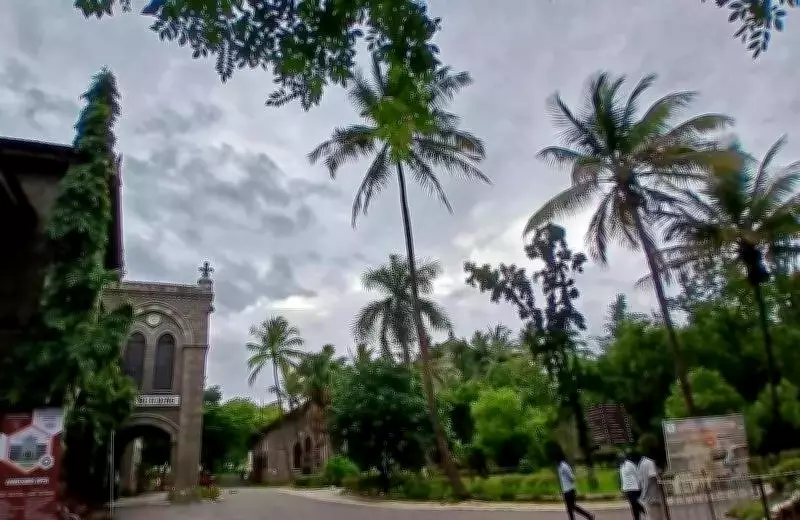
- Fergusson College: Categorized as a highly urbanized zone in the heart of the city, this site recorded extreme heat stress conditions on 44.18% of the 43 days for which data was available.
- Agriculture College Campus: Classified as moderately urbanized, this location experienced 37.03% extreme-stress days.
- IISER Campus: Situated on the city's outskirts with more greenery, this site recorded 32.72% extreme-stress days.
To ensure an equal baseline for comparison, researchers also examined a subset of 39 days with complete datasets across all stations. In this analysis, Fergusson College again showed the highest percentage of extreme heat-stress days at 43.58%, followed by Agriculture College campus at 35.89% and IISER at 30.76%.
Urban Heat Island Signal and Daily Patterns
IITM scientist Rajib Chattopadhyay noted, "The findings point to a clear urban heat island signal, where dense infrastructure, concrete surfaces, and limited vegetation intensify heat exposure. The Fergusson College site, surrounded by heavy construction and high human activity, consistently recorded higher daily maximum WBGT values."
When assessing typical peak heat-stress levels using the median daily maximum WBGT, the urbanized Fergusson College area topped the list at 31.87°C, compared with 31.70°C at Agriculture College campus and 31.50°C at IISER. This indicates that even on a typical hot day, the densest urban pocket remained slightly but consistently more heat-stressed than greener campuses.
Across all sites, heat stress peaked between 1pm and 3pm. Fergusson College and Agriculture College campus recorded their highest values around 2pm, while IISER—with more vegetation and open spaces—peaked earlier, around 1pm. This pattern suggests that greener landscapes heat and cool more quickly than built-up zones.
Heat Stress Thresholds and Contributing Factors
The analysis established preliminary heat stress trigger values for Pune during April and May 2024. A WBGT temperature of 31.5°C was identified as the threshold for elevated risk, 32°C for moderate risk, and 33°C for extreme heat stress. These values corresponded roughly to ambient temperatures of 40°C, 41°C, and 42.5°C, respectively, depending on humidity levels.
Chattopadhyay emphasized, "This analysis is a preliminary study based on a one-year field experiment. Multiple years of data are required to fully understand the impact of urbanization on heat stress in Pune City."
Key factors influencing heat stress included:

- Air Temperature: As temperatures rose, heat stress levels increased sharply, making it the primary driver.
- Humidity: Showed an opposite daily pattern, increasing when heat stress was lower and dropping when it was highest.
- Wind: Stronger winds helped cool conditions by carrying heat away from the body, reducing overall heat stress. The most intense heat stress, typically between 1pm and 3pm, was linked to winds blowing from the south.
Research Team and Publication
The field analysis was led by Ravi Ranjan Kumar, Arpit Tiwari, and Ananya Karmakar of IMD, Pune, along with Ajay Bankar, Rajib Chattopadhyay, and KS Hosalikar. The team also included Joy Merwin Monteiro from IISER Pune and Shayanth Patil from Fergusson College. The findings have been published in the peer-reviewed journal International Journal of Biometeorology, contributing valuable insights to urban climate studies and public health planning.