In 2024, Pune's voters participated in two major elections back-to-back—the general elections and the state assembly polls. While the democratic process unfolded, climate scientists globally intensified their warnings about accelerating ecological breakdowns. Yet, the critical subject of 'environment' remained strikingly absent from the political manifestos and campaigns of most candidates, a trend that cut across all party lines.
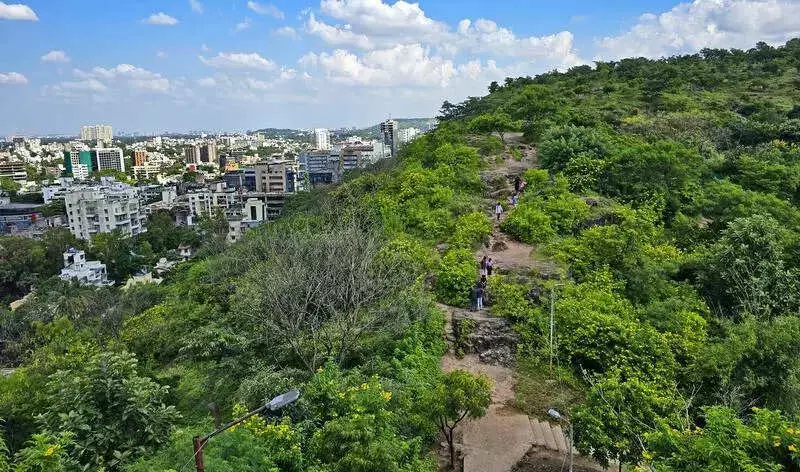
This political silence persists against a dire backdrop. In October 2024, Earth reportedly crossed its first 'climate tipping point', signaling a march towards potentially irreversible catastrophic triggers. Locally, Pune and its twin city Pimpri Chinchwad are grappling with severe environmental distress. In December 2025, Pimpri Chinchwad was identified as having the worst pollution levels in Maharashtra. Meanwhile, Pune's citizens are mobilising constantly to save its green lungs—the beloved tekdis (hillocks), riverbanks, and heritage gardens—from being decimated for road and infrastructure projects.
The Invisible Killer: Why Air Pollution Gets No Political Photo-Op
As of December 2025, data from AQI Air revealed that Pune's PM2.5 concentration was 21 times higher than the World Health Organization's annual safety guideline. The city's air is rated moderate for only seven months a year, unhealthy for sensitive groups for three months, and outright unhealthy for two months.

"Air pollution is ignored because it is invisible and slow. It does not hit like a flood, fire or accident," explains Hema Chari, a core member of the national advocacy group Warrior Moms. She notes that illnesses and deaths are attributed to diseases like asthma or cancer, not directly to polluted air. The diffuse nature of its sources—vehicles, construction, industry—makes it easy for authorities to shift blame and avoid concrete solutions.
"Politicians prefer ribbon-cutting and photo ops, so large infrastructure projects like roads, flyovers, and Metro works take priority, even when they worsen dust, traffic, and emissions," Chari adds. This contradiction is visible across Pune, where prolonged road digging, unchecked construction, rampant tree felling, and chaotic traffic management keep pollution levels dangerously high.
The impact on children is particularly severe, with long-term exposure linked to neurodevelopmental issues, reduced cognitive ability, and mental health risks. Chari asserts that clean air will only become a reality when it is treated as essential civic infrastructure, with strict enforcement, protected green cover, and robust public transport.
Hills, Rivers, Trees: The Long-Term Issues With No Quick Political Payoff
The city's natural heritage is under sustained assault. Residents have protested for years against a road project threatening the hill from Paud Phata to Balbharati, but find little support from political aspirants. "Environmental problems are often long-term, gradual and less visible, making them harder to convert into quick political gains," says heritage advocate Prajakta Divekar of the Vetal Tekdi Bachao Kruti Samiti.
Environmentalist Makarand Shete points to the powerful real estate lobby as a key reason. "Many politicians are part of realty companies or have vested interests. They do not prioritise minimising environmental damage," he states. This leads to continued hill encroachments and a glaring lack of transparency in tree-felling permissions.
The city's rivers tell a similar story of neglect. Data from the Maharashtra Pollution Control Board (MPCB) for 2025 showed the Mutha river near Sangam Bridge was in a 'bad to very bad' state for most months. The Indrayani and Pavana rivers have been plagued by toxic foam and pollution crises.
Shailaja Deshpande, founder of Jeevitnadi, argues that the fundamental flaw is not accounting for the cost of 'natural capital'. "The final cost of any infrastructure project would skyrocket if the net present value of the destroyed natural capital was added. This is never calculated," she explains. Consequently, short-term projects like riverfront development get approved, while long-term public goods like water security and pollution control are sidelined.

Citizens Bear the Burden, Demand Political Accountability
With elected representatives showing little initiative, the onus of stewardship has fallen on citizens. Mechanical engineer Manoj Phulphagar, who regularly attends tree-felling hearings, expects corporators to be primary guardians of the green cover. "Sustainable development is not optional. It is every citizen's responsibility," he emphasises.
Economist Ameet Singh, active in preventing tree felling, offers a blunt assessment: "Politicians don't know enough about the environment, and secondly, they don't know what to do to fix the situation." He highlights that Pune generates 3,500 tonnes of garbage daily and over 3 crore tonnes of emissions yearly, stressing that trees are the city's natural cleanup system. "The city needs 100-160 trees per person... The last person to know this is a politician," Singh states.
Lawyer Maitreya Ghorpade, who has represented citizens in environmental petitions, underscores the power of the electorate. "The role of the public in setting the election agenda cannot be overlooked," he says, citing how riverfront development became an issue in the 2024 assembly polls due to persistent public pressure.
As Pune stands on the cusp of crucial civic polls, the question from its residents grows louder: When will their fundamental right to clean air, water, and green spaces, enshrined even in Article 21 of the Constitution, finally command the sustained political will and action it desperately requires?