

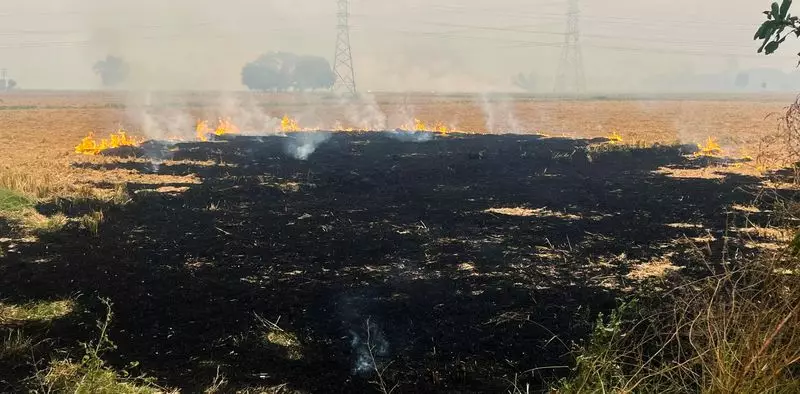
Punjab witnessed a significant surge in agricultural fires as farmers continued to burn paddy stubble despite growing environmental concerns. The state recorded 440 fresh farm fire incidents on Tuesday, pushing the seasonal total to 4,062 since harvesting operations began.
Rising Incidents Despite Government Warnings
According to data from the Punjab Remote Sensing Centre in Ludhiana, the total number of farm fire incidents has now reached 4,062 since September 15. This alarming figure comes despite repeated warnings from state authorities and environmental agencies about the severe impact of stubble burning on air quality.
The fresh incidents were reported from across various districts of Punjab, with farmers opting for the quick method of clearing fields despite available alternatives. The practice has become a major point of contention between agricultural communities and environmental regulators.

District-Wide Breakdown of Fire Incidents
Among the districts most affected by the stubble burning phenomenon, Amritsar emerged as a significant hotspot. Official data revealed that Amritsar district alone accounted for 772 farm fires so far this season, representing nearly one-fifth of the state's total incidents.
Other districts reporting substantial numbers included Tarn Taran with several hundred cases, followed by Patiala, Sangrur, and Gurdaspur. The widespread nature of these incidents highlights the challenge authorities face in controlling the practice across Punjab's agricultural heartland.
Environmental Impact and Government Response
The persistent farm fires have raised serious environmental concerns, particularly regarding their contribution to the deteriorating air quality in northern India. Smoke from these agricultural fires travels across state boundaries, significantly affecting air pollution levels in Delhi and the National Capital Region.
State authorities have intensified monitoring efforts and are promoting alternative methods for managing paddy residue. However, many farmers continue to resort to burning due to the high cost and limited availability of alternative solutions like happy seeders and other machinery.
Environmental experts warn that unless more effective and economically viable solutions are provided to farmers, the cycle of stubble burning and subsequent air pollution is likely to continue each harvesting season. The situation demands urgent intervention and sustainable agricultural practices to balance farming needs with environmental protection.






