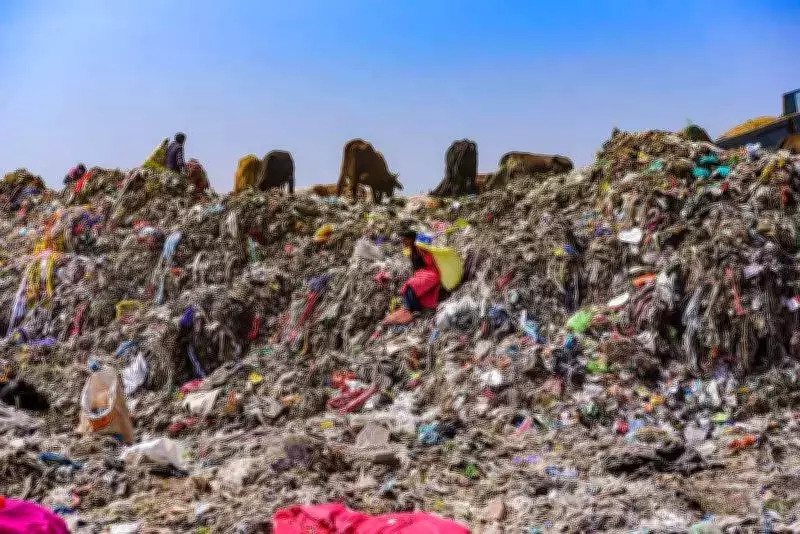
Mountains of Legacy Waste Loom Over Punjab's Urban Landscape
Chandigarh: Despite concerted efforts to enhance waste management systems, Punjab continues to battle towering heaps of legacy waste that have accumulated over decades in towns across the state. A staggering 41.11 lakh metric tonnes of this historical waste remains unprocessed within urban local bodies, with authorities projecting that complete remediation will only be achieved by April 2027.
What Constitutes Legacy Waste and Its Dangers
Legacy waste refers to aged municipal refuse that has piled up at dump sites over many years. This problematic accumulation typically includes:
- Municipal solid waste from households and businesses
- Industrial waste materials
- Potentially hazardous substances
- Construction and demolition debris
Such waste deposits present severe environmental and public health threats. They can generate toxic leachate that contaminates groundwater sources, trigger spontaneous landfill fires, and create persistent governance challenges for municipal authorities struggling with long-term management solutions.

The Evolving Scale of Punjab's Waste Challenge
Punjab's 166 urban local bodies originally reported 84.09 lakh metric tonnes of legacy waste. Of this total, 43.47 lakh metric tonnes has been successfully remediated, leaving what was previously classified as 40.61 lakh metric tonnes of balance legacy waste.
However, following directives from the National Green Tribunal, authorities conducted a reassessment of accumulated unprocessed waste and incorporated it into the legacy stock. This recalculation elevated the current legacy waste figure to 41.11 lakh metric tonnes, as documented in a compliance affidavit submitted by the Punjab government before the NGT.
The increase occurred because 35 urban local bodies currently experience a gap between daily waste generation and processing capacity, resulting in the accumulation of approximately 49,552 metric tonnes of unprocessed waste. This material is typically stored temporarily and processed within five to seven days under normal operations.
Daily Waste Generation and Processing Statistics
The report further illuminated Punjab's broader urban waste management challenge. Across the state, the 166 urban local bodies collectively generate 4,008 tonnes per day of solid waste. Of this daily output, 3,605 tonnes—representing about 89.95%—is currently being processed through existing systems.
This leaves a daily processing gap of 403 tonnes that authorities are working to bridge through enhanced infrastructure development and streamlined waste processing methodologies. The tribunal was informed that ongoing efforts aim to ensure remaining waste receives regular handling to prevent dump sites from expanding further or creating additional legacy waste accumulations.
With the Solid Waste Management Rules, 2026, scheduled to take effect from April 1, 2026, the state has formulated plans to strengthen infrastructure and systems for comprehensive waste collection, segregation, and processing operations.
Sewage Management Presents Parallel Challenges
The compliance report simultaneously highlighted significant challenges in sewage management across urban Punjab. The state's 166 urban local bodies generate approximately 2,219.91 million litres per day of sewage, of which 2,009.50 million litres daily is being treated through 162 operational sewage treatment plants.
Current Sewage Treatment Plant Status
Of these 162 sewage treatment facilities:
- 123 plants meet prescribed discharge standards
- 6 facilities are currently non-compliant with regulations
- 28 plants are undergoing stabilization processes
- 5 plants have been temporarily shut down for maintenance to improve operational efficiency
To augment treatment capacity, nine new sewage treatment plants with a combined capacity of 24 million litres daily became operational between October 2025 and January 2026. Despite these additions, the state still confronts a sewage treatment gap of 210.41 million litres per day.

Future Infrastructure Development Plans
To address this substantial treatment shortfall, 36 new sewage treatment plants with a total capacity of 195.10 million litres daily are currently under construction. These facilities are expected to be completed by December 31, 2026. Furthermore, 30 additional sewage treatment plants with a combined capacity of 145.7 million litres daily are in the planning stages, with likely completion targeted for December 31, 2027.
However, land availability remains a persistent obstacle in four urban local bodies, causing delays in sewage treatment plant construction within those specific areas. This land acquisition challenge underscores the complex interplay between urban development, environmental management, and infrastructure implementation timelines.