

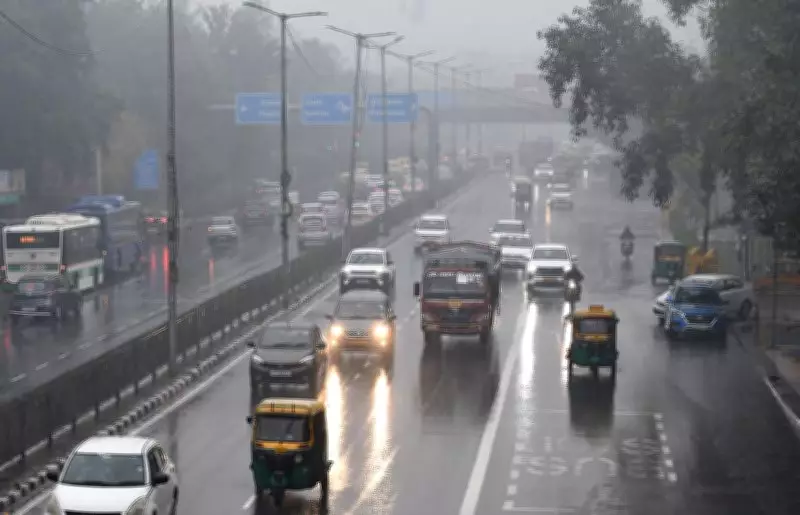
Rainfall Sweeps Punjab and Haryana, Temperatures Plunge Below Normal Levels
Heavy rainfall lashed numerous parts of Punjab and Haryana on Thursday, leading to a sharp and notable decline in maximum temperatures across the region. The meteorological department reported widespread precipitation, affecting key urban centers and resulting in cooler-than-usual conditions.
Widespread Rainfall Across Key Cities
According to weather officials, the rain impacted a broad swath of areas, including Chandigarh, Ambala, Hisar, Rohtak, Bhiwani, Gurugram, Amritsar, Ludhiana, Patiala, Rupnagar, Mohali, and Sangrur. This extensive coverage underscores the intensity of the weather system moving through North India.
Significant Temperature Drops Recorded
The rainfall triggered substantial dips in daytime highs, with many locations registering temperatures several notches below their normal seasonal limits. In Chandigarh, the common capital of both states, continuous rainfall throughout the day resulted in a maximum temperature of 20.8 degrees Celsius, which is eight notches below the normal range.

In Haryana, Ambala recorded a high of 25.8 degrees Celsius, four notches below normal. Rohtak experienced an even more pronounced drop, with a maximum of 20.7 degrees Celsius, marking a ten-notch decline from typical levels. Hisar saw temperatures fall to 23.2 degrees Celsius, eight notches below normal.
Punjab also faced similar cooling effects. Amritsar recorded a maximum of 22.1 degrees Celsius, six notches below normal, while Ludhiana registered 23.4 degrees Celsius, down five notches. Patiala reported a high of 21.6 degrees Celsius, seven notches below the usual average.
Implications and Weather Patterns
This sudden shift in weather highlights the dynamic monsoon patterns affecting North India. The rainfall has provided relief from earlier heat but also signals potential disruptions to daily activities and agriculture. Residents are advised to stay updated with local forecasts as conditions may evolve.
The meteorological department continues to monitor the situation, emphasizing the need for preparedness in light of such abrupt climatic changes. Further updates are expected as the weather system progresses.






