

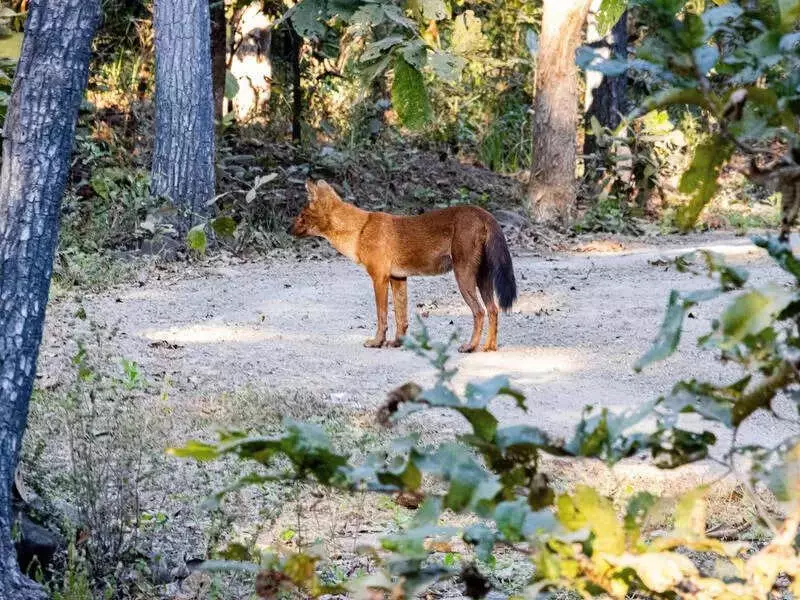
In a thrilling development for wildlife conservation in central India, the forest department of Dewas district in Madhya Pradesh has officially confirmed the first-ever recorded sighting of two Wild Dogs, commonly known as Dholes, within the Kheoni wildlife sanctuary. The rare sighting occurred on Thursday and has generated significant excitement among conservationists and officials, marking a potential milestone for the region's biodiversity.
A Landmark Sighting for the Sanctuary
The confirmation came from DFO Amit Singh, who stated that the sighting is exceptionally significant given the rarity of these predators in this part of the state. The dedicated forest team not only spotted the two animals but also succeeded in capturing a clear photograph of one individual. This visual evidence is crucial for documentation and further study. The department is now on high alert, deploying camera traps and intensifying patrols to monitor the movements of these formidable canines as they explore what could be their new territory.
Understanding the Fierce Dhole
DFO Amit Singh elaborated on the unique nature of the Dhole, distinguishing it from other large carnivores. Unlike the often solitary tiger or leopard, Wild Dogs (Dholes) are renowned for their highly organized social structure, hunting in coordinated packs. This collective strategy grants them exceptional hunting prowess, enabling them to challenge and even overpower larger predators to secure prey. Their presence is a strong indicator of a robust and balanced ecosystem, as they sit at the apex of the food chain.

Implications for Kheoni's Ecosystem
The appearance of Dholes in Kheoni is being hailed as a positive sign of the sanctuary's ecological health. "Spotting Wild Dogs is an extremely good sign as they are very rare in this region," Singh told the media. He emphasized that their presence suggests the sanctuary is flourishing, providing a suitable habitat with adequate prey base for such apex predators. This development is expected to further enhance the area's biodiversity and ecological dynamics. While Dholes are known populations in parks like Pench, Bandhavgarh, and Kanha, their presence in the Indore-Ujjain region, which includes Dewas, has been scarcely reported.
The forest department has initiated plans for a comprehensive survey to answer critical questions raised by this sighting. Officials aim to determine if the two individuals are part of a larger pack, and crucially, whether they are transient visitors or intend to establish a permanent home in Kheoni. This inquiry is particularly timely given the ongoing mating season for the species, which could influence their movement and settlement patterns.






