

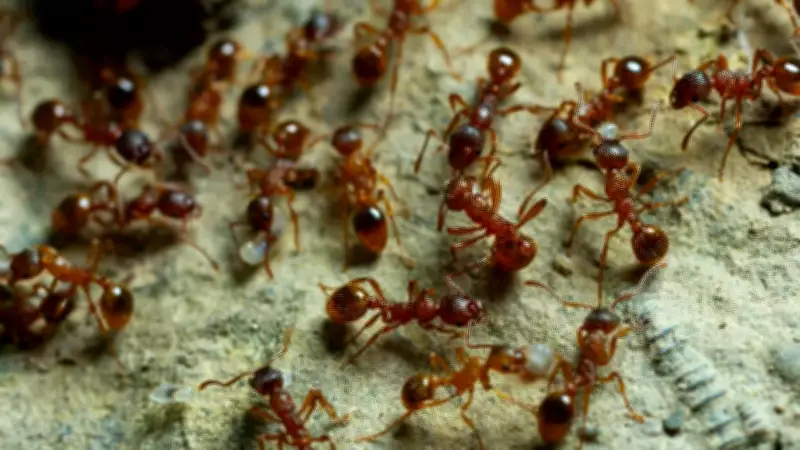
California's Red Ants Kidnap Black Ant Pupae in Brutal Evolutionary Strategy
Deep within the forests of California's Sierra Nevada, a disturbing natural phenomenon unfolds with chilling precision. A species of red ant, scientifically known as Polyergus mexicanus, has perfected a dark and cunning survival tactic that involves not mere conflict with neighbors, but systematic kidnapping on a massive scale. These ants target nearby colonies of black ants, specifically Formica accreta, to steal hundreds of their pupae—essentially baby ants in cocoons—in a ruthless display of evolutionary adaptation.
The Raiding Process: Efficient and Relentless
The red ants operate like tiny, highly organized raiding parties. They locate a neighboring black ant nest and swarm it with relentless energy, focusing their efforts on capturing pupae rather than engaging in unnecessary combat. Observers have noted that these raids are incredibly efficient, with the ants knowing exactly where to strike to maximize their haul. Once they have secured hundreds of pupae, they march them back to their own nest in a procession that resembles a conveyor belt of stolen life.
Chemical Deception: The Key to Enslavement
Here is where the strategy becomes even more sinister. When the kidnapped pupae hatch inside the red ant colony, they are coated in secretions from special glands. This chemical bath effectively disguises their original scent, tricking the young ants into believing they belong to the red ant colony. In the ant world, scent is everything—it determines identity and belonging. For these captives, the deception is complete and irreversible.

From that moment on, the formerly black ants begin a life of servitude. They forage for food, tend to the red ant brood, and maintain the nest. They even feed their captors through regurgitation, sustaining a species that cannot survive on its own. This system, known as obligate social parasitism, is as brutal as it sounds, with the enslaved ants working tirelessly, unaware of their own exploitation.
Evolutionary Necessity and Global Context
The red ants are obligate social parasites, meaning their survival depends entirely on their kidnapped workforce. Their jaws are unsuitable for foraging or processing food, so without the enslaved black ants, they would starve. This parasitic relationship has evolved over millennia, becoming not just opportunistic but essential for the red ants' existence.
Scientists liken this process to a form of biological brainwashing, where the captives' biology and behavior are subtly altered by the colony's chemicals. The phenomenon of slave-making ants serves as a stark reminder of how complex and ruthless evolution can be. While seven or eight species worldwide are known to engage in such kidnapping, the Polyergus raids in California are among the most studied, with observers noting that raids are timed with precision and target specific stages of the black ant lifecycle, primarily pupae, which are easiest to manipulate.






