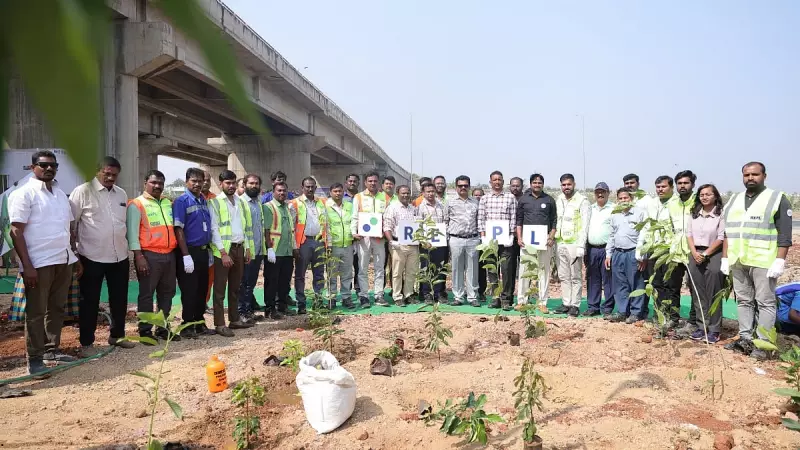
In a significant push towards eco-friendly infrastructure, Roadway Solutions Ltd (REPL) has embarked on a large-scale green initiative along National Highway 40. The company has undertaken the plantation of a staggering 14,000 saplings using the innovative Miyawaki method, marking a substantial step in promoting sustainable highway development.
What is the Miyawaki Method and Why is it Crucial?
The project leverages the renowned Miyawaki afforestation technique, pioneered by Japanese botanist Akira Miyawaki. This method is celebrated for its ability to create dense, native, and self-sustaining forests in a remarkably short time. Unlike conventional plantations, the Miyawaki approach involves planting a diverse mix of indigenous species close together. This stimulates competition, leading to accelerated growth – often up to ten times faster. The resulting green patches act as robust carbon sinks, enhance local biodiversity, improve air quality, and help in soil conservation.
REPL's specific plantation drive focuses on a 1.5-kilometer stretch of NH-40. The selection of native species is a core principle of the method, ensuring the plants are well-adapted to the local climate and require minimal maintenance after the initial establishment phase. This makes the project not just environmentally sound but also economically viable in the long run.

Driving India's Green Highway Mission Forward
This initiative by REPL aligns perfectly with broader national goals for sustainable infrastructure. It directly supports the Green Highway Mission, a Government of India policy that mandates ecological development alongside road expansion. The mission emphasizes the creation of green corridors to mitigate pollution, reduce the urban heat island effect, and make travel more pleasant.
The 14,000 saplings planted along NH-40 will serve multiple critical functions. They will function as natural noise barriers for nearby communities, help prevent soil erosion on the highway embankments, and provide a habitat for local birds and insects. This project exemplifies how industrial development and environmental stewardship can go hand-in-hand. REPL's move sets a precedent for other infrastructure companies to integrate such green practices into their core construction and maintenance activities.
A Model for Future Infrastructure Projects
The success of this Miyawaki plantation could serve as a replicable model for highway development across India. As the country continues to expand its road network, incorporating such ecological measures from the planning stage itself becomes imperative. The approach moves beyond mere compensatory plantation to creating thriving, biodiverse ecosystems.
Experts highlight that community involvement and long-term monitoring are key to the sustained success of such projects. Ensuring the survival and growth of these saplings will be as important as the planting act itself. REPL's commitment, if followed through with proper care, will leave a lasting green legacy along NH-40, transforming a mere roadway into a vibrant ecological corridor. This initiative is a concrete step towards building a future where India's economic arteries are also its green lungs.