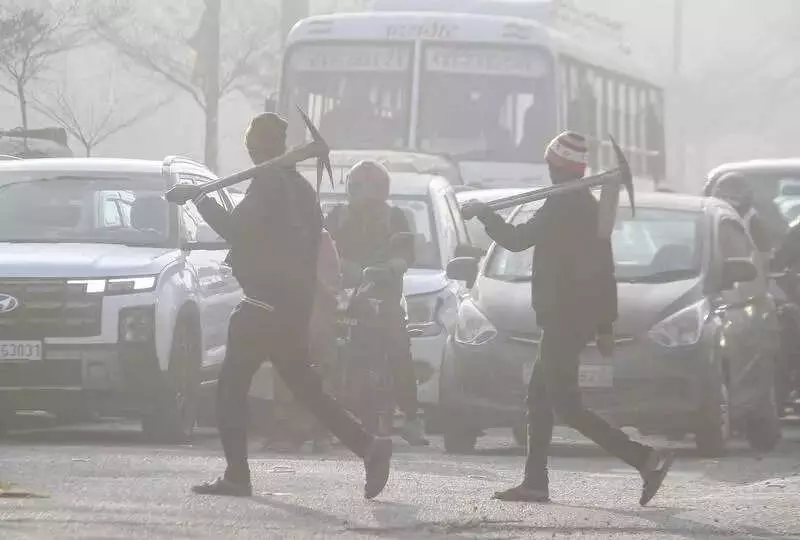
Rohtak has shockingly emerged as the epicentre of North India's severe air pollution crisis, recording a hazardous Air Quality Index (AQI) of 421 on Tuesday. This alarming level surpassed the air quality readings in the national capital, Delhi, which stood at 354 on the same day.
Haryana Reels Under Toxic Smog Blanket
Data released by the Central Pollution Control Board (CPCB) paints a grim picture for the state of Haryana. While Rohtak topped the pollution charts, a majority of the state continues to suffer under a thick, toxic blanket of smog. The situation remains critical across several urban centres.
Six cities were categorised with 'very poor' air quality. These include Dharuhera (AQI 343), Ballabhgarh (AQI 330), Gurugram (AQI 320), Bahadurgarh (AQI 311), Ambala (AQI 302), and Jind (AQI 301). Other major towns recorded 'poor' AQI levels, such as Sonipat (285), Manesar (278), Charkhi Dadri (205), Fatehabad (233), and Panchkula (211).

A slight relief was noted in Faridabad, part of the National Capital Region (NCR), where the AQI dropped to a 'moderate' 182. This marks the first time this season that Faridabad's AQI has fallen below the 300-mark.
Government Response and Minister's Statement
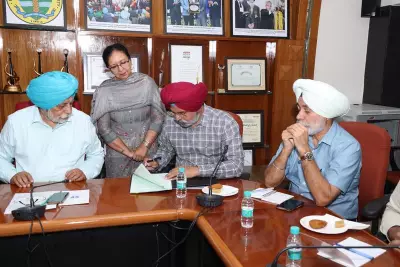
Haryana's Environment Minister, Rao Narbir Singh, addressed the growing concern, stating that measures are being implemented to control the deteriorating situation. He emphasized the government's commitment to combating environmental pollution.
"The environmental imbalance in the NCR region is a matter of serious concern. The Haryana government is committed to controlling environmental pollution and is ensuring strict compliance with the directions issued by the National Green Tribunal (NGT) and the Supreme Court," Minister Singh stated.
He recently conducted a review of pollution control status and directed officers to prepare a concrete future action plan. The minister provided a nuanced view of the causes, noting that the smog problem in Delhi and surrounding areas during November and December is not solely due to stubble burning or seasonal factors.
He identified vehicle emissions, construction activities, and industrial emissions as major contributors to the persistent crisis.
New Measures to Curb Vehicular Pollution
In a significant administrative shift aimed at tightening control over pollution from vehicles, the state government has announced new protocols. Officers from the environment department will now conduct regular inspections of pollution-check equipment installed at petrol pumps across the state.
Furthermore, the responsibility of regulating companies that issue Pollution Under Control (PUC) certificates will be transferred from the transport department to the Haryana State Pollution Control Board (HSPCB). This move is intended to bring more stringent oversight and reduce fraudulent certification practices.
The ongoing air quality crisis underscores the urgent need for sustained, multi-source intervention to protect public health in North India, with Haryana's cities currently bearing the brunt of the toxic smog.