

From Personal Grief to Environmental Triumph: The Saalumarada Thimmakka Story
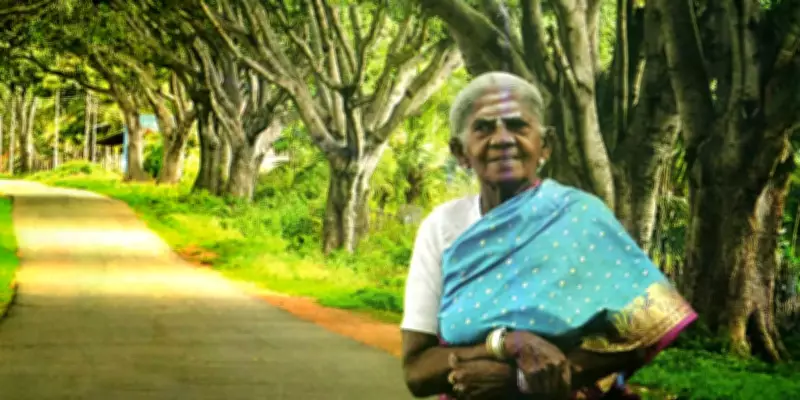
Along a sun-baked stretch of highway connecting Hulikal and Kudur in Karnataka, travelers encounter an unexpected oasis. Instead of the typical barren landscape, a majestic procession of banyan trees creates a continuous green canopy, transforming an ordinary road into what feels like a living monument to perseverance and care.
The Unlikely Environmentalist: A Life of Hardship and Hope
Saalumarada Thimmakka's journey began in circumstances that offered little hint of the environmental legacy she would create. Historical accounts consistently describe her as a poor, uneducated laborer from rural Karnataka who endured significant financial struggles throughout her early life. Together with her husband Chikkaiah, she maintained a modest existence through physical labor, facing the additional emotional challenge of remaining childless throughout their marriage.
This profound personal sorrow became the unexpected catalyst for one of India's most remarkable environmental stories. Rather than succumbing to their loss, Thimmakka and her husband redirected their nurturing instincts toward the land around them, beginning to treat trees as the children they never had.

The Daily Devotion: Water, Labor and Protection
What followed was neither a symbolic gesture nor a temporary project, but rather a decades-long commitment that demanded extraordinary physical endurance. The couple gathered banyan saplings and systematically planted them along the roadside, initiating a punishing routine that would define their lives.
- Water Transportation: They regularly carried water approximately four kilometers to nourish the young trees
- Physical Protection: They constructed thorny fencing to shield the vulnerable saplings from grazing cattle
- Consistent Maintenance: Through scorching heat and uncertain conditions, they maintained their daily vigil
The resulting forest corridor emerged not through miraculous intervention, but through relentless dedication—day after day, year after year, with water, labor and unwavering faith.
A Living Legacy: 384 Trees Transforming a Highway
Thimmakka's monumental achievement involved planting and nurturing 384 banyan trees along what various reports describe as a four-kilometer stretch of highway. This gradual transformation turned a once-barren roadside into a living corridor of shade that has become both a practical resource for travelers and a destination in its own right.
She didn't create a decorative avenue for aesthetic purposes alone. Instead, she provided essential shade where it mattered most—along a highway exposed to Karnataka's intense sun. Over decades, this remarkable row of banyan trees converted an ordinary road into a landmark that people now travel specifically to experience, serving as a quiet testament to patience, care and sustained effort.
The Meaning Behind the Name: Saalumarada
Her title, Saalumarada, derives from the Kannada language and translates literally to "row of trees." This name represents one of those rare instances where an honorific perfectly captures the essence of an individual's life work. The designation came to symbolize far more than botanical achievement—it pointed toward human endurance and a form of motherhood that, while not biological, proved profoundly protective and generative.
Thimmakka's work stands as a powerful rebuttal to the assumption that wealth, formal education or social position are prerequisites for shaping public life and environmental consciousness. She possessed none of these advantages in any conventional sense. What she did possess was time, extraordinary grit, and a stubborn refusal to accept the roadside's emptiness as permanent.
From Local Laborer to National Icon
For many years, Thimmakka's work remained rooted in the uncelebrated reality of village life. However, as the trees matured and her story spread, recognition began to extend far beyond Karnataka's borders. Profiles and reports document her gradual emergence as an environmental icon whose influence reached national prominence, culminating in the prestigious Padma Shri award presented to her in 2019.

Her achievement transcends mere tree planting. She transformed conservation into a profoundly human narrative that resonated across India: personal grief redirected into environmental stewardship, physical labor transformed into lasting legacy, and a private life marked by scarcity made publicly meaningful through the creation of shade and beauty.
Why Thimmakka's Story Continues to Resonate
Thimmakka's life possesses that rare quality that makes people pause and reflect amid today's constant information flow. Her story is simultaneously simple enough to be universally understood and profound enough to inspire genuine admiration.
- A poor laborer with limited resources
- A childless couple facing personal sorrow
- A barren highway needing transformation
- A collection of humble saplings
- Decades of consistent, determined effort
The result: a magnificent line of banyan trees that now outlives the difficult years that produced them. In a culture that often celebrates spectacle and instant achievement, her narrative advocates for a different kind of greatness—one built through calloused hands, repeated small actions, and the revolutionary belief that modest beginnings need not determine final outcomes.
Saalumarada Thimmakka's legacy continues to grow alongside her trees, reminding us that environmental care often begins not with grand plans or substantial resources, but with simple, sustained acts of care repeated over time.





