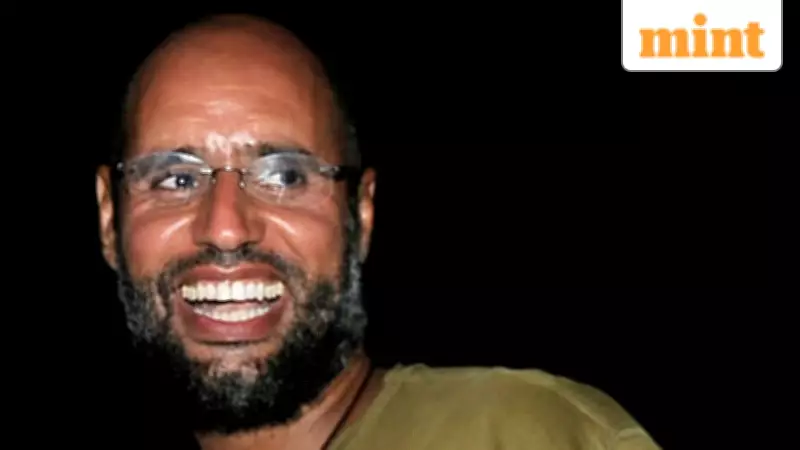
Saif al-Islam Gaddafi Assassinated: End of a Controversial Political Figure
Saif al-Islam Gaddafi, once viewed as the successor to his father Muammar Gaddafi, has been killed in a direct confrontation at his residence, according to reports. Masked gunmen forced their way into his home, leading to his death, with no further details released by his office. This event marks a dramatic end to a life that saw him transition from a privileged heir to a political prisoner and a presidential candidate whose ambitions contributed to electoral collapse in Libya.
From Diplomatic Reformer to Rebel Opponent
Although Saif al-Islam never held a formal government position, he was widely regarded as the most influential figure in oil-rich Libya after his father's 40-year rule. He played a pivotal role in shaping national policy and was entrusted with high-level diplomatic missions. Notably, he spearheaded negotiations for Libya to dismantle its weapons of mass destruction and helped broker compensation agreements for victims of the 1988 Pan Am Flight 103 bombing over Lockerbie, Scotland.
Intent on ending Libya's international isolation, he reached out to Western countries, promoting himself as a reformer who advocated for a constitution and greater respect for human rights. Educated at the London School of Economics and fluent in English, he was seen by foreign governments as Libya's most acceptable and Western-friendly representative.

The 2011 Uprising and Brutal Crackdown
When protests erupted against Muammar Gaddafi's rule in 2011, Saif al-Islam stood firmly by his family and tribal loyalties. He severed many international ties and played a key role in a brutal crackdown on rebels, whom he contemptuously referred to as rats. In an interview with Reuters during the revolt, he warned of rivers of blood, vowing that the government would fight to the last man and woman and bullet. He predicted that Libya would be destroyed and take 40 years to recover, as everyone would want to be president or emir.
Capture, Detention, and Isolation
After rebel forces seized Tripoli, Saif al-Islam attempted to escape to Niger disguised as a Bedouin tribesman but was captured by a militia and airlifted to Zintan. He spent six years in detention there, a stark contrast to his earlier life of luxury, which included pet tigers, falcon hunting, and mingling with British high society. Human Rights Watch met him in Zintan, noting he did not allege ill treatment but was held in solitary confinement, missing a tooth and isolated from the world, though he had access to a television and books.
In 2015, he was sentenced to death by firing squad for war crimes by a Tripoli court and was wanted by the International Criminal Court for murder and persecution.
Political Comeback and Electoral Controversy
Released in 2017 under an amnesty law, Saif al-Islam lived in hiding in Zintan to avoid assassination. From 2016 onward, he was permitted to communicate with contacts inside and outside Libya, receiving regular visitors to discuss politics. In 2021, wearing traditional Libyan attire, he appeared in Sabha to file his candidacy for presidential elections, aiming to capitalize on nostalgia for Libya's pre-2011 stability.
However, his candidacy was controversial, opposed by many who suffered under his father's rule and rejected by powerful armed groups from the 2011 rebel factions. Disqualified due to his 2015 conviction, his attempts to appeal were blocked by fighters, contributing to the collapse of the election process and Libya's return to political stalemate.
Symbolic Stature and Assassination Impact
In a 2021 interview, Saif al-Islam described his political strategy as a slow comeback, like a striptease, to play with people's minds. Analysts noted that while he struggled with public communication after his release, his symbolic significance remained substantial, hindering the 2021 elections. His assassination is expected to diminish morale among pro-Gaddafi factions while removing an obstacle to holding elections in Libya, according to experts.
Saif al-Islam Gaddafi's life encapsulates Libya's turbulent recent history, from diplomatic outreach to violent conflict, ending in a confrontation that underscores the nation's ongoing political challenges.