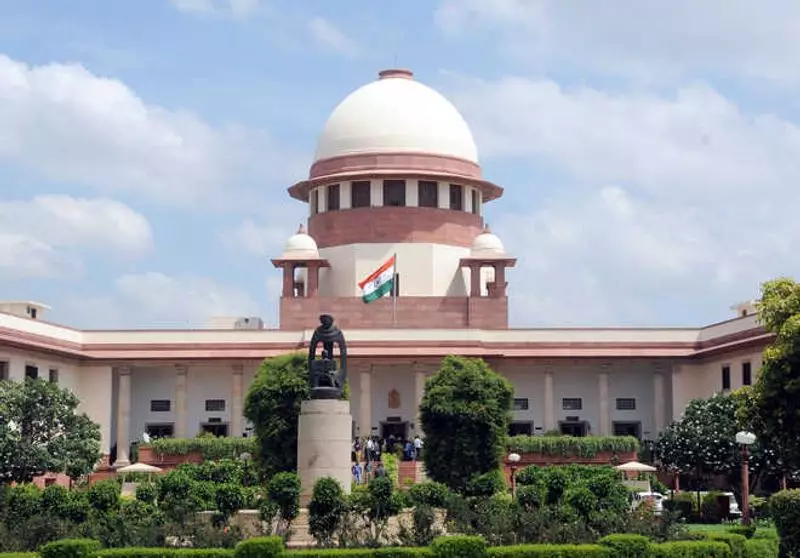
The Supreme Court of India has delivered a stern rebuke to authorities handling the national capital's perennial air pollution crisis. The apex court emphasised that the problem requires consistent, year-round monitoring and decisive action, rather than the customary, reactive hearings that coincide with the onset of winter.
A Critique of Seasonal Firefighting
A bench comprising Justice Sanjay Kishan Kaul and Justice Sudhanshu Dhulia expressed strong dissatisfaction with the prevailing pattern of addressing Delhi's toxic air. The court observed that as soon as the winter season arrives, the air quality deteriorates dramatically, leading to a flurry of hearings and temporary measures. This approach, the justices noted, is fundamentally flawed.
The court explicitly stated that the problem demands a permanent solution and continuous surveillance throughout the year, not just emergency interventions when pollution peaks. This criticism underscores a systemic failure in environmental governance, where planning is absent until a public health emergency is already underway.

The Commission's Report and the Road Ahead
The bench was reviewing a report submitted by the Commission for Air Quality Management (CAQM) in the National Capital Region and Adjoining Areas. The report outlined the Graded Response Action Plan (GRAP) – a set of emergency measures that are activated in stages as air quality worsens.
While acknowledging the existence of GRAP, the Supreme Court's stance signals that such a crisis-response framework is insufficient on its own. The justices pointed out that the real work of preventing the crisis must happen in the months leading up to winter. This includes addressing major perennial sources of pollution like vehicular emissions, industrial discharge, dust from construction, and the politically sensitive issue of stubble burning in neighbouring states.
The court has directed the CAQM to hold a meeting within the next week to deliberate on the issue comprehensively. The goal of this meeting is to move beyond stop-gap arrangements and formulate a proactive strategy that ensures cleaner air for Delhi's residents not just in November, but in every month of the year.
The Human Cost of Delay
The Supreme Court's intervention is rooted in the severe public health consequences of air pollution. Every winter, Delhi and the broader National Capital Region (NCR) are engulfed in a toxic smog, leading to a spike in respiratory illnesses, cardiovascular problems, and reduced life expectancy. Schools are often shut, outdoor activities are halted, and the economy suffers.
By demanding regular monitoring, the court is pushing for a shift from crisis management to prevention. This implies stricter enforcement of existing laws on emissions and waste burning during summer and monsoon months, better public transport infrastructure, and sustained inter-state coordination to manage agricultural residue.
The message from the highest court is clear: the health of millions cannot be held hostage to an annual cycle of governmental inaction followed by panic-driven steps. The coming meeting of the CAQM will be a critical test of whether authorities are finally ready to transition from customary hearings to consequential, year-round action.