

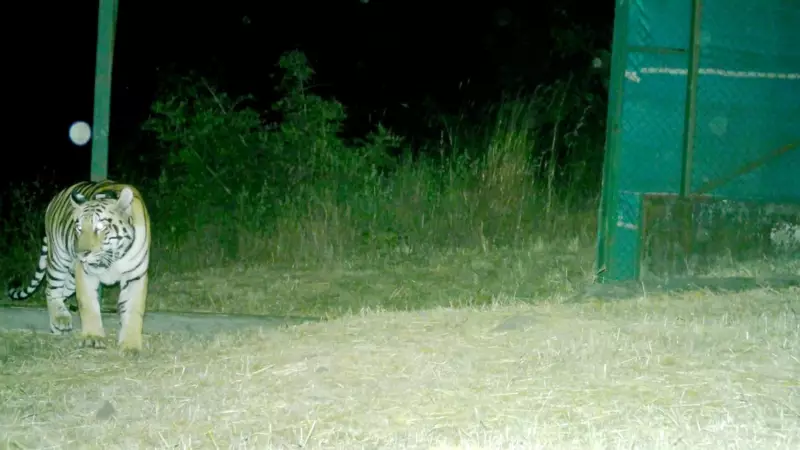
In a significant boost for tiger conservation in Maharashtra, the state's Forest Department has successfully released a second tigress into the wilds of Chandoli National Park within a month. The tigress, named Tara, marks a crucial step in the ambitious Tiger Augmentation and Range Expansion (TARA) programme aimed at revitalising the big cat population in the Sahyadri Tiger Reserve (STR).
A Carefully Monitored Journey to the Wild
The operation to translocate Tara began on December 9, 2025, when she was safely moved from the Tadoba Tiger Reserve in Chandrapur to the STR. Upon arrival, she was placed in a specially designed soft-release enclosure within the Chandoli National Park, located in the Sangli region. This phase allowed wildlife officials to conduct a thorough assessment of her health, behaviour, and adaptability to the new environment.
Forest department authorities kept the enclosure gates open from December 13, but Tara took her time. "She had made a kill and was feeding on it for the past three days. Finally, today, December 18, 2025, in the morning, she left the enclosure and went into the core forest," an official press release stated. During her time in the enclosure, she displayed excellent natural instincts, remaining alert and demonstrating strong hunting skills, which confirmed her readiness for independent survival.

Strengthening the Sahyadri Tiger Landscape
This release follows the successful translocation of another tigress, Chanda, on November 20, who was also brought from the Tadoba Tiger Reserve. Prior to these releases, the STR was home to only three male tigers. The introduction of two adult tigresses is a strategic move to encourage breeding and establish a sustainable population.
Tushar Chavan, Field Director of the Sahyadri Tiger Reserve, emphasised the importance of Tara's release. He stated that her entry into the wild is a "significant step towards strengthening the tiger population in the Sahyadri landscape." Echoing this sentiment, M S Reddy, Chief Wildlife Warden of Maharashtra, highlighted that the release adhered strictly to scientific protocols and careful behavioural evaluation, reflecting the department's commitment to evidence-based wildlife management.
Monitoring, Biodiversity, and Sustainable Tourism
To ensure the safety and smooth integration of both tigresses, the forest department has equipped Tara and Chanda with radio collars. These devices enable round-the-clock monitoring using satellite-based telemetry and VHF antenna tracking. The comprehensive monitoring strategy includes:
- Field-patrol-based triangulation and direct sign verification.
- Detailed behavioural documentation (tracking movement, resting sites, kill patterns, and territory exploration).
- Conflict-avoidance protocols with local communities.
- Veterinary response readiness for any emergencies.
Rohan Bhate, Honorary Wildlife Warden, pointed out the broader implications of this conservation effort. "With the release of two adult tigresses, Tara and Chanda, we hope breeding will happen, and it will increase the tiger population in STR, which is required to strengthen biodiversity. It will also boost sustainable wildlife tourism in STR, creating new employment," he said.
The Sahyadri Tiger Reserve, a vital ecological zone, spans nearly 740 square kilometres across the Satara, Sangli, Kolhapur, and Ratnagiri districts. It encompasses the Chandoli National Park, Koyna Wildlife Sanctuary, and Radhanagari Wildlife Sanctuary. The successful release of Tara represents a hopeful chapter in the long-term conservation of India's national animal in this western landscape.






